The power paddle era isn’t over, but it’s changing. While amateurs continue chasing offense, many of the best players in the world are quietly shifting what they put in their hands.
Affiliate disclosure: If you click the links on the page or use our discount codes, we may earn a small commission at no extra cost to you that supports our testing and reviews.
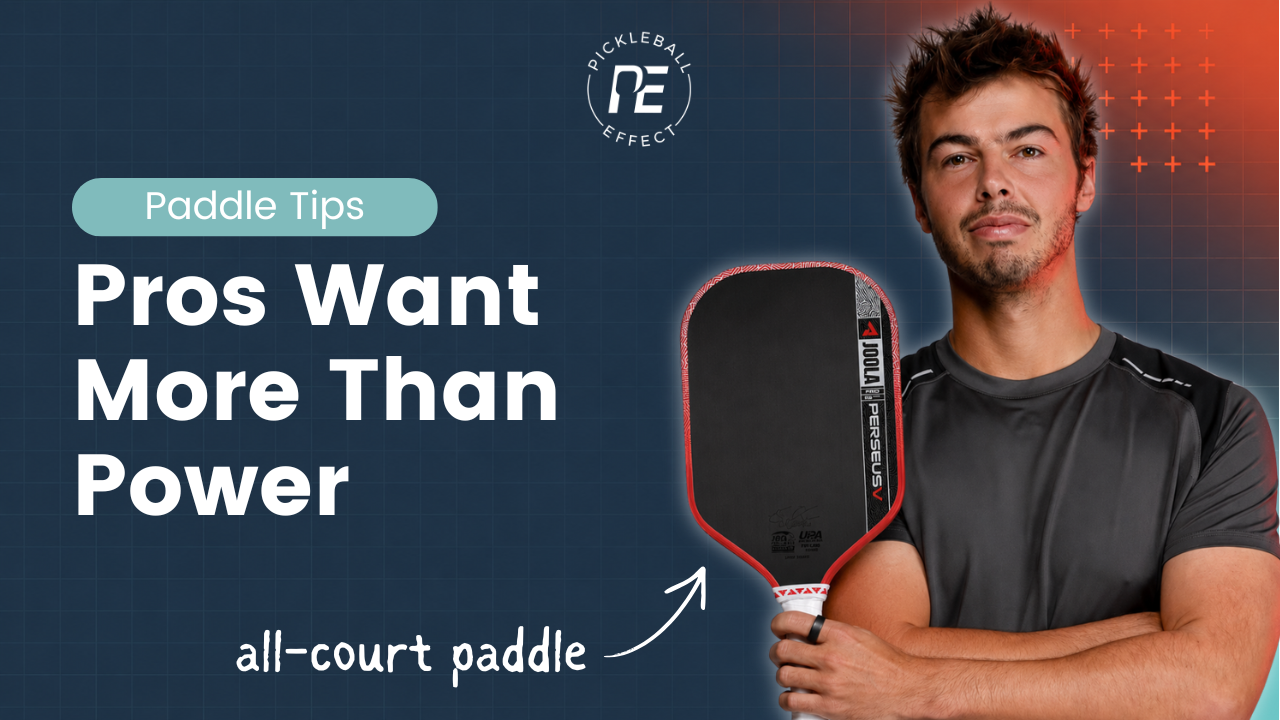
All-court pickleball paddles are taking over the pro game. That’s not a hot take. It’s what the equipment choices at the top of the game are telling us right now.
All-court paddles are designed to balance offensive output with pace absorption, sitting between pure power and control builds. They give players enough offense to finish points while making resets, drops, and soft exchanges more manageable. And right now, the best players in the world are choosing them over pure power.
A quick note on classifications… Some of the paddles below sit on the aggressive end of the all-court spectrum, and there are differences of opinion out there on where a few of them belong. Pickleball Effect’s classifications are based on on-court testing and data.
The Firepower Percentile referenced throughout ranks each paddle’s combined power and pop offensive output against every paddle in the Pickleball Effect database — 100th is the most powerful paddle tested.
There was a time when the JOOLA Pro IV felt like a genuine competitive advantage. Whoever had it held a power edge over most of the field. That era is gone.
My thought is that the pros simply adapted faster than paddle tech evolved. For a while, raw pace was overwhelming. Now pro players defend it much better than they did even 18 months ago. The aggressive style popularized by players like Christian Alshon, Gabe Tardio, Quang Duong, and Patriquin dethroned the soft-game-first dynasty of the Ben and Collin Johns era. But now, the men’s game feels like it’s settling somewhere between those two extremes.
Power still matters, but it’s no longer enough on its own. The players winning consistently are the ones who can generate offense without sacrificing resets, drops, and control in transition.
I think a lot of players hear “all-court” and assume soft or underpowered. In reality, today’s all-court paddles are better described as complete rather than low powered. They still offer some offense and put-away ability, but in a more controlled and predictable package that gives players confidence across every part of the game.
My opinion on the men’s side is that the game is settling into a middle ground between the soft, control-first style that dominated the late 2010s and early 2020s and the drive-and-crash aggression that surged through 2024 and 2025. Neither extreme is consistently winning on its own anymore, and the equipment reflects that. Across the board, top pros are gravitating toward paddles with accessible power rather than simply supplying offense for them.
The Pro IV vs Pro V comparison data is worth a look if you want to see how significant that shift has been from one generation to the next.
The women’s side is a slightly different story. While many women pros are also moving toward all-court builds, the game style itself hasn’t shifted as dramatically. While they certainly respect those standing on the other side of the court, the putaway ability is not as deadly, so speedups that would likely lose you a point in most men’s matches tend to work more often on the women’s side.
What has changed is what those players can do within that framework. Newer paddle technology has expanded shot-making options: more aggressive dinks setting up errors and putaways, speed-ups from positions that would have been too risky a few years ago, and better ability to shape drives that create popups.
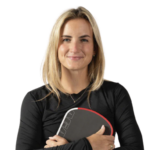
Kate Fahey, PPA Pro Player
Kate Fahey, one of the top women’s pros using the JOOLA Agassi Pro V, put it well in a recent Pickleball Effect podcast. Her take was that pop has been overpowering skill in recent pickleball, and that the Pro V gives her the ability to choose when she wants to use power rather than having it on by default. That’s the shift in a nutshell.
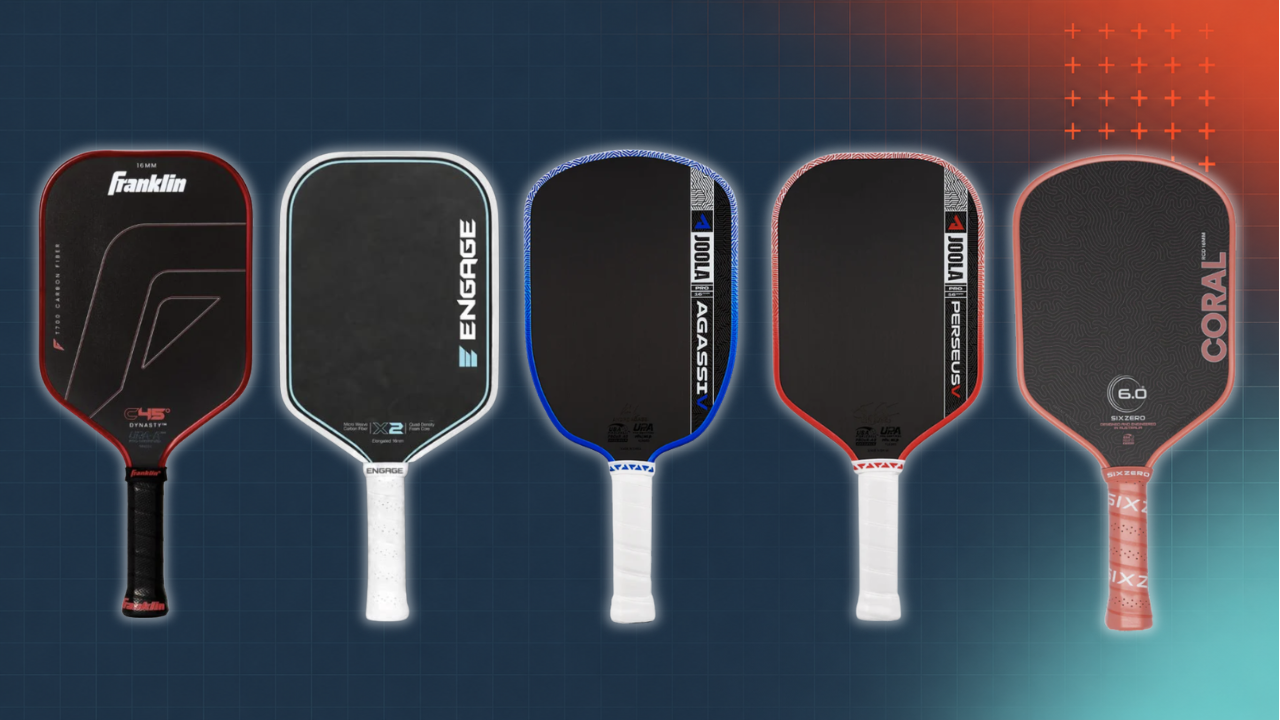
Here’s how the paddles used by top pros stack up in the Pickleball Effect database.
The Power Percentile ranks the paddle’s top-end power, while the Firepower Percentile combines power and pop to measure its overall offensive potential against hundreds of paddles I’ve tested.
The all-court paddles these pros are choosing aren’t soft. They’re not sacrificing much offense. They’re accessing it differently.
For clarity, the Franklin C45 looks lower powered here because its stock setup is very light. These tests are all done with paddles in stock form. Add weight to the C45 and its power and pop increase noticeably, making it a stronger all-court option.
| Paddle | Pro | Type | Power (MPH) | Power Percentile | Firepower Percentile |
|---|---|---|---|---|---|
| Six Zero Black Opal | For Comparison | Power | 57.6 | 98th | 94th |
| Perseus Pro IV (16mm) | For Comparison | Power | 56.6 | 77th | 81st |
| Six Zero Coral Elongated | Devilliers, Hovenier | All-Court | 56.4 | 69th | 69th |
| Perseus Pro V (16mm) | Ben Johns | All-Court | 56.4 | 69th | 69th |
| CRBN TruFoam Barrage 2 | Daescu | All-Court | 56.4 | 69th | 73rd |
| Engage X2 | Oncins, Livornese Jr | All-Court | 56.3 | 64th | 64th |
| Franklin C45 | Waters, Patriquin, Diamond, Sewing | All-Court | 56.1 | 56th | 47th |
| Agassi Pro V (14mm) | Kate Fahey | All-Court | — | — | — |
* The Black Opal and Pro IV are included as reference points — both represent the higher-powered setups many of these players moved away from.
For discounts on these paddles and many others, check out our pickleball discounts page for codes from many of the top brands.
The pros have already adapted to pace. They reset faster paced balls reliably because they’ve played thousands of hours against elite-level power. Most amateur players aren’t there yet.
But the lesson still applies. More power isn’t always more winning. If you’re popping up resets, struggling on drops, or getting into trouble when opponents drive at you, an all-court paddle will serve your game better than a pure power option, even if the power numbers look attractive on paper.
For a look at which all-court paddles are earning top marks through Pickleball Effect’s hands-on testing, the 2026 Best All-Court Paddle Hot List is the right place to start.
An all-court pickleball paddle is designed to balance offensive output with pace absorption. It sits between a power paddle and a control paddle, giving players enough offense to finish points while making resets, drops, and soft exchanges more manageable. Most all-court paddles fall in the middle range of the Firepower scale and are versatile enough for most playing styles and skill levels.
Several of the top pros have shifted to all-court paddles in 2026. Ben Johns is on the JOOLA Perseus Pro V. Anna Leigh Waters and Hayden Patriquin are using the Franklin C45. Jay Devilliers switched to the Six Zero Coral. Andre Daescu moved to the CRBN TruFoam Barrage. The common thread is a move away from pure power builds toward paddles that balance offense with better touch and control.
Not quite, but closer than most people expect. The gap in raw power output is often just 1 to 2 MPH. The bigger difference shows up in pop and how the paddle responds on shorter, compact swings, where power paddles generate more immediate energy return.
Power still matters. Nobody is abandoning offense. The shift is about accessing it more deliberately rather than having it on by default. All-court paddles make it easier to reset, drop, and absorb pace without giving up much offensively.
Not necessarily, but I do think many developing players would benefit from them more than they realize. At the recreational and intermediate level, power can still overwhelm opponents and absolutely help you win points. A power paddle can be a real advantage when players struggle to handle pace consistently.
But at the highest levels of the game, most players can already generate enough offense on their own. What separates players is often their ability to reset under pressure, control transition balls, create angles, and apply pressure with spin and placement rather than just raw pace.
That’s why many top players are moving toward more complete all-court setups instead of the most explosive paddles possible.
For developing players, I also think there’s long-term value in learning how to create your own pace and offense rather than relying on the paddle to do most of the work. An all-court paddle can help build a more complete game with better touch and consistency. Then if you eventually move into a power paddle later, it becomes your skill plus the paddle creating offense together, not just the paddle supplying it for you.
Hard to say. Game styles evolve, equipment evolves, and the pros adapt faster than anyone. What this reflects is that the game has matured. The pure aggression of the drive-crash-speedup era had a ceiling. The best players found it, and the equipment is following.
Different categories. All-court paddles still provide meaningful offense, they just balance that with better touch. Control paddles are designed to actively absorb pace and reduce pop on contact. Pros moving toward all-court aren't giving up much offense. Pros on control paddles are.
Author Profile
Matt started playing pickleball in 2023 and quickly fell in love with the strategy, patterns, and problem-solving parts of the sport. He enjoys following the latest in paddle technology, performance trends, and the pro game. As a type 1 diabetic athlete, he’s especially passionate about the intersection of health and competition, sharing his experiences managing diabetes while competing, training, and navigating everyday life through sports.
Click button to activate sitewide discount.
Affiliate disclosure: If you click the links on the page or use our discount codes, we may earn a small commission at no extra cost to you that supports our testing and reviews.