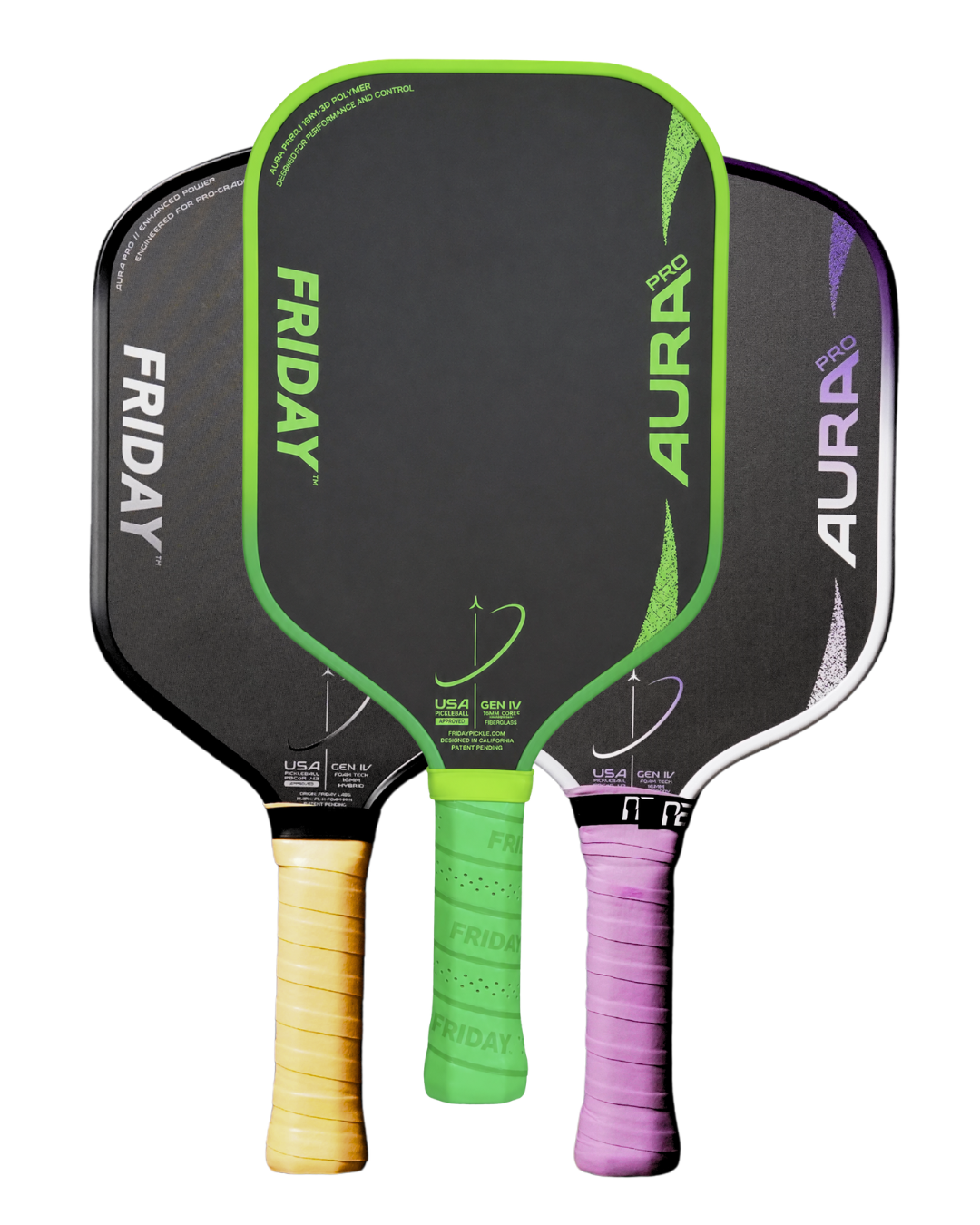
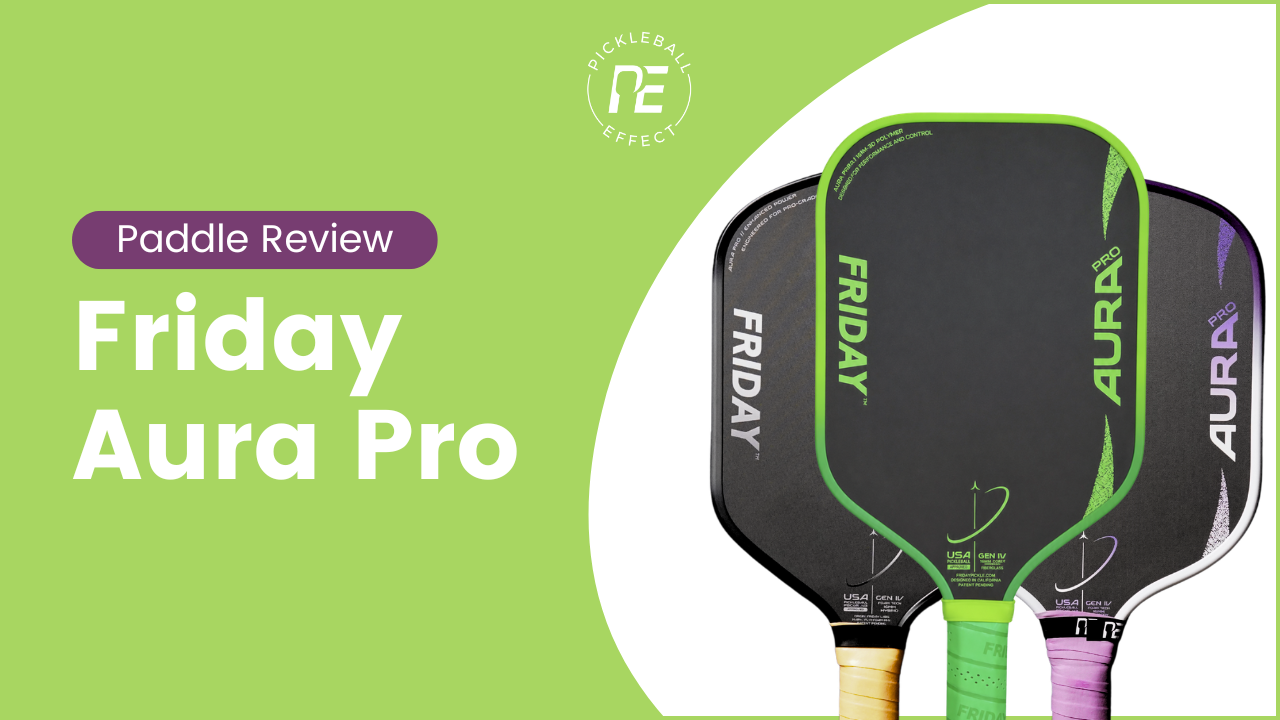
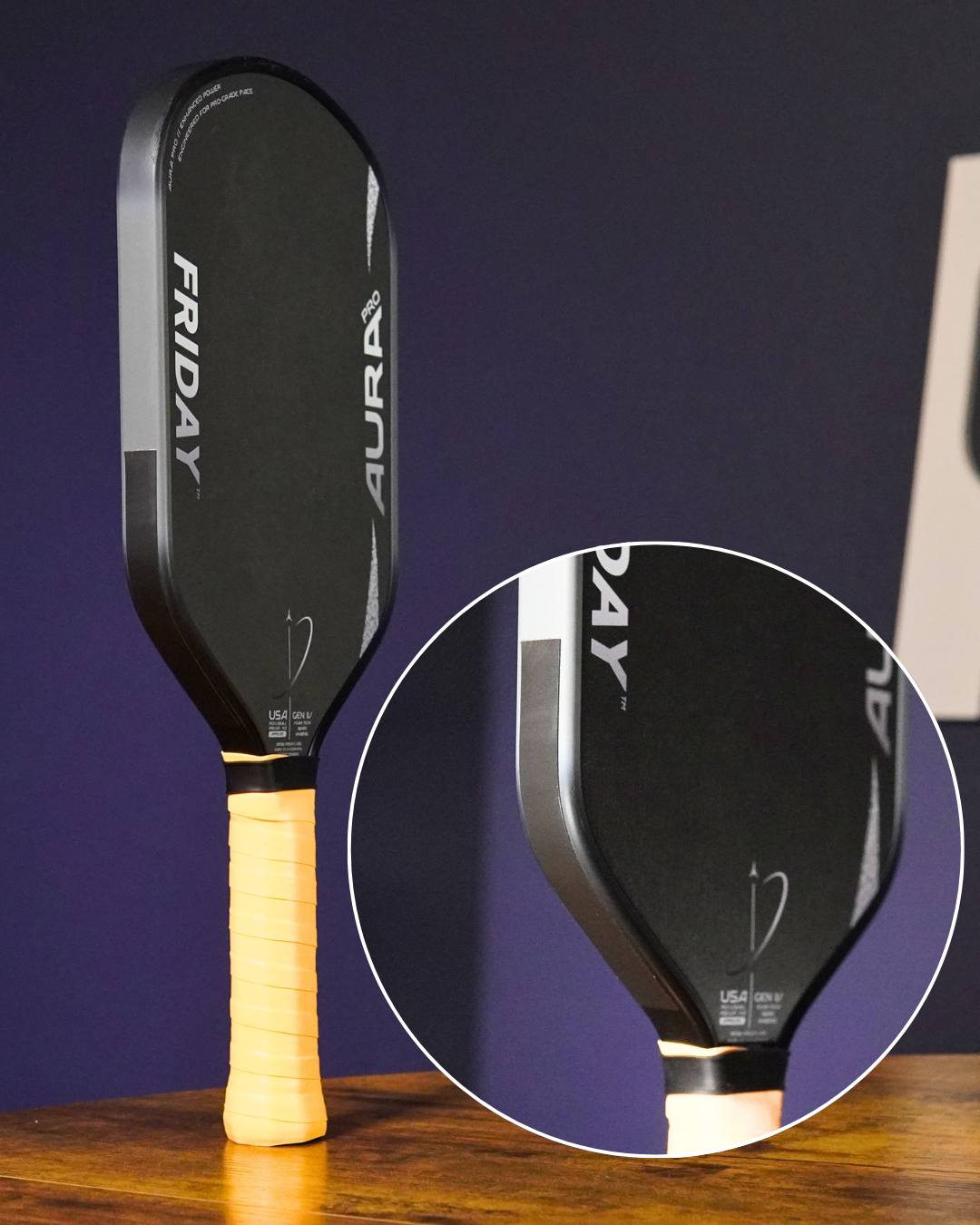
The Aura Pro series is a big step forward for Friday.
They built their brand on fun designs, strong content, and value-focused paddles in 2024, but have been shifting into more performance and innovation over the last year and this is their first lineup to me that feels like they have arrived. With an EPP foam core, propriety tech, multiple shapes, and legit on-court results, the Aura Pro series puts them firmly in the conversation with more established performance paddle brands.
Affiliate disclosure: I was sent this paddle to test, but this review wasn’t paid for or approved by the brand. Everything here reflects my own testing and opinions. If you click the links on the page or use my discount codes, I may earn a small commission at no extra cost to you that supports my testing and reviews.
What stands out
A competitive foam power paddle with a more linear power delivery and a crisp, firm feel that makes it one of the more polymer-like options in the category.
How it plays
Bottom line: A high power paddle for the people, not just the elite. Big power when you go after it, but controlled enough for 4.0+ players to trust. Add some weight to improve the sweet spot and it really comes together.
Save with code PBEFFECT from Friday’s website or click link to Pickleball Central to apply discount at checkout.
Performance ratings are based on playtesting, paddle comparisons, and power, pop, and spin tests.
This paddle is available in three shapes. Measurements are from my test units and may vary.
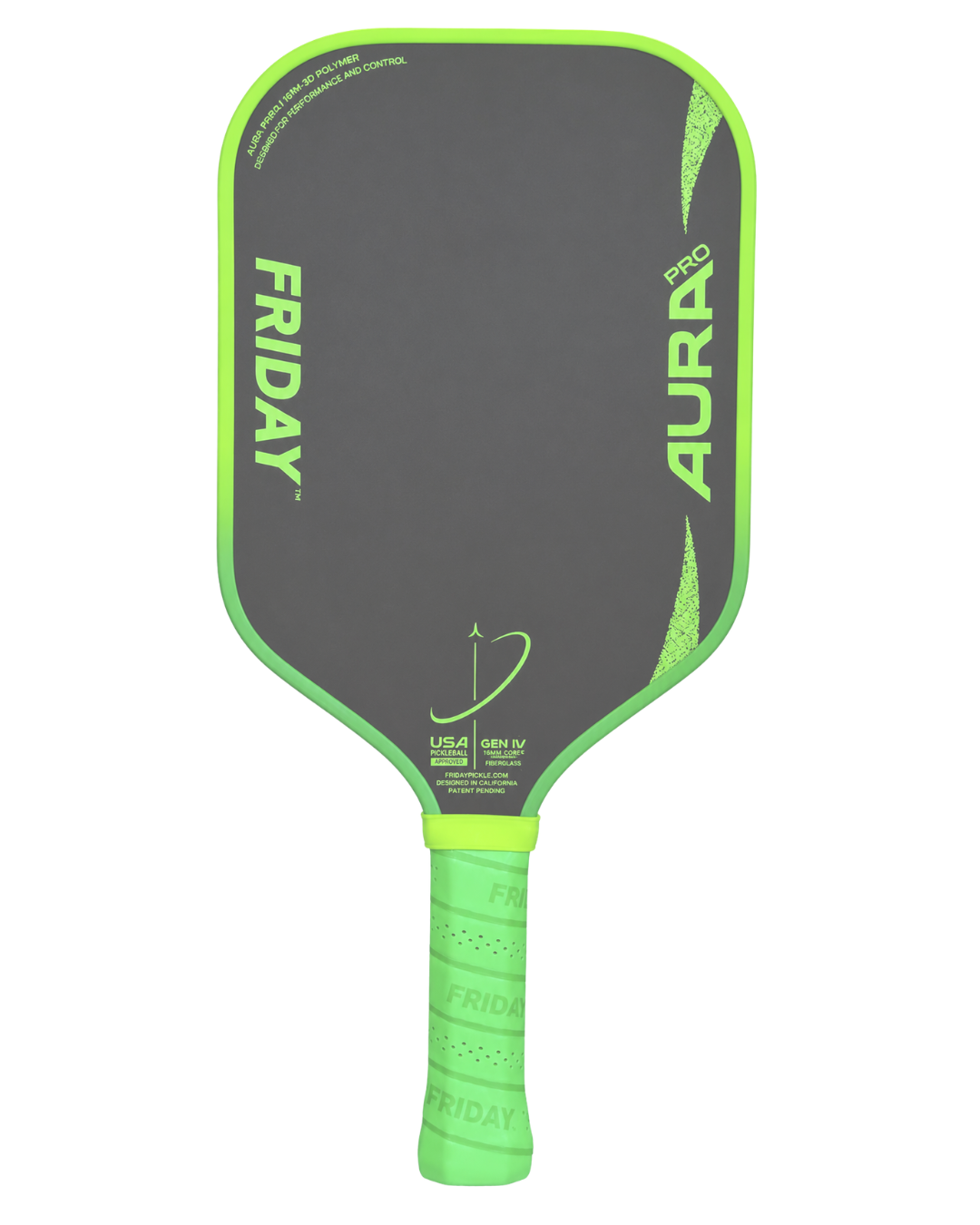
Lightweight and maneuverable for an elongated shape, though the sweet spot is more average stock.
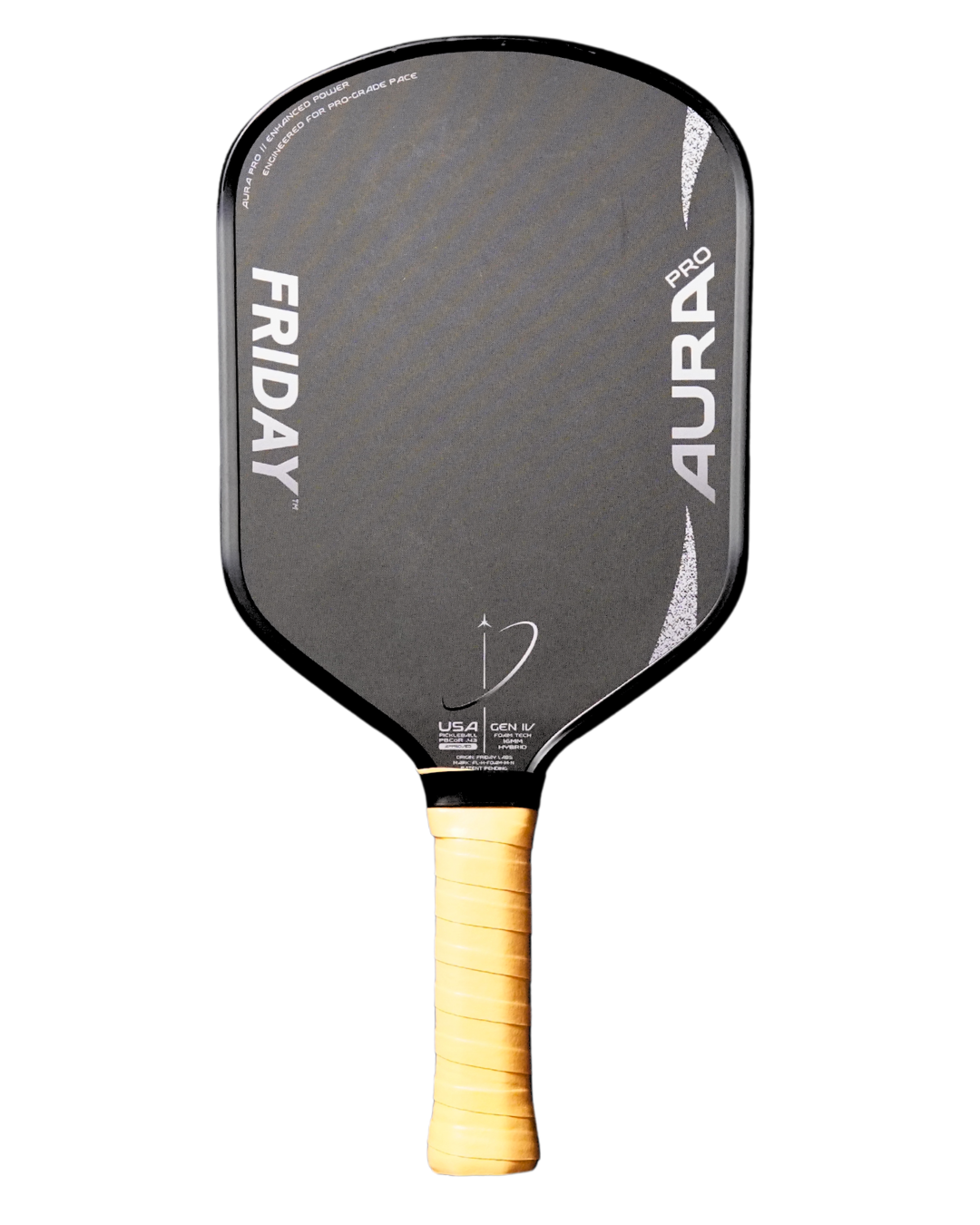
Higher swing weight for a hybrid with average stability out of the box, but tuning helps it come together well.
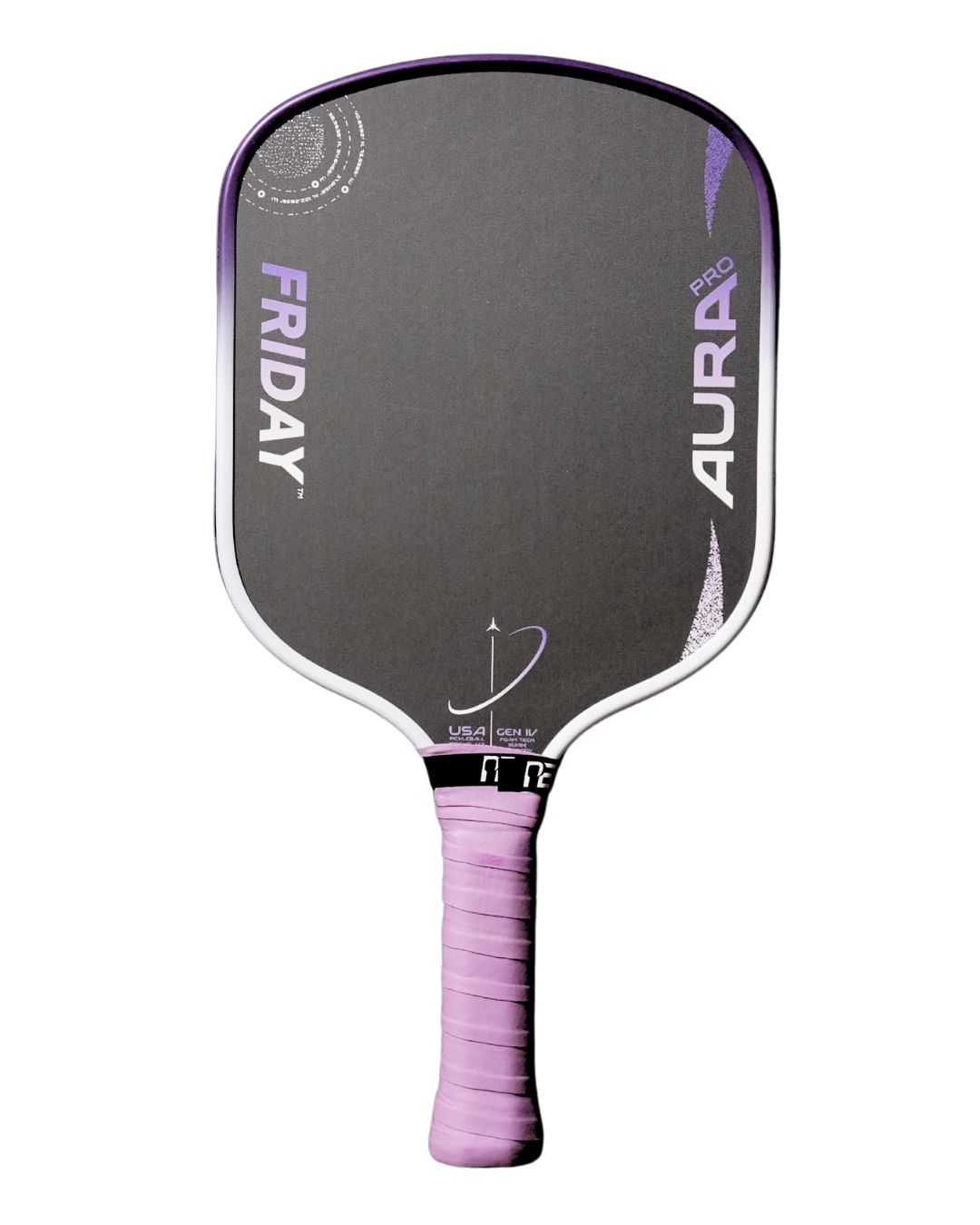
Good specs overall and exactly what you want from a widebody. High maneuverability with a strong sweet spot.
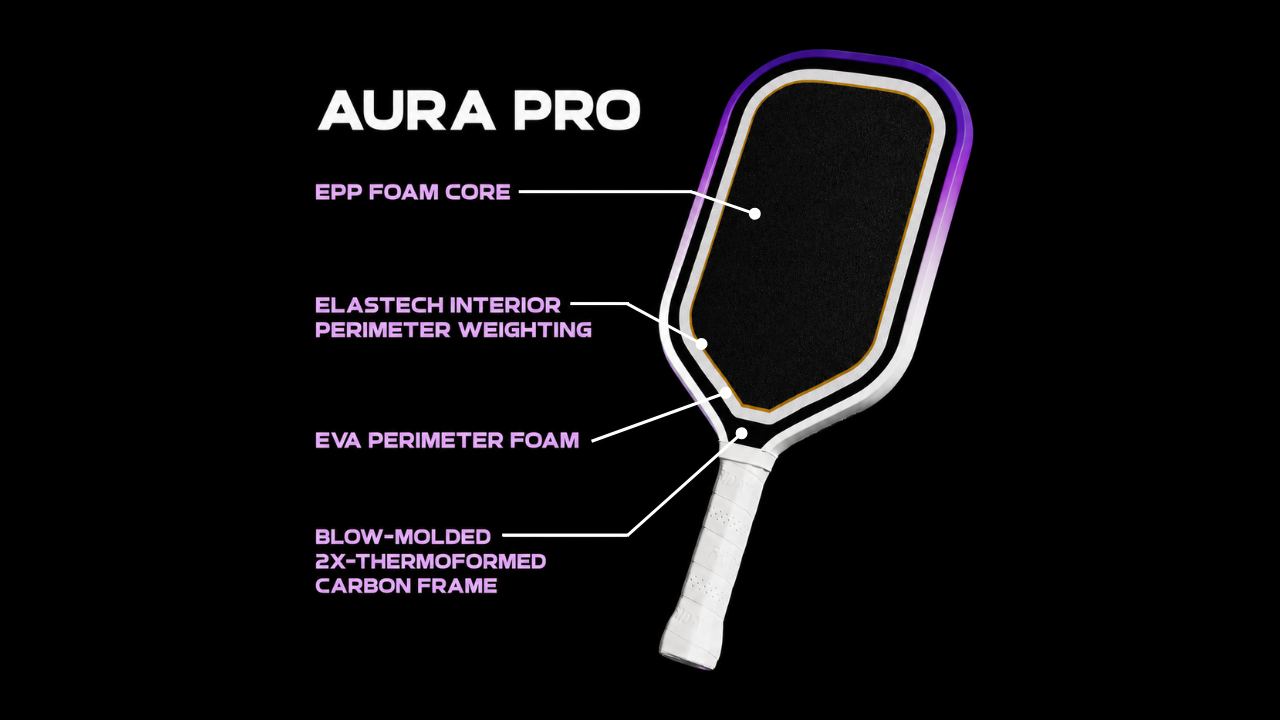
Despite Friday being a mid-sized brand, there’s some genuinely unique tech here, including several patent-pending construction elements.
Notable construction features:
While floating foam cores are becoming common in Gen 4 paddles, the Elastech and frame construction are unique to Friday. Together, they give the Aura Pro a firmer, crisper response that feels more like a traditional polymer-core paddle.
Instead of an exaggerated trampoline effect, the ball response is more linear and predictable likely because those construction elements change the paddle’s vibrations and flex at contact.
Save with code PBEFFECT from Friday’s website or click link to Pickleball Central to apply discount at checkout.
The Aura Pro sits near the upper end of the power category, though its slightly toned-down pop keeps it a step below the Boomstik and Loco in overall offensiveness.
What makes this paddle unique is that it reaches a high power and pop level through a more linear response instead of the exponential “gear shift” power common in many top-end power paddles. That makes it easier to adjust to and develop touch with, opening it up to a wider range of intermediate players who want that high power profile and advanced players can really dial it in.
This is a great fit for players who:
Less ideal if you:
Save with code PBEFFECT from Friday’s website or click link to Pickleball Central to apply discount at checkout.
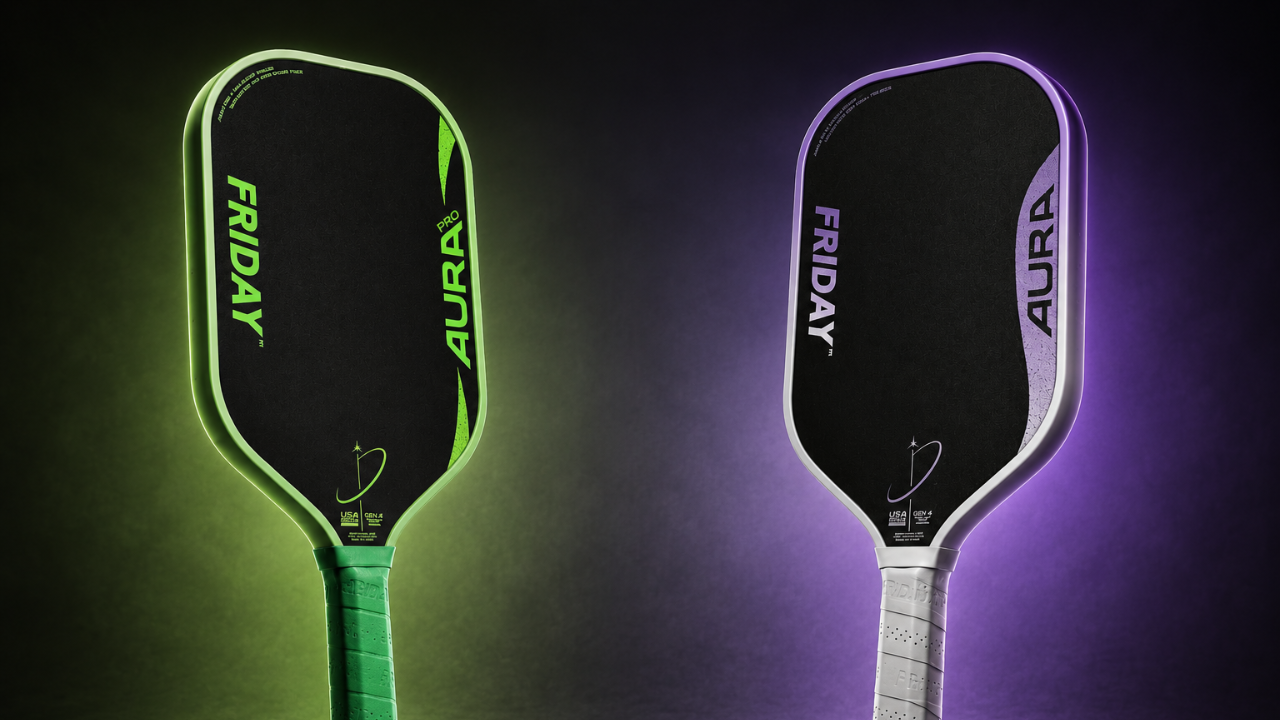
Alongside the Aura Pro lineup, Friday also launched a separate non-Pro Aura series, which I tested as well. That line has a softer, denser feel with lower offensive output and fits into the all-court category.
That variety is a good thing, but between the two, I much preferred the Aura Pro series. The standard Aura paddles felt a bit springier and less predictable to me, especially compared to the more linear and controlled response of the Pro models. They’re not bad paddles, but the Pro series felt more refined overall.
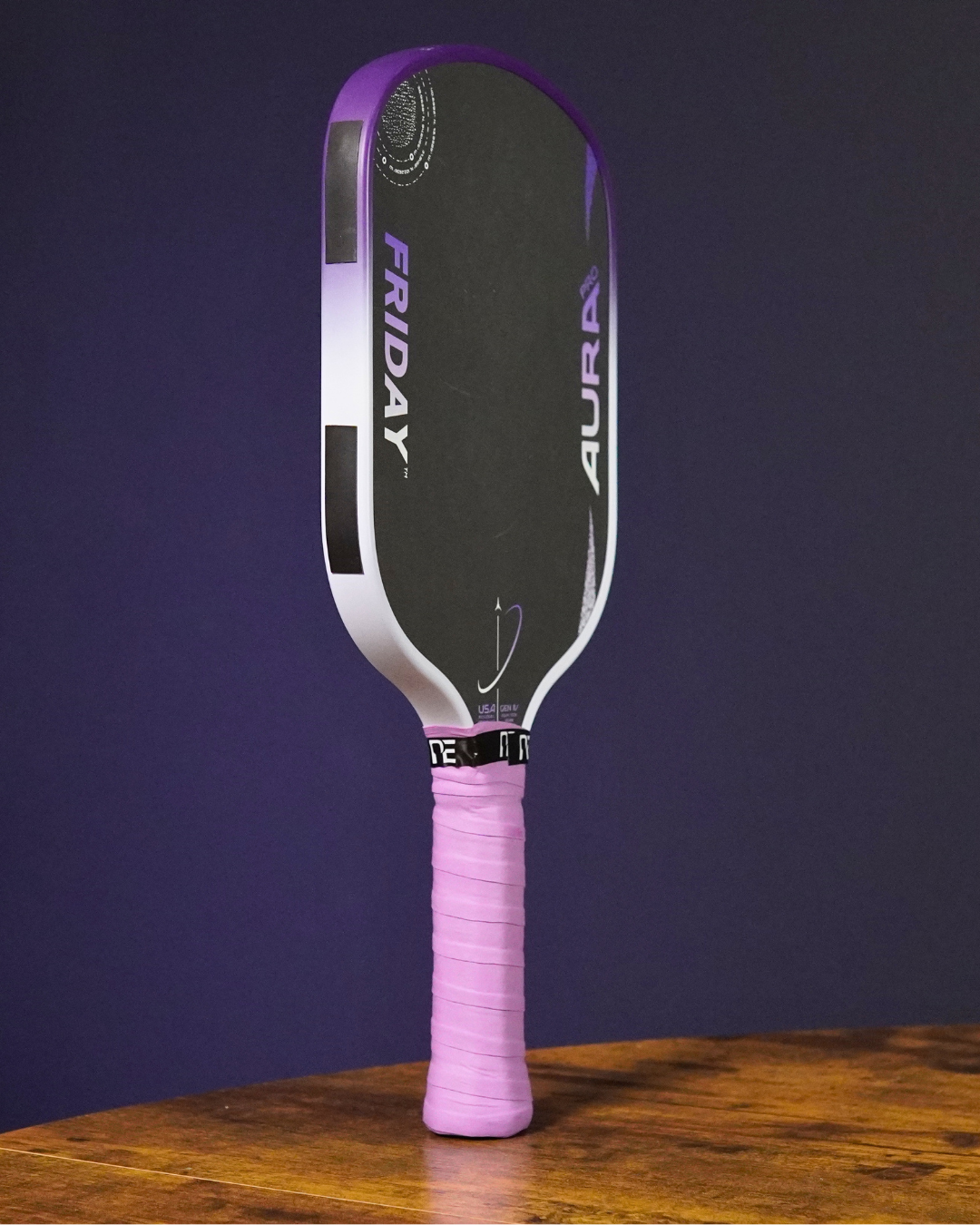
Goal:
Add plow-through and create a forgiving, stable feel across the entire face.
What you’ll need:
Placement:
Why this placement:
Keeping the weight on the sides boosts stability, while spreading it across all four corners makes the face feel more forgiving instead of concentrating weight in one area. Placing a small amount of weight higher on the paddle also adds needed swing weight without increasing static weight much.
The Result:
A small boost in weight that helps the paddle carry through the ball better while still feeling highly maneuverable, with a forgiving response across the entire face.
| Metric | Stock | Setup | Change |
|---|---|---|---|
|
Overall Weight
|
7.85 oz
|
8.1 oz
|
↑ 0.25 oz
|
|
Swing Weight
|
108
|
111
|
↑ 3
|
|
Twist Weight
|
6.86
|
7.24
|
↑ 0.38
|
|
Balance Point
|
235 mm
|
236 mm
|
↑ 1 mm
|
Goal:
It’s slightly heavy for a hybrid out of the box and needs more stability, so the goal is to improve the sweet spot without making it feel sluggish.
What you’ll need:
Placement:
Why this placement:
The throat area keeps the weight we’re adding below the balance point so the swing weight doesn’t go up much but it’s still adding some weight to the sides which increases the stability and sweet spot of the paddle.
The Result:
A boost in stability and size of the sweet spot while keeping the paddle manuverable enough to stay dangerous in hand battles.
| Metric | Stock | Setup | Change |
|---|---|---|---|
|
Overall Weight
|
8.0 oz
|
8.33 oz
|
↑ 0.33 oz
|
|
Swing Weight
|
116
|
117
|
↑ 1
|
|
Twist Weight
|
6.43
|
6.82
|
↑ 0.39
|
|
Balance Point
|
240 mm
|
237 mm
|
↓ 3 mm
|
Reviewer Profile
Braydon Unsicker is the founder of Pickleball Effect and has been reviewing pickleball gear since 2020. He’s known for independent, data-backed paddle reviews and hands-on testing that help players cut through marketing claims and make smarter equipment decisions.

Affiliate disclosure: I was sent this paddle to test, but this review wasn’t paid for or approved by the brand. Everything here reflects my own testing and opinions. If you click the links on the page or use my discount codes, I may earn a small commission at no extra cost to you that supports my testing and reviews.