One of the most satisfying things in pickleball is watching a ball dive at your opponent’s feet because of the spin you put on it.
But what pickleball paddles actually produce the most spin?
Most articles will answer that question with opinions. This one answers them with data.
After measuring hundreds of paddles with my paddle RPM spin test, I’ve identified the paddles that generate the most spin and the ones most likely to keep generating it months after you buy them.
In this article, I’ll cover:
Affiliate disclosure: I was sent these paddles to test, but this article wasn’t paid for or approved by the brands. Everything here reflects my own testing and opinions. If you click the links on the page or use my discount codes, I may earn a small commission at no extra cost to you that supports my testing and reviews.
Four of the top five paddles in my database with the most spin belong to the RPM Q2 series. With the RPM Q2 Elongated 14mm paddle objectively having the highest spin of all the paddles I’ve tested.
| Rank | Brand | Paddle | Spin (RPM) |
|---|---|---|---|
| 1 | RPM | Q2 Elongated 14 | 2176 |
| 2 | RPM | Q2 Elongated 16 | 2163 |
| 3 | RPM | Q2 Widebody 14 | 2161 |
| 4 | 11SIX24 | Power 2 Vapor | 2139 |
| 5 | RPM | Q2 Widebody 16 | 2136 |
Every RPM paddle I’ve tested has posted high RPM numbers, but this series gave us even more. The extra grab is noticeable right away on drives and serves. It uses a raw carbon-style surface with a proprietary formulation that offers excellent bite while also delivering durability that’s on par with Selkirk’s InfiniGrit and is better than typical raw carbon textures though its not among the elite durability wise.
The best two paddles from this series are the Elongated 16mm and Widebody 16mm options. Here’s a quick rundown on how they play.
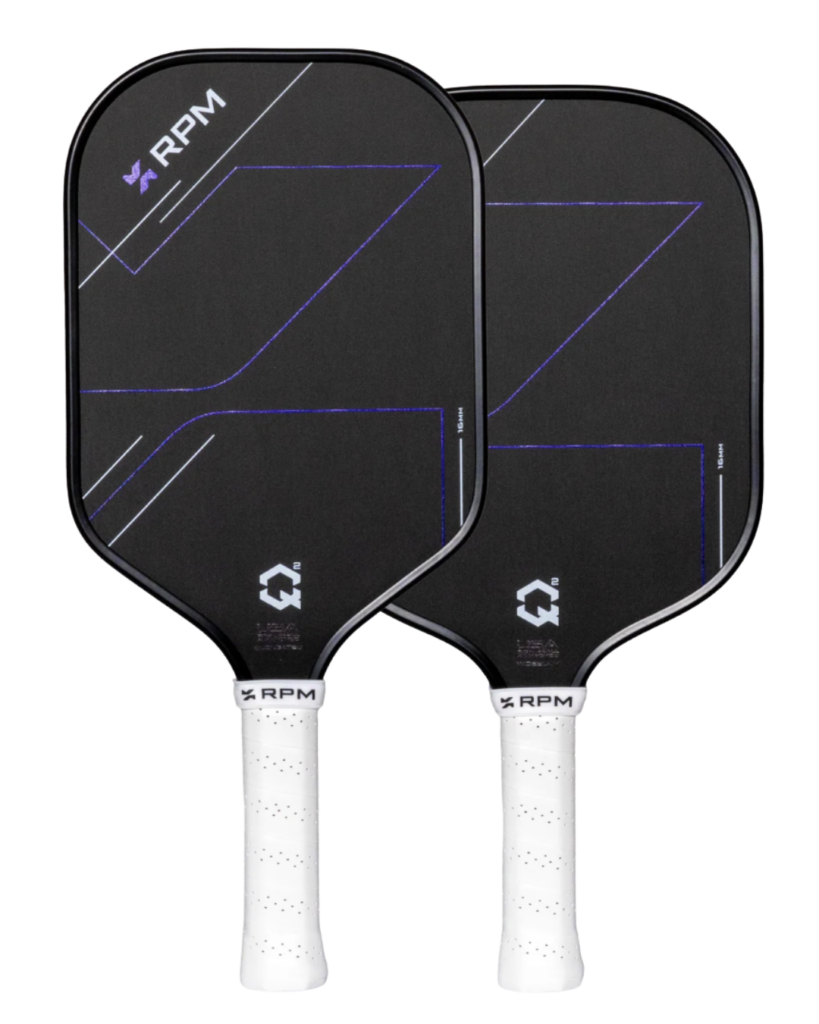
Price: $249.99 (Save 15% with promo code PBEFFECT — final price $212.50)
This award belongs to the Six Zero Coral Pro series. Its aggressive UPA-A approved surface uses embedded diamond particles that produce excellent spin and resists wear for improved durability.
The Coral Pro produced 2,085 RPM in my testing, the highest spin score of any all-court or control paddle with a durable grit texture in my database, earning it the award for Best Paddle for Spin and Control.
While it didn’t top the overall RPM leaderboard, its 2,085 RPM score wasn’t far behind the category leader at 2,119 RPM. The difference is that the Coral Pro’s durable grit texture will maintain that performance over time, while the raw carbon paddles above it will lose spin performance in as little as a month.
| Paddle | Ra Starting Value | Ra Retention | Rz Starting Value | Rz Retention |
|---|---|---|---|---|
| Six Zero Coral Pro | 7.7 | 95% | 39 | 94% |
| Raw Carbon Avg | 7.1 | 81% | 35.5 | 77% |
Ra measures overall grit, while Rz measures the tallest peaks of the texture. The Coral Pro does an excellent job retaining those peaks over time, which is one of the biggest factors in maintaining spin as a paddle is used.
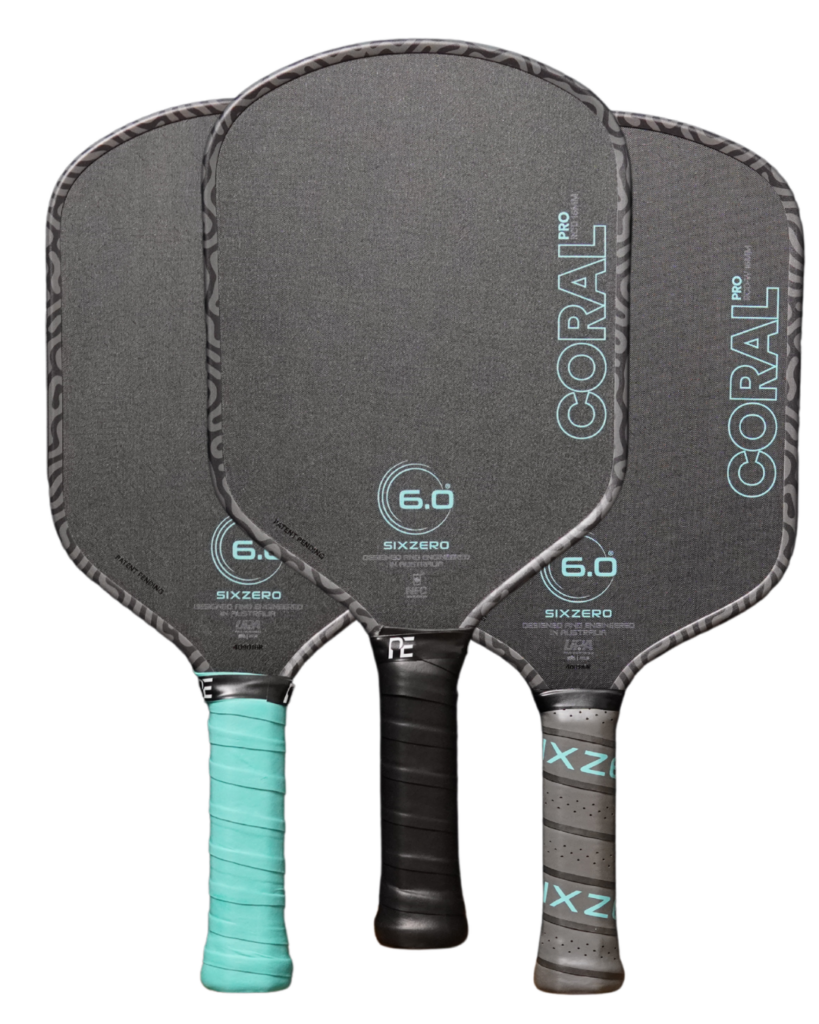
Price: $220 (Save 10% with promo code PBEFFECT — final price $200)
There are several strong contenders for this title, but the data points to the 11SIX24 Power 2 Ultre. It ranks inside the top 6 for spin production in my paddle database with 2,130 RPM and features the grittiest and most durable paddle surface I’ve tested to date.
The Power 2 series is available in multiple shapes, but the Ultre stands out as the best overall option. Its shape sits between a hybrid and elongated paddle, giving it broad appeal and a well-rounded blend of reach, forgiveness, and maneuverability.
| Paddle | Ra Starting Value | Ra Retention | Rz Starting Value | Rz Retention |
|---|---|---|---|---|
| 11SIX24 Power 2 Ultre | 8.13 | 98% | 42.3 | 93% |
| Raw Carbon Avg | 7.1 | 81% | 35.5 | 77% |
Ra measures overall grit, while Rz measures the tallest peaks of the texture. The Ultre maintains both values very well which is what’s contributing to the long term spin production.
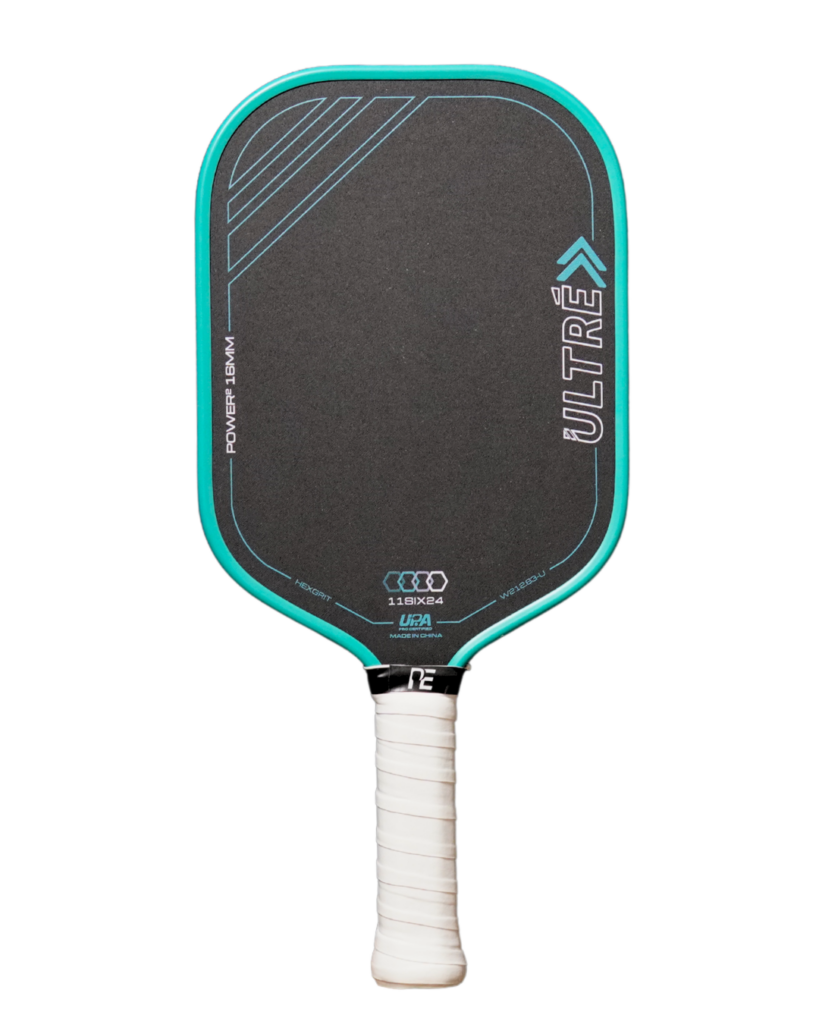
Price: $209.99 (Save $10 with promo code PBEFFECT — final price $199.99)
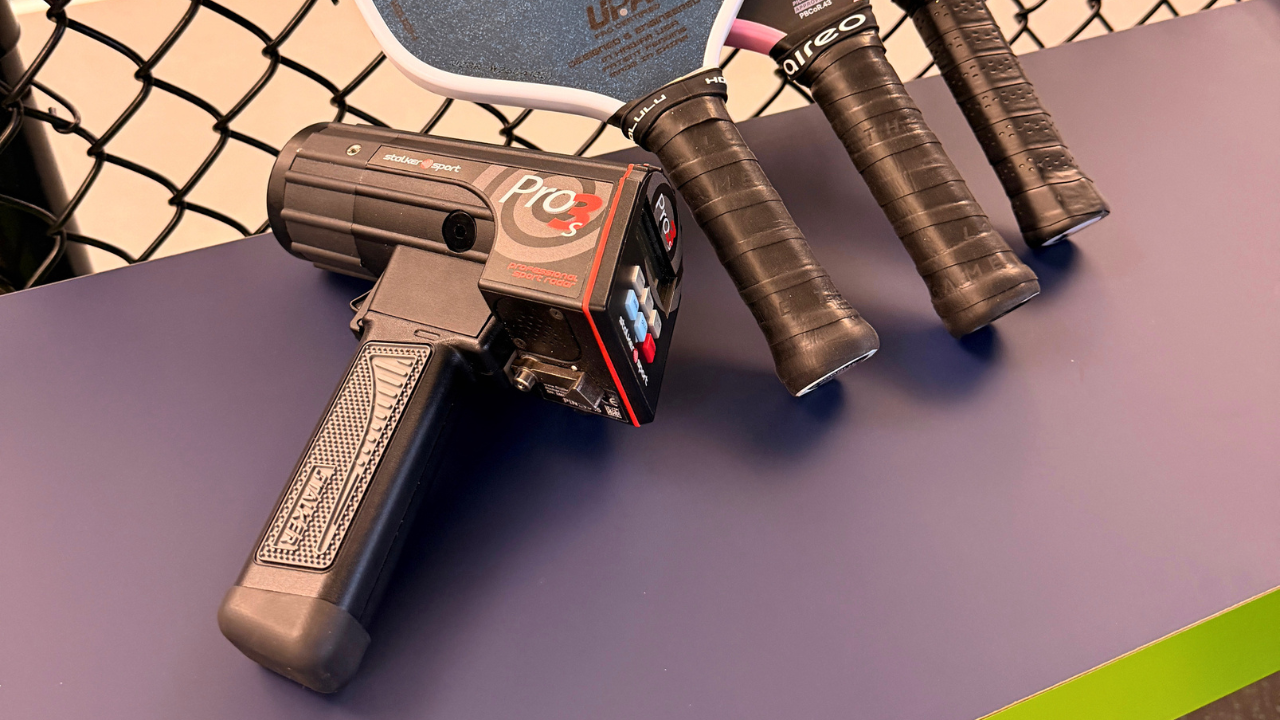
I test spin using a Stalker Pro 3S radar gun, which measures both ball speed and RPM. For each paddle, I hit 10 serves with maximum spin and use the average RPM as the paddle’s spin score.
To keep the test as consistent as possible, I use the same ball type, indoor conditions, and testing process for every paddle. While there will always be some variability because a human is hitting the shots, controlling these factors creates a reliable benchmark for comparing paddles against one another.
No test can perfectly capture every spin shot you’ll hit on the court, but using the same methodology across hundreds of paddles has allowed me to build a large spin database and identify which paddles consistently generate the highest RPM numbers.

I use a home-built abrasion machine that I designed specifically to create a controlled and consistent grit durability test. The machine uses a sand paper disk and applied weight that are intended to approximate the wear created by repeated pickleball impacts. While it can’t perfectly replicate on-court play, it provides a consistent way to compare different paddle surfaces under the same conditions.
Before and after testing, I measure the paddle surface with a Starrett SR160 surface roughness tester, which records both Ra (overall roughness) and Rz (the height of the texture’s peaks).
By measuring how much these values change over the course of the test, I can compare how well different paddle surfaces maintain their spin-producing texture.
It’s important to understand that RPM numbers are only useful when compared within the same testing system. Different testers use different equipment, swing speeds, shot types, and methodologies, so you should not compare Pickleball Effect RPM numbers to RPM numbers from other sources.
Within my database, the average paddle tests at roughly 2,000 RPM. Once a paddle gets above 2,050 RPM, it’s performing better than most paddles I’ve tested. Crossing 2,100 RPM puts a paddle in elite territory, with only a small percentage of paddles reaching that level.
The highest-spinning paddles I’ve recorded are currently in the 2,150-2,175 RPM range.
The most important thing is not the absolute number itself, but where a paddle ranks relative to other paddles tested under the same conditions. That’s what allows for meaningful apples-to-apples comparisons.
Traditional raw carbon fiber paddles create their texture through a peel-ply manufacturing process that leaves a rough epoxy surface. This can generate excellent spin when new, but the epoxy texture (which is essentially hardened glue) tends to wear down quickly from repeated ball and paddle contact.
Durable grit paddles use harder materials than epoxy, such as ceramic hybrids or silicon carbide, to create the surface texture. These materials are more resistant to wear, allowing them to maintain their spin-producing texture and performance for much longer than traditional raw carbon fiber surfaces.
Most paddles lose spin because their surface texture wears down through normal play. The ball material is actually harder than most paddle surface textures, so over thousands of impacts, the ball gradually chips away at the grit and smooths the surface.
As that texture wears down, the paddle generates less friction with the ball and spin performance begins to decline. Some surfaces wear down quickly, while durable grit technologies are designed to maintain their texture much longer.
Traditional raw carbon fiber paddles create their texture through a peel-ply manufacturing process that leaves a rough epoxy surface. This can generate excellent spin when new, but the epoxy texture tends to wear down relatively quickly from repeated ball and paddle contact.
Durable grit paddles use harder materials, such as ceramic hybrids or silicon carbide, to create the surface texture. These materials are more resistant to wear, allowing them to maintain their spin-producing texture and performance for much longer than traditional raw carbon fiber surfaces.
For many players, yes.
Traditional raw carbon fiber surfaces can generate excellent spin, but they often lose texture over time. Durable grit surfaces are designed to maintain their texture much longer, which means more consistent spin performance throughout the life of the paddle.
If you play frequently or care about maximizing spin, a durable grit paddle can be a worthwhile investment. If you only play occasionally, the difference may be less noticeable.
Reviewer Profile
Braydon Unsicker is the founder of Pickleball Effect and has been reviewing pickleball gear since 2020. He’s known for independent, data-backed paddle reviews and hands-on testing that help players cut through marketing claims and make smarter equipment decisions.

Click button to activate sitewide discount.
Affiliate disclosure: I was sent this paddle to test, but this review wasn’t paid for or approved by the brand. Everything here reflects my own testing and opinions. If you click the links on the page or use my discount codes, I may earn a small commission at no extra cost to you that supports my testing and reviews.