
In 2023, the Double Black Diamond from Six Zero reshaped the paddle landscape. Ever since, Six Zero fans have been waiting for something that could match today’s more offensive play style while keeping the Double Black Diamond’s DNA of consistency and forgiveness. That paddle is the Coral, the true successor to the Double Black Diamond.
For this review I’ll cover the paddle tech, specs, on court performance and how it compares to the market. Let’s dive in.
The Coral series sits in an all court leaning power space with offense similar to the Honolulu J2NF but with a little extra pop at the net. Power and pop fall in the high 60 to low 70 percentile range, which gives most players enough punch without making the paddle too difficult to control. If you are coming from a DBD, it feels like a clear and manageable step up in offense.
Control is strong for the power level, and the feel is smoother and less hollow than comparable floating foam paddles. The Shock Shield helps keep feedback clean, and the ball comes off the face predictably. I found my soft game quickly, and players with decent touch will adjust easily. Beginners who tend to hit long may prefer something with less pop, but most players will find the Coral very approachable.
Buy from Six Zero >>
(save with code PBEFFECT)
By from Pickleball Central >>
(click link for discount + 30 day paddle trial)
Looking for the right paddle to fit your game? Take our paddle fitting quiz for three recommendations that will match your style of play.
Affiliate disclosure: I was sent this paddle to test, but this review wasn’t paid for or approved by the brand. Everything here reflects my own testing and opinions. If you use the links or my code PBEFFECT, I may earn a small commission at no extra cost to you that supports future reviews.
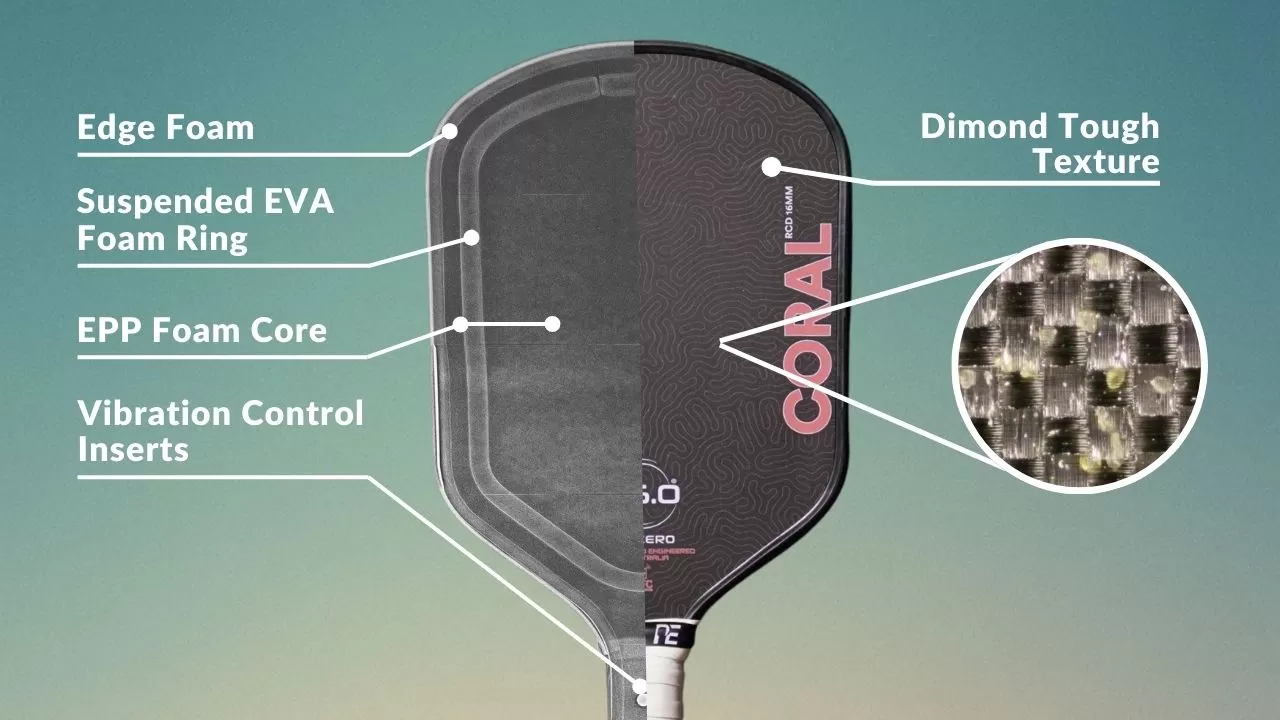
Six Zero blends the current floating-foam trend with a few twists that make the Coral distinct from other brands. These are the core technology elements:
This paddle is different because the tech is theirs. No copycats, no shortcuts. New tech doesn’t always work, but this one delivers.
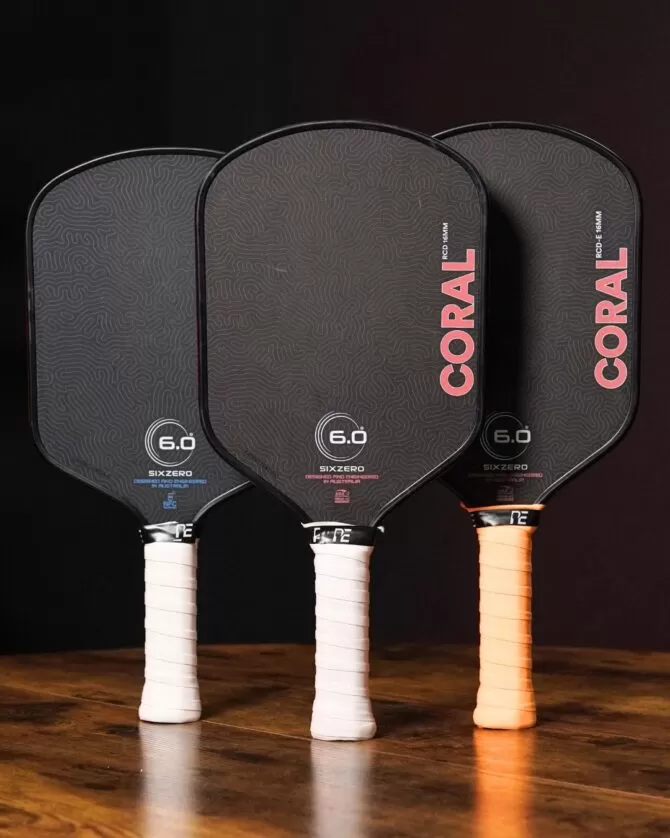
The series is available in three shapes though it’s launching with their hybrid shape while the widebody and elongated will be available shortly after.
The specs make a good first impression. The hybrid and widebody in particular have the kind of lightweight swing weights and solid twist weights that most players find easy to play.
Measurements are from my review units and may vary between paddles.
Save with code PBEFFECT on Six Zero’s site, or click the button to apply the Pickleball Central discount.
They come maneuverable with enough built-in stability to feel trustworthy, and there’s still room to add a couple grams if you want to expand the sweet spot further.
The elongated is the only shape that feels a bit out of step. It’s barely longer than the hybrid and isn’t a true 16.5-inch build, yet it’s narrowed to 7.5 inches wide, which reduces stability. You don’t get the usual reach or plow-through advantage that elongated paddles normally offer, so unless you’re a die-hard elongated fan who doesn’t mind the trimmed length, the hybrid makes more sense. The elongated shape does have an extra long handle at 5.75” though if that’s important to you.
The Coral series lands in an all court leaning power space. It does not bring the same raw offense as paddles like the Selkirk Boomstik or Bread and Butter Loco line, and it sits closer to the Honolulu J2NF in overall power, just with a little extra pop at the net.
Both power and pop fall in the high 60 to low 70 percentile range in my database. This range is ideal for most players because it provides enough offense to stay dangerous without creeping into the territory where the paddle starts causing unforced errors. If you are coming from a DBD, the Coral will feel like a noticeable step up in offense while still being easy to control.
It’s not going to overpower people from the baseline for you, but it responds well when you bring your own pace, and you don’t have to overswing to generate offense.
The control is very good for the level of offense you get, and it feels different from other floating foam paddles that often have a crisp, hollow sensation that some players like and others struggle with. The Coral still has that crisp response, but it is smoother and not nearly as hollow. The Shock Shield helps soften the feel without muting feedback, so you get a lively, connected response with more pleasant feedback overall.
The ball listens well off the face and goes where you expect. I adjusted quickly and found myself playing instinctively, and by my second session I was not thinking about the paddle at all, which is always a good sign. If you already have a functional soft game, the Coral will not get in your way. The paddle does have enough offense that total beginners or players who frequently hit long may want something with less pop, but if you have a working soft game this one is very easy to learn.
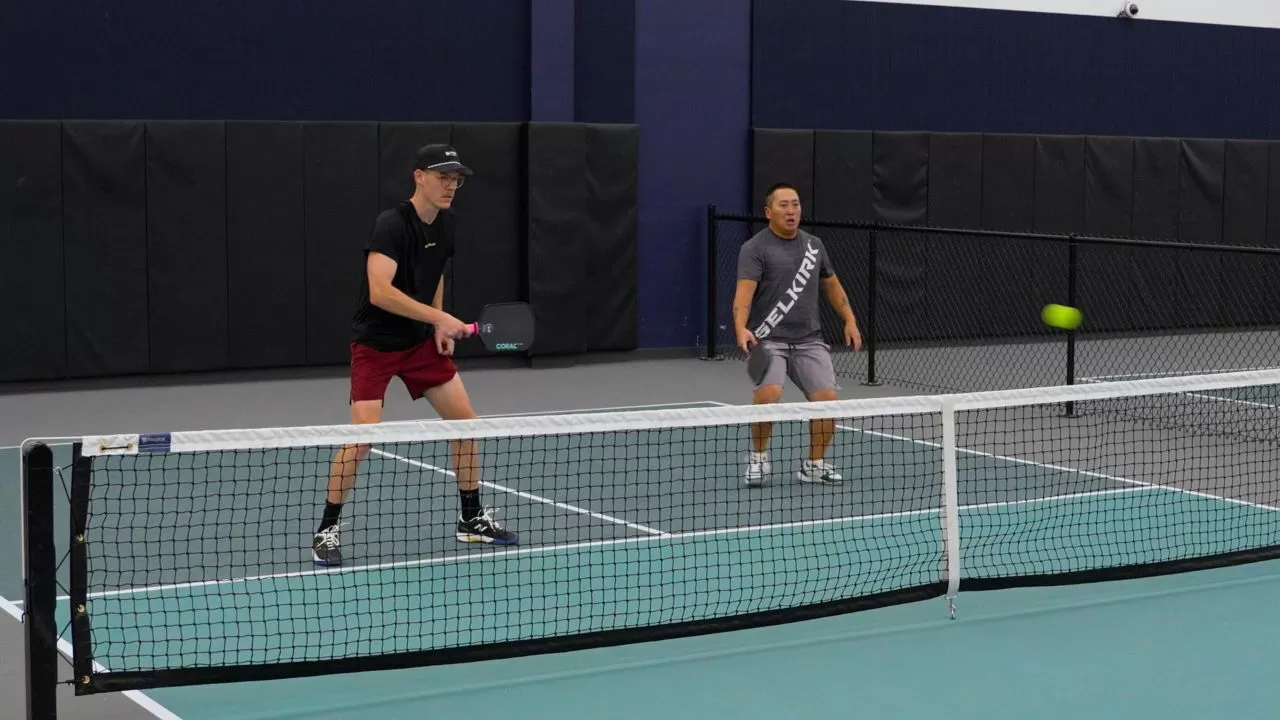
My spin tests came in the high 1900s to low 2000 RPM range. This is good but expectational result. The face is a little smoother and does not grab quite as aggressively as some paddles when brand new, but the real benefit is the durability of the Diamond Tough grit, which should hold up longer than typical textures.
The Coral Series has a reliable sweet spot that feels solid and connected across most of the face. The hybrid and widebody shapes stand out the most, offering the best combination of stability and forgiveness. Off-center hits hold their line well, and the face delivers a consistent launch that makes resets, blocks, and roll volleys predictable. With a little weight tuning, the sweet spot becomes even more pronounced without making the paddle feel heavy or sluggish.
Maneuverability is in a good place with the Corals. The lighter swing weights make it easy to get the paddle into position, and it stays quick in hand during fast exchanges. It feels especially comfortable at the kitchen line, where the crisp response and manageable head weight help you handle flicks, counters, and hand battles without feeling late. Even with a few grams of added weight for stability, the Corals remain easy to move.
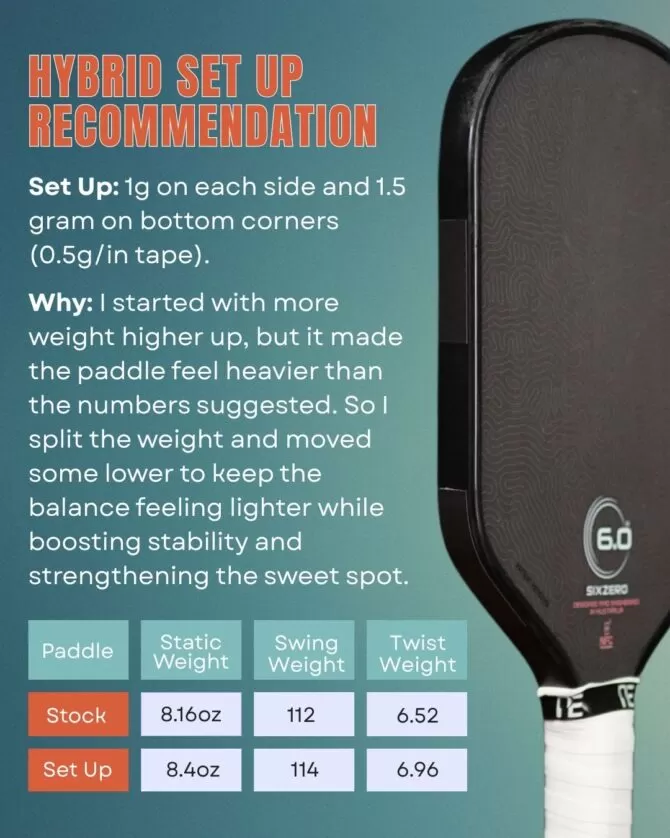
I liked the Hybrid shape the most so I spent some time finding a good paddle set up for it which is this one shown in the image.
If I were to tinker with the widebody I’d likely add 2-3 grams on each side at the same spot I put the higher up piece on the hybrid. For the Elongated I’d do a similar set up as the one for the hybrid but with a little more weight on that side piece since it needs a bigger stability boost.
You can virtually try your own set ups in my Tuning Lab app.
The closest comparison to the Coral is the Honolulu J2NF. Both offer similar overall offense, but the Coral brings a little more pop and a slightly crisper feel. The Honolulu NF line is more forgiving, although the Coral is not far behind. Choose the NF paddles if you want a softer feel or the highest level of forgiveness. Choose the Coral if you prefer a crisper response and want longer lasting texture durability.
Compared to the Pickleball Apes Charm series, the Coral is a bit poppier and more maneuverable. The Charm series plays plusher and more dense and has a higher activated power ceiling. Both sit in the all court foam category but offer different flavors. Go with the Charm if you want a softer feel and activated power, and choose the Coral if you want a crisp, refined feel or more linear power response.
The Coral gives DBD players exactly what they have been waiting for. You get more offense, a slightly crisper impact feel, and nearly the same balance and maneuverability. If you enjoyed the DBD, the Coral will feel familiar in the best ways. The DBD is still a good option for entry level players or players who consistently hit long and need more help taming pop.
These paddles sit a tier higher in pure offense. The Coral trades a bit of power for noticeably better controllability. It still feels crisp, but it is less hollow and has a slightly more composed, foam supported feel.
Save on the paddles mentioned above and others with my discount codes found here >>
Save with code PBEFFECT on Six Zero’s site, or click the button to apply the Pickleball Central discount.
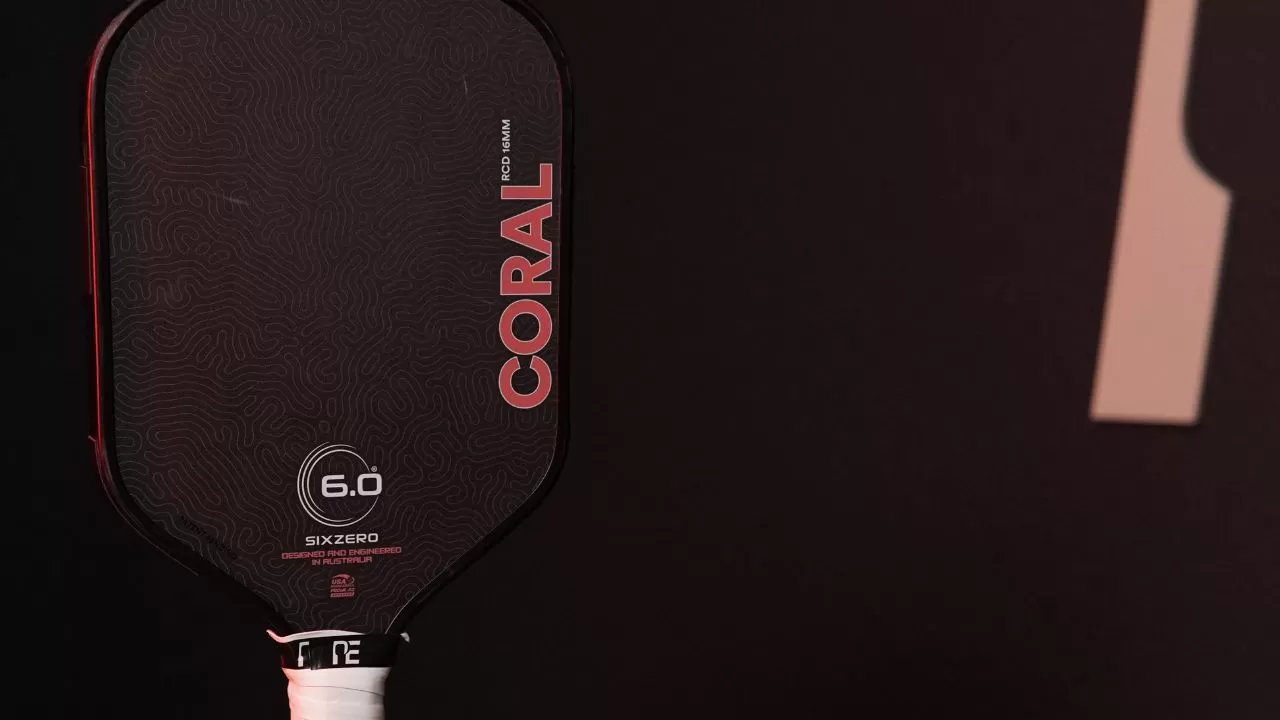
Six Zero did a good job with the Coral Series. Outside of the elongated shape missing the mark a bit, I’m a fan of this series and think it’s one of the best all-court paddles you can get right now. The tech is smart, the feel is refined, and the overall performance profile is going to be easy for a large group of players to connect with.
Players who liked the Double Black Diamond and are looking for a bump offensively will find the Coral to be an immediate upgrade. And I’m glad the Coral and Black Opal feel distinctly different. It makes Six Zero’s lineup clearer and easier to navigate than in the past.
Reviewer Profile
Braydon Unsicker is the founder of Pickleball Effect and has been reviewing pickleball paddles since 2020. He provides independent, data-backed paddle reviews and personally tests and measures each paddle to help players cut through marketing claims and make informed gear decisions.

Looking for the right paddle to fit your game? Take our paddle fitting quiz for three recommendations that will match your style of play.


