
The power paddle category has been dominated by premium-priced options for years. If you wanted top-end firepower, you were usually looking at $200 to $300 paddles. But Vatic Pro and Ronbus have flipped that equation with $100 models that perform shockingly well for the price. Between the Vatic Pro V-Sol Pro, V-Sol Power, and Ronbus Quanta lines that were both released towards the end of 2025, there’s now legitimate power paddle options in the budget power space, and not just as “good for the money” paddles, but as real performers that rival premium-tier options.
Across these lines, you get modern builds with foam cores, multiple shape options, and multiple weight distributions that can be tuned to fit different player types. It’s a surprisingly complete offering considering the price tag.
Use code PBEFFECT to save on your paddle purchase.
Affiliate disclosure: I was sent these paddles to test, but this review wasn’t paid for or approved by the brands. Everything here reflects my own testing and opinions. If you use the links or my code PBEFFECT, I may earn a small commission at no extra cost to you that supports future reviews.
Looking for the right paddle to fit your game? Take our paddle fitting quiz for three recommendations that will match your style of play.
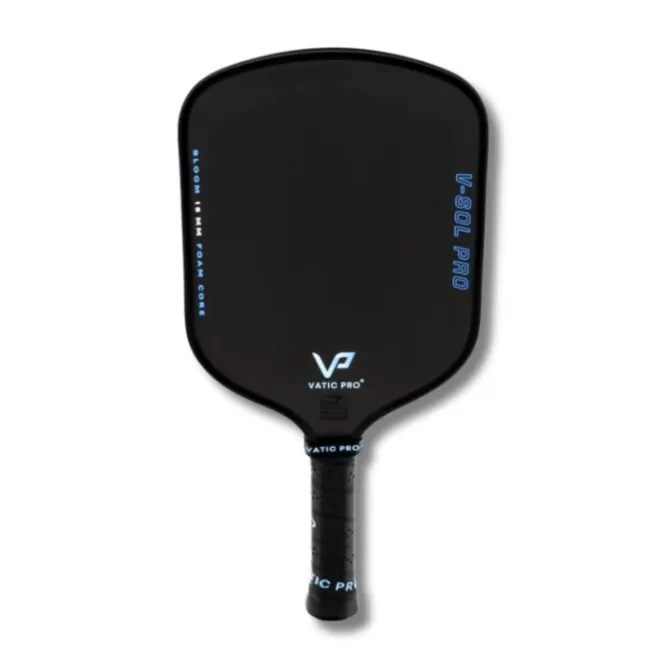
Vatic Pro has two $99 power lines:
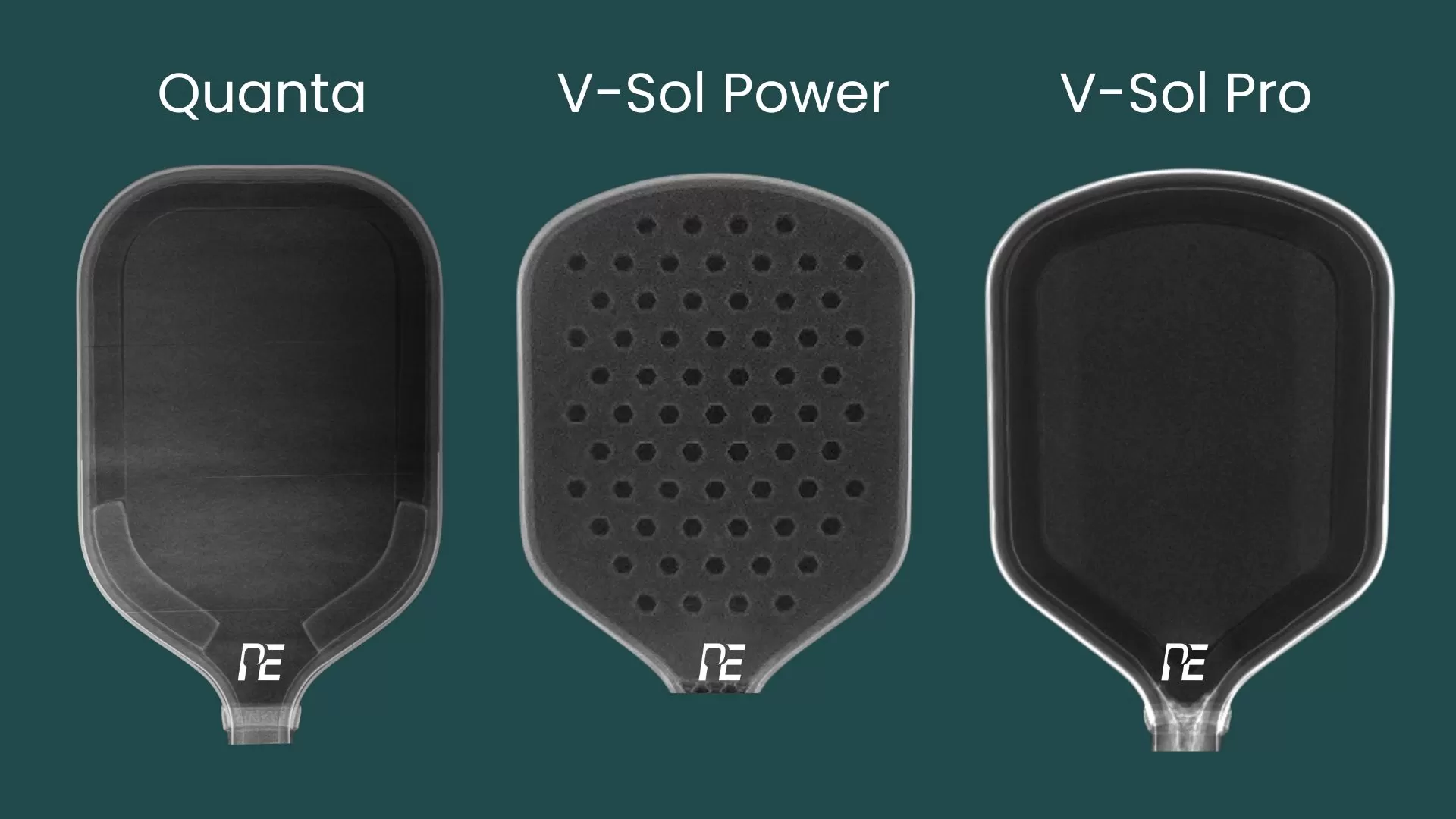
Both lines come in three shapes:
Each of the hybrid and elongated versions is available in both short- and long-handle formats. You rarely get this many shape and handle length options and to get them at this price point is fantastic.
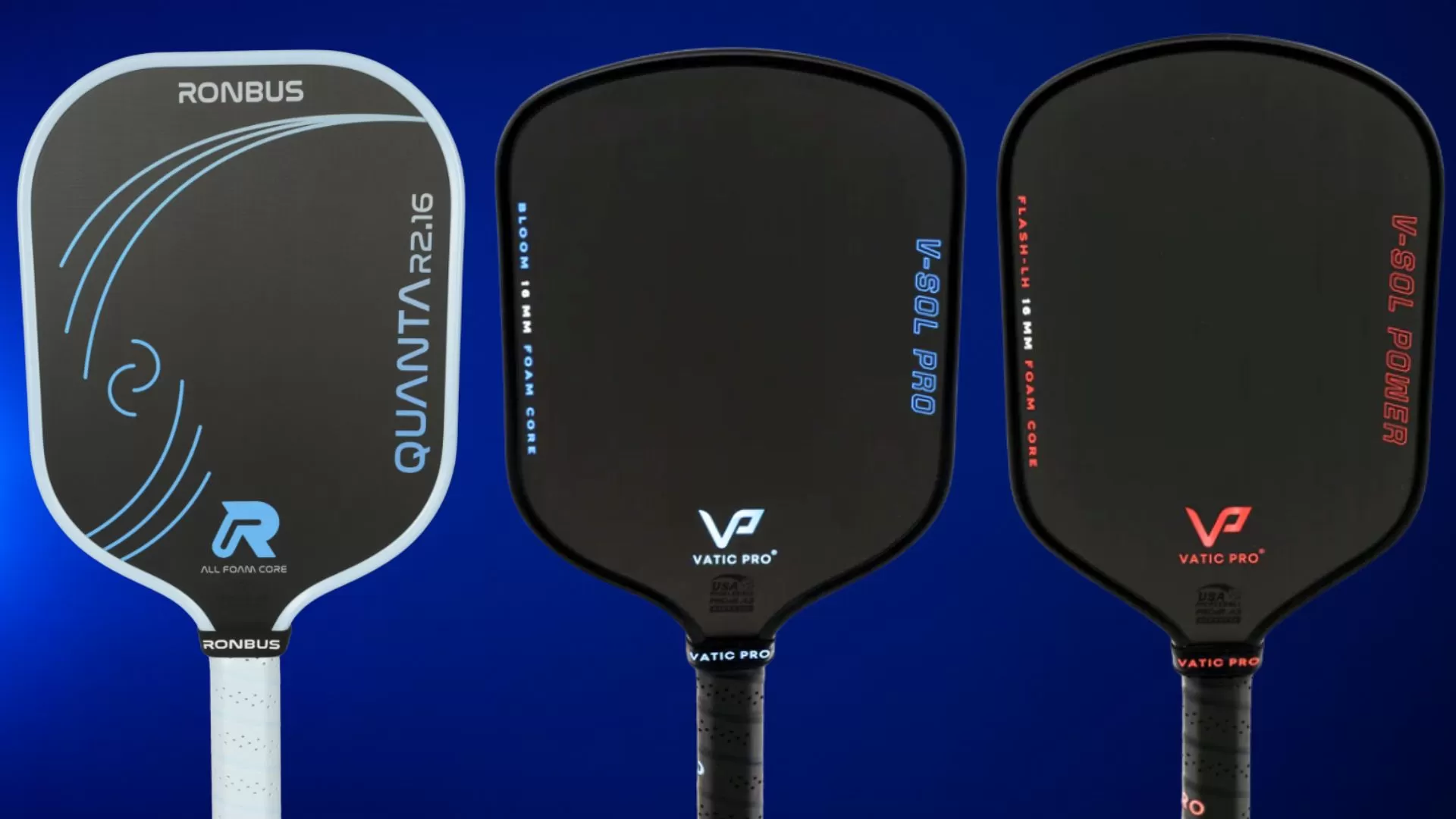
Here’s pictures of each shape with a mix of paddles from both paddle lines. I didn’t want to add images of every single option because it’s a lot, so I kept it to a minimum here.
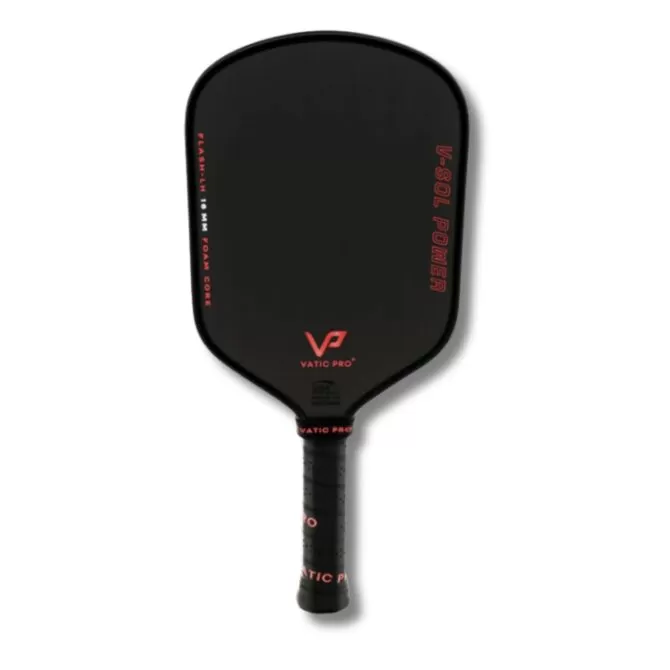
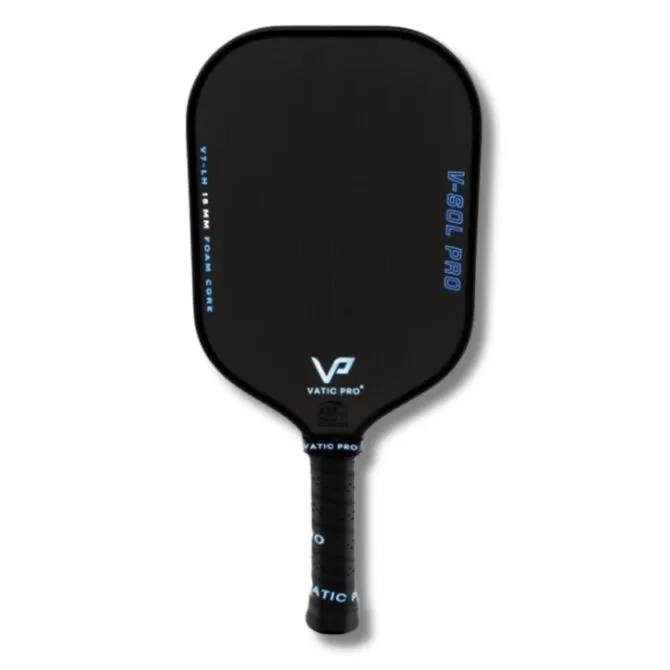
The swingweight numbers are lower in general across the board and the paddles play very maneuverable for each of their respective shapes but aren’t so low that they absolutely need customization to get some weight behind the ball. Then have nice twistweight numbers as well in correlation with the lighter swingweights that makes them easy to customize if you want to create oversized sweet spots.
The table is formatted as Pro/Power so you can see the numbers for each series side by side.
| Metric | Bloom (Pro/Power) | Flash SH (Pro/Power) | V7 SH (Pro/Power) |
|---|---|---|---|
Shape | Widebody | Hybrid | Elongated |
Static Weight (oz) | 8/8 | 8/8 | 8/8 |
Swingweight | 107/109 | 108/110 | 114/117 |
Twistweight | 6.87/7.02 | 6.43/6.29 | 6.49/6.67 |
Handle Length (in) | 5.6/5.6 | 5.3 & 5.6 options | 5.3 & 5.6 options |
Grip Size (in) | 4.13 | 4.13 | 4.13 |
Ronbus Quantas are power paddles that also go for $99 after code.
Ronbus is offering five shapes in the Quanta line. The variety is nice, but it can feel overwhelming if you are not familiar with their naming system. Here’s a quick breakdown of each shape. Up front, I think the R1, R2, and R4 stand out as the best of the group thanks to their stronger twistweight-to-swingweight ratios.
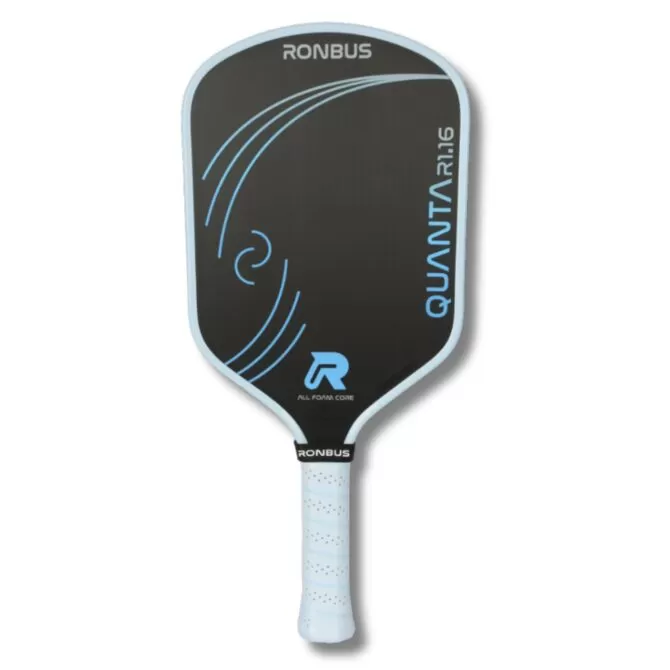
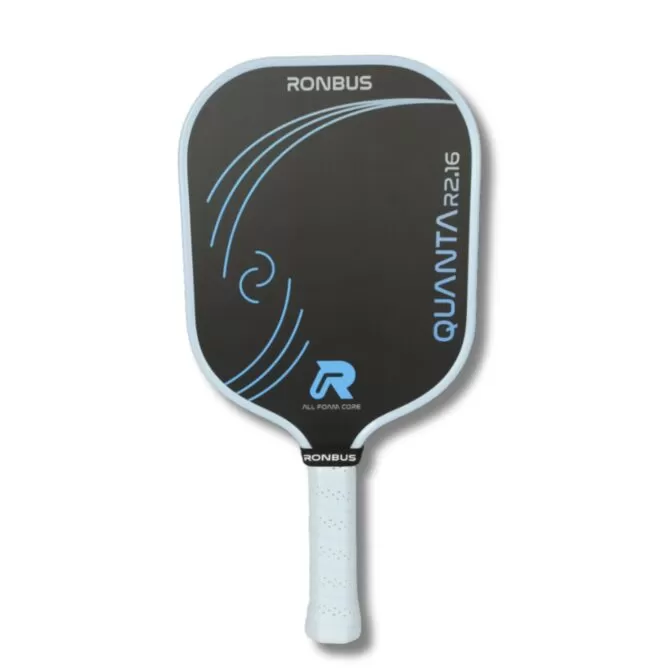
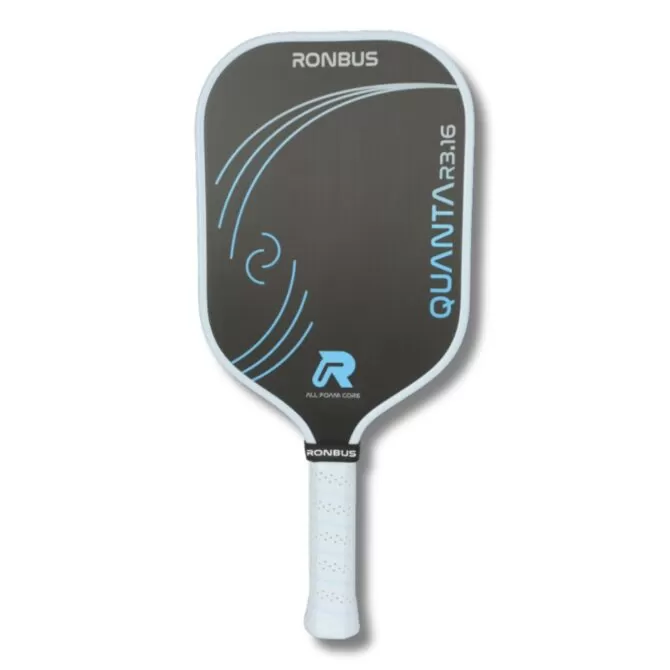
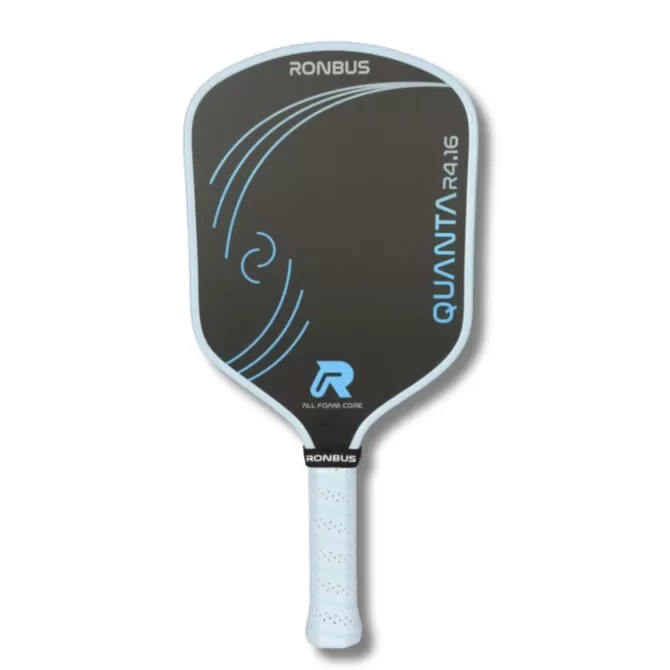
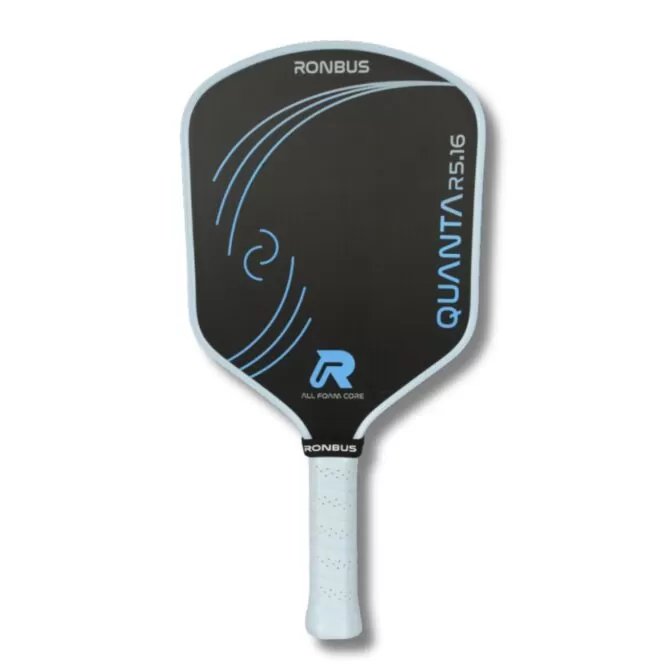
The numbers are very low across the board on these. Which makes these paddles light, quick, and easy to swing but also less stable and lacking plow-through until weight is added. For players who like to customize by applying tungsten tape, that low starting point is a huge advantage because you can dial in the stability and balance to your liking. But if you don’t like to customize and tinker with paddle setups then I’d recommend the V-Sol options.
| Metric | R1 | R2 | R3 | R4 | R5 |
|---|---|---|---|---|---|
Shape | Elongated, curve top | Widebody, square top | Elongated, square top | Hybrid, curve top | Widebody, curve top |
Static Weight (oz) | 7.65 | 7.68 | 7.69 | 7.7 | 7.7 |
Swingweight | 107 | 103 | 113 | 105 | 103 |
Twistweight | 5.6 | 6.25 | 5.64 | 5.9 | 6.15 |
Handle Length (in) | 5.5 | 5.5 | 5.5 | 5.5 | 5.5 |
Grip Size (in) | 4.13 | 4.13 | 4.13 | 4.13 | 4.13 |
V-Sol Pro and Quanta: Lively Power and Pop
Both paddles have a stiff, lively, and hollow feel that’s reminiscent of Gen 3-style builds like the JOOLA Perseus Pro 4. Power comes on instantly and you don’t have to swing hard to hit a deep drive or a crisp volley. They’re especially dangerous at the net where the high pop makes counters and volleys explosive. Depending on how you weigh them, they both fall into the mid to high power category among other bigger power paddles like the JOOLA Pro IV and Selkirk Boomstik paddles.
The V-Sol Pro and Quanta share a lot of overlap in their performance profiles. Both deliver quick acceleration, easy access to power, and similar offensive capability. The main difference is in their feel and balance. The Quanta feels a little more hollow at impact and quicker through the air, while the V-Sol Pro has a slightly fuller and more solid impact feel. Both produce enough pop that they can be tough to control if your soft game isn’t sharp, but they reward clean technique and confident swings.
These profiles come ready to go right out of the box with no break-in period necessary, and because of their foam core construction, you can expect better long-term durability and less break-in over time. That’s one of the big advantages foam paddles have over Gen 3 honeycomb builds. The consistency and resilience of the foam give these paddles reliable performance even after heavy use.
V-Sol Power: Plush and Controlled Power
The V-Sol Power is also a power paddle, but it feels softer and more muted at impact. It doesn’t rebound as quickly as the Pro or Quanta, which gives you a split second more dwell time on dinks and resets. Its top-end power ceiling is higher than the other models, though, but you need some swing speed to reach it. Making it more rewarding for players who can already generate their own offense. It’s more of an on-demand type of power rather than instant power.
It has a high power and medium pop profile compared to the high power and high pop profiles of the others. That gives it a more balanced approach to power, bridging the gap between control and explosiveness.
All three lines are lighter than most power paddles, which gives them great hand speed.
Out of the box, the V-Sol Pro has the best sweet spot and overall forgiveness. Add 3g of tungsten tape to each side and it locks into an oversized sweet spot similar to $250+ paddles. The V-Sol Power is close behind, with just a slightly smaller sweet spot.
The Quantas, on the other hand, need weight. Because they are so light out of the box they don’t have great sweet spots. Once you add some weight to them, though, you can create great sweet spots, even surpassing the V-Sol Pro and still keep the swingweight in check.
For players who like to tune their paddles, the Quanta becomes a highly customizable weapon while the V-Sol options are more player friendly out of the box.
Use code PBEFFECT for a discount on your paddle purchase.
Use code PBEFFECT for a discount on your paddle purchase.
If you’re unsure about paddle shape:
There’s no shape to avoid in these paddle lines. Sometimes certain shapes work better with specific tech, but in this case, all the shapes are solid. Just comes down to your preferences and needs.
The Ronbus Quanta series needs weight to play well. Here are my recommended setups for their three best shapes.
The Vatic Pro paddles don’t have to have weight added to play well but they do still benefit from it. I have a couple of recommended setups for them below. I’ll add more as I make them, sorry there are only a couple for now.
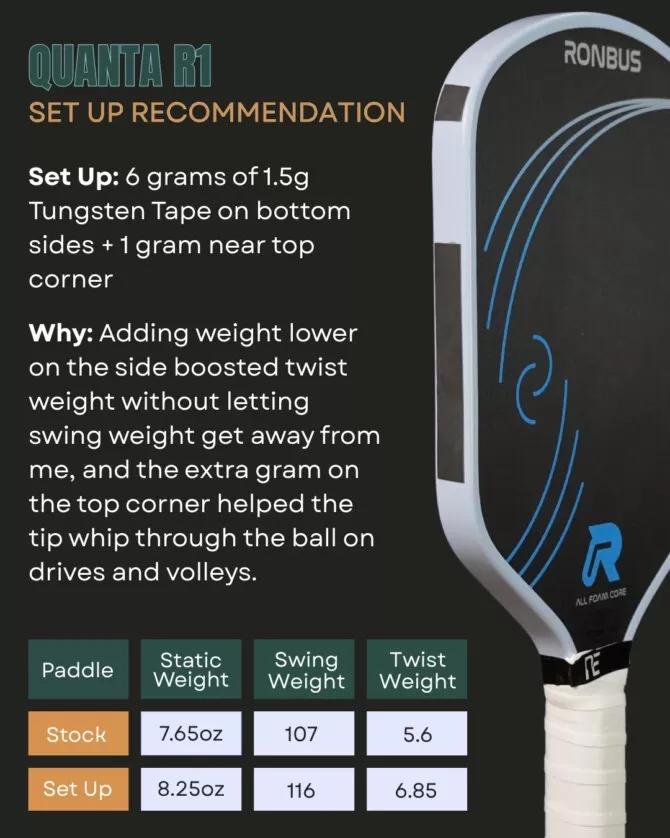
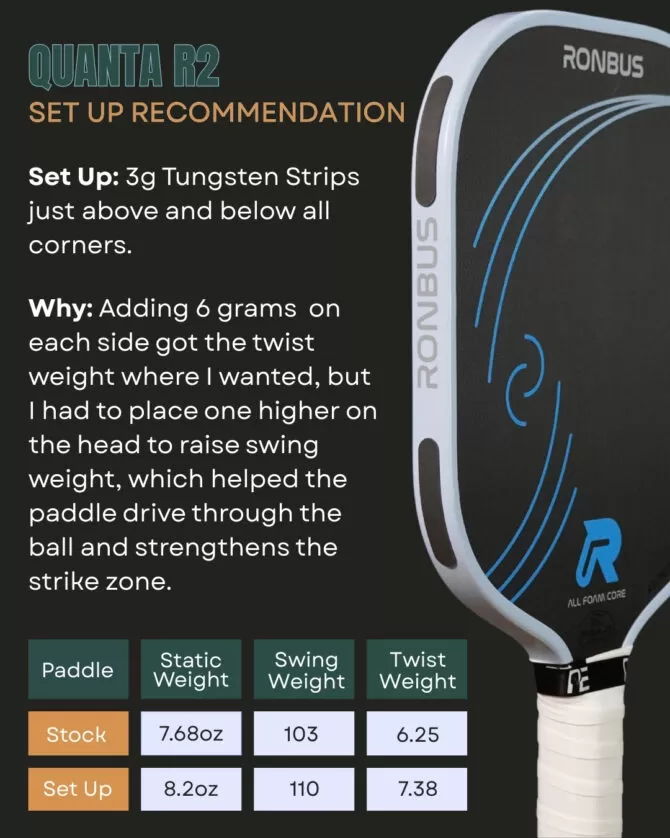
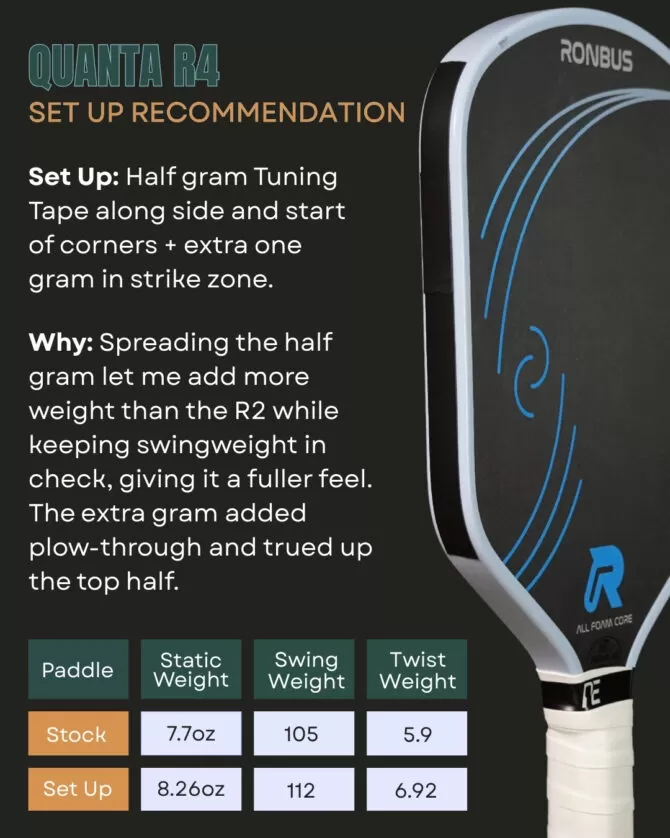
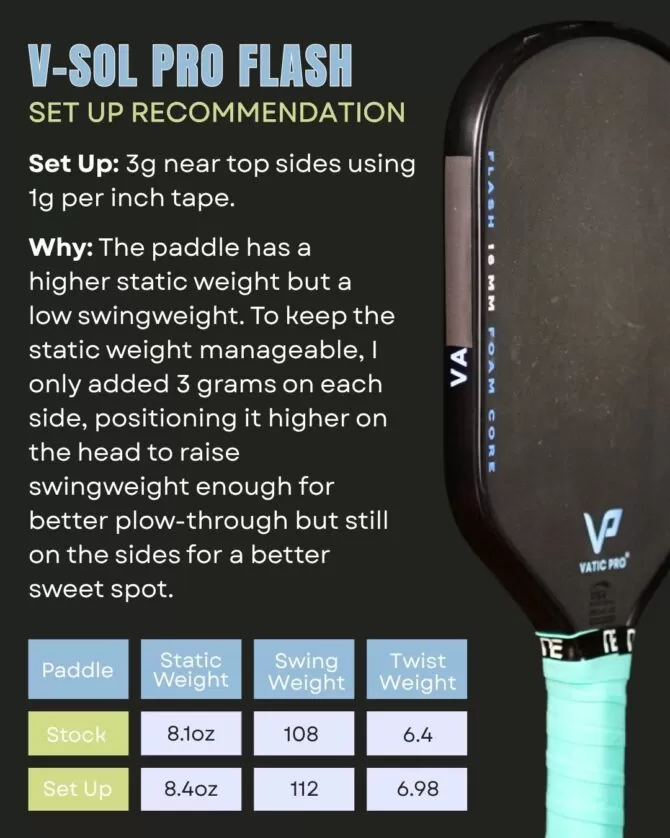
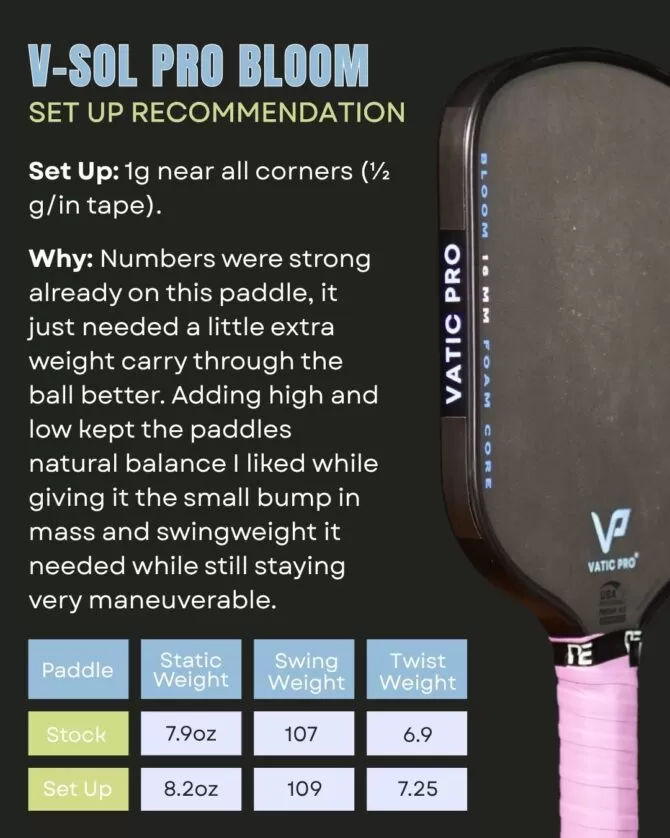
You can purchase the weighted tape I used for these set ups here:
These $100 paddles compete directly with paddles up to three times their price.
In short, these $100 paddles deliver the performance of top-tier power paddles at a fraction of the cost.
Are there any reasons to spend more?
For the V-Sol Pro & Quanta there may be some reasons to go with more expensive models if you’re looking for a specific attribute like maximum pop with the Boomstik, or a more refined gen 3 type feel with the Bread & Butter Locos.
For the V-Sol Power, it’s competitors in the GX2 Power do offer more pop while the J2NF gives you an even more controllable power paddle so if those fit the exact profile you’re looking for then yes, there may be a reason to go those directions.
But I think these fit the needs of the majority of players and you can save a lot of money going this route.
For the first time, the power category finally has affordable paddles worth recommending. Vatic Pro and Ronbus didn’t just undercut prices, they delivered true performance that stands up to premium models. Whether you want raw power (V-Sol Pro / Quanta) or controlled power (V-Sol Power), there’s a fit here for just about everyone.
If you pick one up, you can use code PBEFFECT to save and support my reviews and testing.
Use code PBEFFECT for a discount on your paddle purchase.
We’ve categorized paddles into three categories. Control, All-Court, and Power. Paddle categories are determined by Braydon after he hits or reviews the paddle.
A paddle’s weight represents the inherent mass of the paddle as measured on a scale. However, relying solely on this static weight measurement can be misleading when assessing the true perceived heaviness of the paddle. Even if two paddles both clock in at 8 oz, their actual heft in your hand can markedly differ due to variations in weight distribution within the paddle. This is why the static weight should be considered with the swingweight of the paddle. See the definition of swingweight below.
The weight value listed in the database corresponds to the paddle’s weight that I used to gather the swingweight and twistweight measurement. It’s possible that if your paddle has a different static weight than then the swingweight and twistweight may be slightly different.
There are three primary shapes a paddle can have which consists of the length and width of the paddle. These three shapes are:
Then there are two less common shapes you’ll see. These are:
When considering the advantages and trade-offs of paddle shapes, it’s important to understand the characteristics of each shape.
It’s interesting to note that advanced players often prefer elongated shapes. On the other hand, players at lower skill levels typically opt for the extra forgiveness offered by standard shaped paddles.
Ultimately, the choice of paddle shape depends on an individual’s playing style, preferences, and skill level. Whether your focus is on reach or forgiveness, understanding the unique benefits and trade-offs of each shape can assist you in selecting the paddle that best suits your game.
Swingweight is a measure of the paddle’s resistance to swinging about the end of the handle. The higher the swingweight number the heavier it will feel in your hands. A higher swingweight has more power but is harder to swing, lower swingweight is easier to swing but has less power. Sometimes a faster swing with a lower swingweight can make up for power lost in swingweight. The price paid for that is greater impact shock. Stock swingweights will vary between 100 – 140.
Twistweight is the resistance to rotating around the long axis through the middle of the paddle from butt to tip. The higher the twistweight the more resistance the paddle has to rotating on off center hits. This measurement is closely related to the amount of forgiveness or the size of the sweet spot of the paddle. A higher twistweight indicates a bigger sweet spot. Twistweight numbers range from 5 – 8.
Measuring the revolutions per minute (RPMs) off of a serve you get a number that shows the spin potential of a paddle. Using these RPM measurements I’ve created five buckets that a paddle will fall into indicating its overall spin potential. The five buckets are:
1900 or Higher = Very High
1700 – 1900 = High
1500 – 1700 = Medium
1300 – 1500 = Low
1300 or less = Very Low
You can tell a big difference in the amount of spin a paddle generates when you compare a Very High paddle to a low paddle. But the gains from Medium to High to Very High are marginal. We’ve found that having at least a medium rating is often enough if you’re looking for a good spin paddle. However, if you’re a big hitter then you will benefit more from a high spin paddle to help you keep the ball in play more often.
The power level of a paddle is shown in miles per hour (MPH) after taking ten measurements with a speed gun of hitting a serve as hard as I can. This measurement gives you an idea of how hard you can hit the ball when given the chance to take a full swing. So shots like serves, drives and overheads. The higher the MPH reading the more power you can generate with the paddle.
I also show the percentile ranking of the measurement to give you an idea of how it stacks up against the rest of the paddles in my database.
The pop level of a paddle is shown in miles per hour (MPH) after taking the average of ten speed gun measurements of hitting a punch volley as hard as I can. This measurement gives you an idea of how hard you can hit the ball on shorter swings and gives you an idea of how quickly a ball comes off the face when you apply less force on the ball. So shots volleys, dinks, counters, and resets are all affected by the pop measurement. The higher the pop measurement the stronger your counters will be but it takes more skill to keep the ball from floating or popping up on you when resetting a hard hit ball or when dinking.
I also show the percentile ranking of the measurement to give you an idea of how it stacks up against the rest of the paddles in my database.

Looking for the right paddle to fit your game? Take our paddle fitting quiz for three recommendations that will match your style of play.


