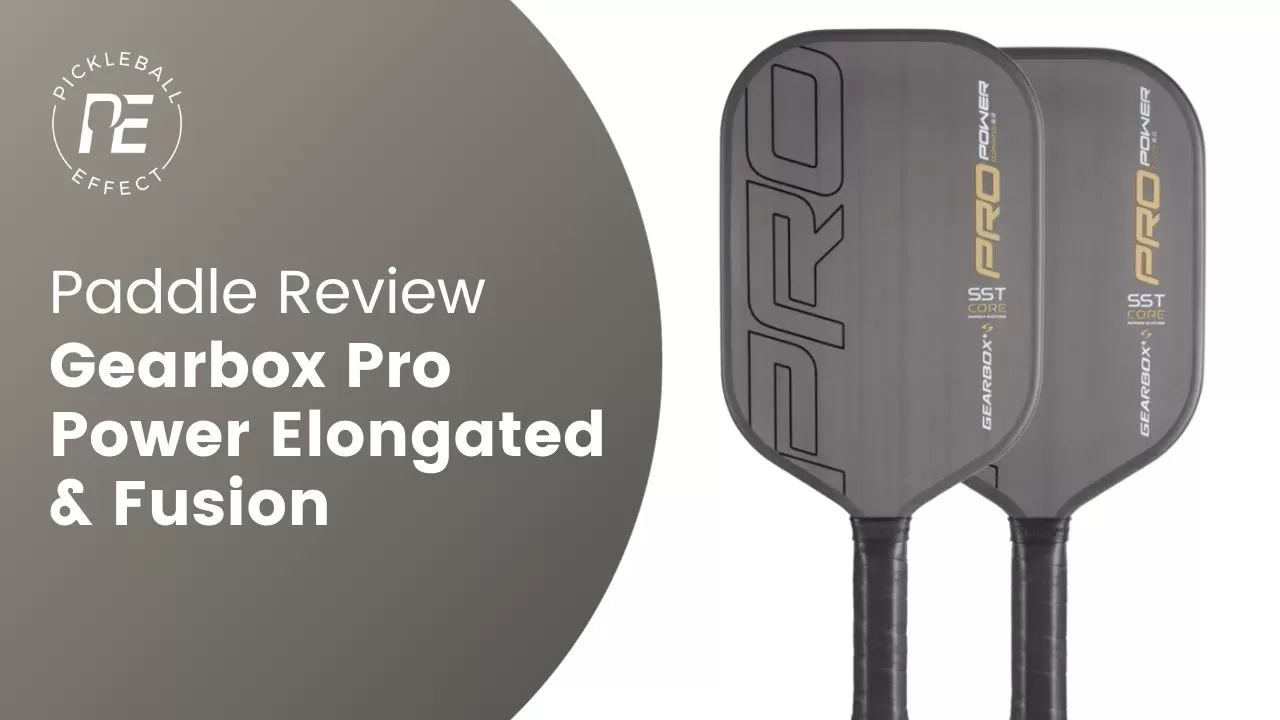
For this review I played with all four paddles in the Pro series which consists of the Pro Power Elongated, Pro Power Fusion, Pro Control Elongated, and the Pro Control Fusion. However, because there are so many paddles in the series I split up the review into two articles. A review for the Power models and a review for the control models. This review is for the Power models which I think are the most exciting and interesting paddles of the group.
Looking for the right paddle to fit your game? Take our paddle fitting quiz for three recommendations that will match your style of play.
Gearbox is not known for having the most forgiving paddles and a big question I had going into this review is if these will be better there. I think these paddles are more forgiving than past SST core paddles that Gearbox has made, though they are still a little below average compared to the rest of the market. This, combined with its big power requires a higher skilled player to take full advantage of the power without it causing too many errors. I see this paddle as a niche paddle that some people will really love but don’t think it’s a great paddle for the masses.
My spin tests for the paddles were averaging just under 2000 RPMs though I had a few results spike over 2100. These are very high spin paddles and they seem to add even more shape to the ball to the naked eye than other paddles. The reason I suspect the overall average RPM number was below 2000 is because the paddles have a tighter sweet spot so if you missed the sweet spot (which is more common since it’s smaller) then it produced less spin.
The last thing I’ll call out here is that all the paddles in this series are very quiet compared to your standard polypropylene core paddle. Gearbox said they added some technology that would do this and I can verify that it’s true. They have a muffled sound to them. It’s interesting.
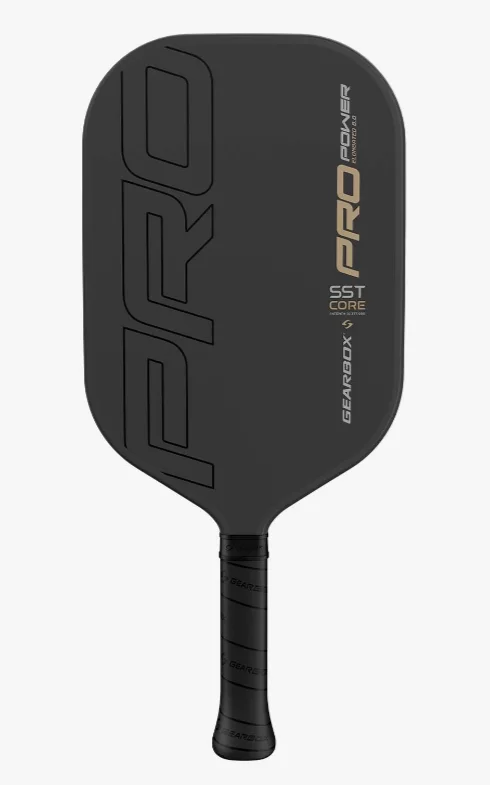
The Pro Power Elongated is the most powerful paddle in the series and is one of the most powerful paddles you’ll find. Naturally, it falls into the power category. The ball is lively off the face but it doesn’t jump off as quick as you think it should for how much power you get. So it has nice access to power without giving up your entire connection to the paddle. It has a unique feel to it, though. It’s a light, hollow feel sort of like a Selkirk Power Air except it’s not as harsh of a feel and isn’t as loud. I like how it feels at impact more than the Power Air but that was the closest example I could think of from a well-known paddle. Because the feel is a bit foreign and unique it’s one of those things where you either like it or you don’t.
Attacking is the heart and strength of this paddle. The power is there. The spin is there. And it’s decently maneuverable. It has a higher swingweight at 121 and it does feel a bit head heavy when you first pick it up but it cuts through the air well with its edgeless design so it didn’t feel as heavy as the swingweight suggested when you played with it though I wouldn’t describe it as a light paddle. It has a slightly lower swingweight than the Pro Control Elongated by two points, but the paddle does feel lighter and moves more easily in comparison. This is all to say that I don’t think I was losing rallies because the paddle was too heavy or cumbersome. It moves better than you expect based off the specs of the paddle.
On the positive side of the higher swingweight design, the paddle plowed through the ball better than past Gearbox paddles and felt stronger through impact than past generation Gearbox paddles.
It doesn’t take much access the power in the paddle. You have to adjust your swing and if you go for it too often then you’re going to hit a lot of balls long. You have to tame it and pick your times to access the power it offers. It’s not so much power than you can simply overpower your opponents with drives, but you can certainly put more pressure on them with it.
This is a power type paddle so controlling it is naturally going to be more difficult and with the power being so great with this one it was even harder in certain scenarios. Plus, it’s hollow feel and quieter sound was a bit foreign and something I’ve never quite hit before so getting a sense for it took some time.
Everything was popping up and going long at first. I had to take some pace off my swings and then slowly added more power as time went on. The paddle seemed to respond well when you would swing harder and wanted power but it wasn’t so poppy off the face that it was impossible to control. With time I was surprised that I was able to get to a decent place with my soft game though I never felt like it was an extension of my hand like some paddles do once you play with them for a while.
When I had time to set up for a drop shot or wasn’t too pressured then I was hitting my soft shots well and wasn’t making silly errors when dinking. But when I was getting attacked or was in a defensive position in the midcourt or at the baseline I had a hard time taking pace off the ball to reset the point and get back to neutral. In those moments when you don’t have a ton of time to react it’s nice when your paddle can do some of the work of taking pace off the ball but with the Pro Power you to have to take the pace off yourself with your own touch and it was more difficult.
Additionally, out of the box, the paddle has a below average sweet spot from side to side and you can feel some dead spots towards the tip which doesn’t help with consistency and defense. You could feel the paddle twist a little more in your hands, especially when you lightened your grip. It certainly wasn’t doing you any favors there, however, lead tape can help with this which I talk about in the next section.
If you are used to bigger power and have always played a power type paddle and have developed you’re own sense of touch then I’m sure you’d be able to manage this just fine. You always have to keep the paddle you’re coming from and your skill level in perspective.
Gearbox is known for having paddles with smaller sweet spots and they didn’t resolve that issue for me with these. The Pro Power paddles still has a little below average sweet spot both side to side and towards the tip of the paddle. The sweet spot is a small improvement from previous Gearbox SST core paddles but it’s still a demanding paddle that requires a higher skill level to take full advantage of its capabilities. I believe the improvement in sweet spot from previous SST core paddles can be primarily attributed to its higher swingweight and not to any technology they added.
However, I will say that adding lead tape in the spot I suggest in this video helps a lot in terms of improving its stability and it even makes the paddle feel a little denser and more familiar too. It takes at least 3-4g on each side to see the improvement you want and it keeps getting better with more weight but because we are starting with a higher swingweight it starts to add up quickly and you can feel the increase. With the paddle being edgeless it compensates some for having a higher swingweight so you can add a decent amount of weight before it gets crazy heavy though if you’re sensitive to heavy paddles then I don’t think this is a good paddle to go with because I think it needs lead tape to perform its best.
If you decide to get this paddle I would highly suggest getting some lead tape. It’s much harder to manage it without the added forgiveness of the lead tape.
Paddles in the power category are going to have smaller sweet spots and will be less forgiving in general. That’s usually the sacrifice you have to make to add power to the paddle. Of course there is some variability in the size of the sweet spot across power paddles but speaking generally they will be smaller in size compared to good control and all-court type paddles. So for this paddle to have a smaller sweet spot is on par with other paddles you’ll see in this category.
So is it a big deal that this paddle has a smaller sweet spot? Not really, it’s what you expect from a power type paddle and the return on power you get is going to be worth it for some players. What’s tricky with these is that the stock swingweights are higher than like a Prokennex Black Ace or a Selkirk Power Air and since I think they need lead tape for optimal performance adding more weight can make them too heavy for some players and slow down your hand speed some.
Past generation Gearbox paddles didn’t have the power this one has to justify the smaller sweet spot but that’s not the case here.
I think this is a good power paddle that will take your offense to new heights. I like its natural offensive ability and you can really rip the ball, especially with some weight added. It offers good spin, has decent maneuverability, and has a quiet sound that I think people will like.
If you like to play fast and lean into power to win points, then you’ll love this paddle. It will give you everything you ever wanted in that regard. The extra power and tighter sweet spot is harder to control, though, and makes the paddle less versatile. It won’t help your soft game. But if you have a well developed touch or are coming from another power type paddle then I bet you’d be able to control it just fine.
If you decide to pick one up, know that it will take some time to adjust to the unique feel and extra power so it’ll
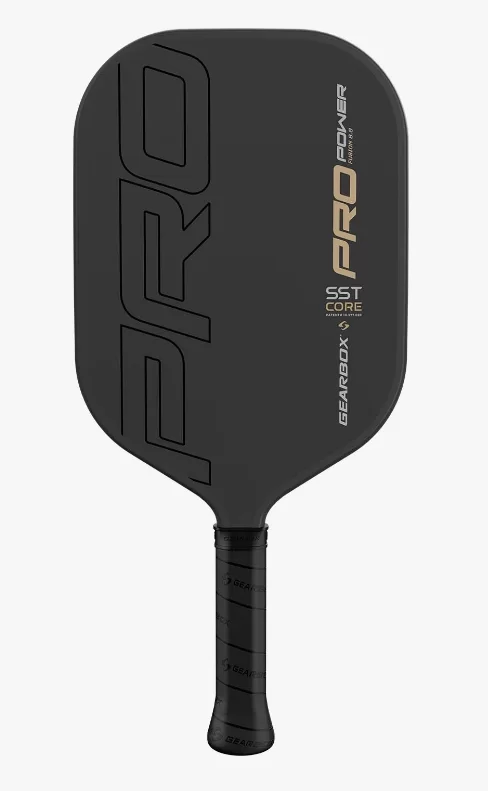
The Pro Power Fusion is constructed the same way as the Pro elongated version except that it is shorter. Not wider, just shorter. It’s 16” long while the elongated version is 16.5” long. It’s a new paddle shape that no one else has done. The paddle looks and feels small when you first hold it, almost like a kids paddle. But you get used to it how it looks after a couple of games.
Gearbox is pushing the price boundaries with these paddles, as several new and emerging brands are offering paddles that are $100 or more cheaper and are very good. This has led many players, including me, to question whether these paddles are truly worth their hefty price tag of $275. This is a tough and subjective question but here are the pros and cons that I considered that factor into the price when I was thinking through this.
Ultimately, I’ll leave it up to you, but for me these are unique and differentiated enough to justify the price if they have the specs and playability you’re looking for.

Looking for the right paddle to fit your game? Take our paddle fitting quiz for three recommendations that will match your style of play.


