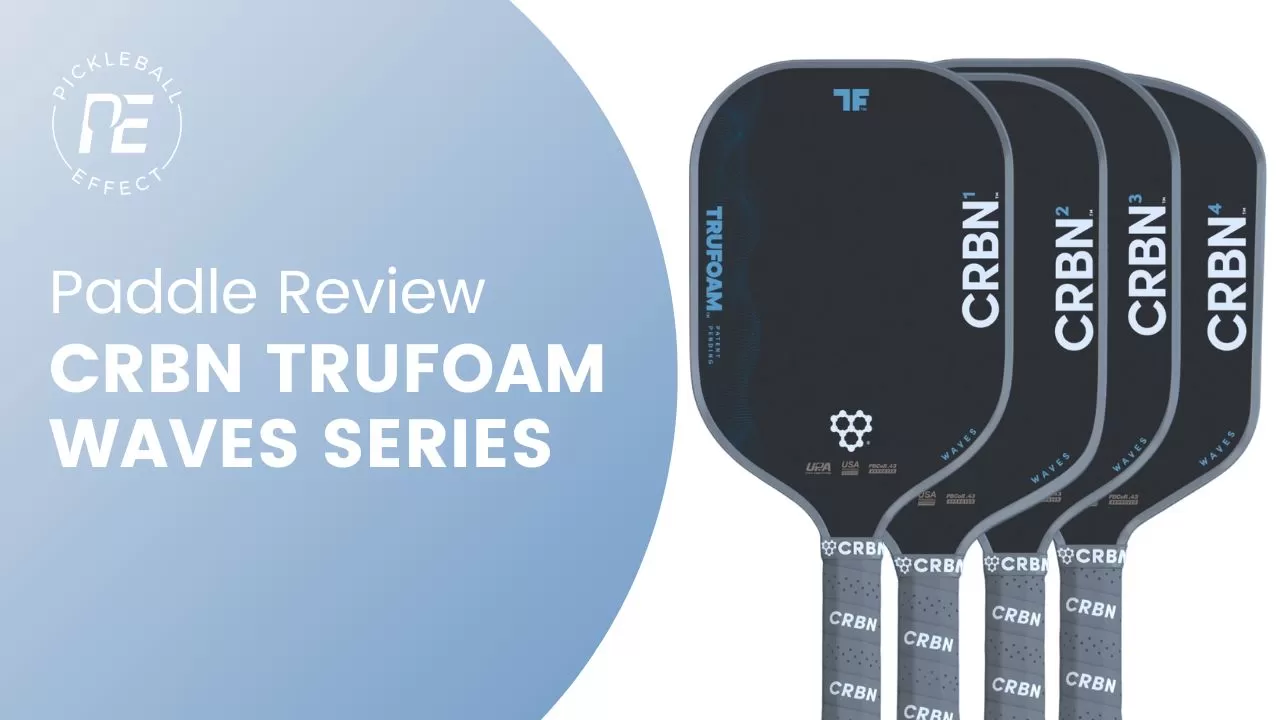
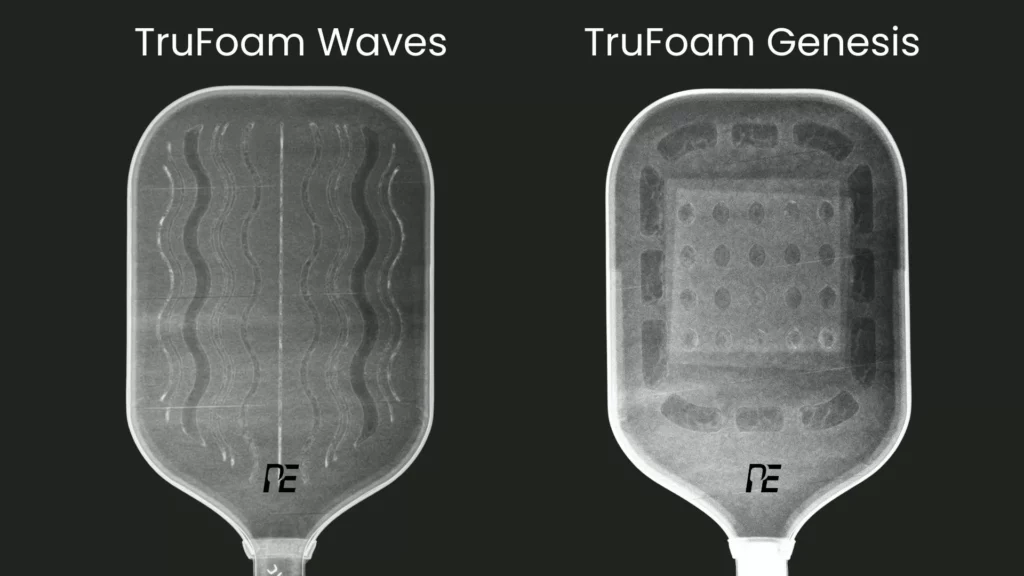
CRBN’s TruFoam Waves paddles are the follow-up to the TruFoam Genesis line that launched earlier this year. They weren’t built to replace the Genesis, but to stand alongside it as another option. Marketed as the more powerful evolution, CRBN made the Waves sound like a big step forward in offensive output, but after testing them, I found the story to be more nuanced. They play more like a refined all-court Genesis than a new category altogether. In fact, I think the two lines feel more alike than different, though there are reasons I keep reaching for the Waves over the Genesis. What I don’t see is the Waves competing in the power category.
Back in January, the Genesis was the only foam paddle worth talking about. It injected life and responsiveness into a category that had mostly felt flat. For six months it owned the foam space uncontested. Fast forward to today, and the market looks completely different. Foam paddles are being released left and right, ranging from $100 to $300+ with many high performing options. At $280, the Waves now enter a much more competitive landscape.
In this review, I’ll compare the Waves to the Genesis line, look at how they stack up against the broader foam market, and wrap up with my recommendations on which players they’re best suited for and who might want to pass.
Looking for the right paddle to fit your game? Take our paddle fitting quiz for three recommendations that will match your style of play.
The series is available in all four of CRBN’s shapes.
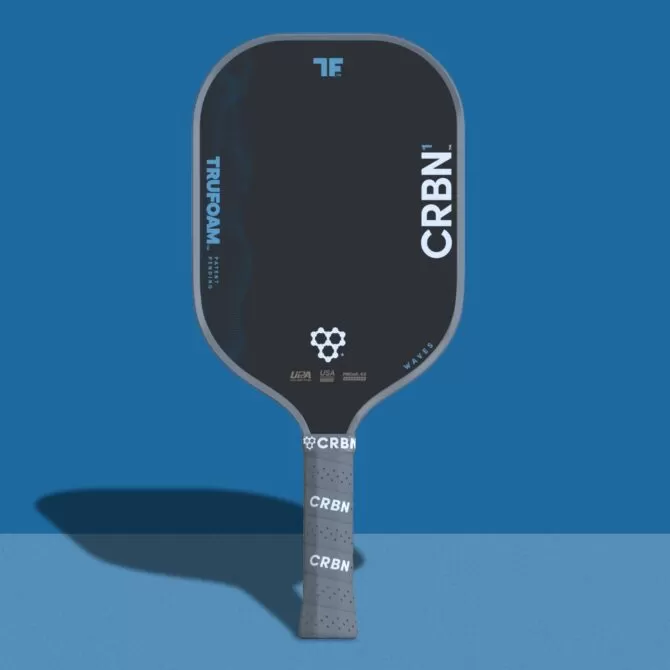
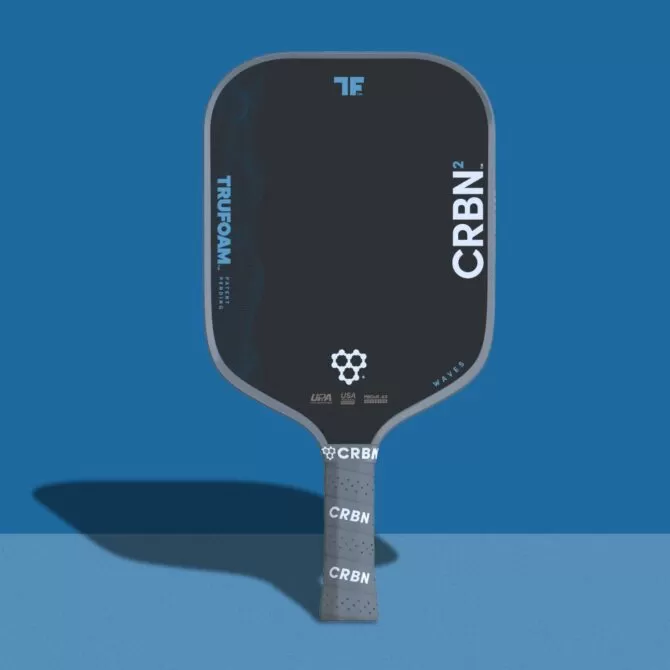
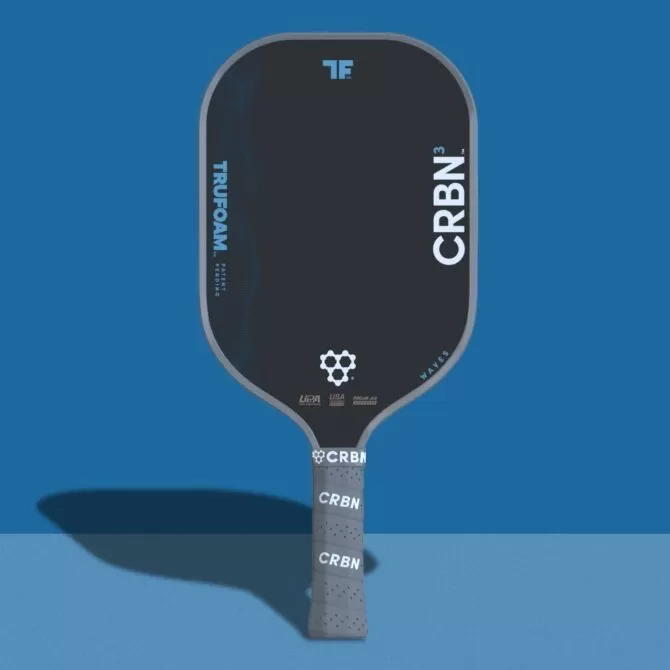
TFW 3
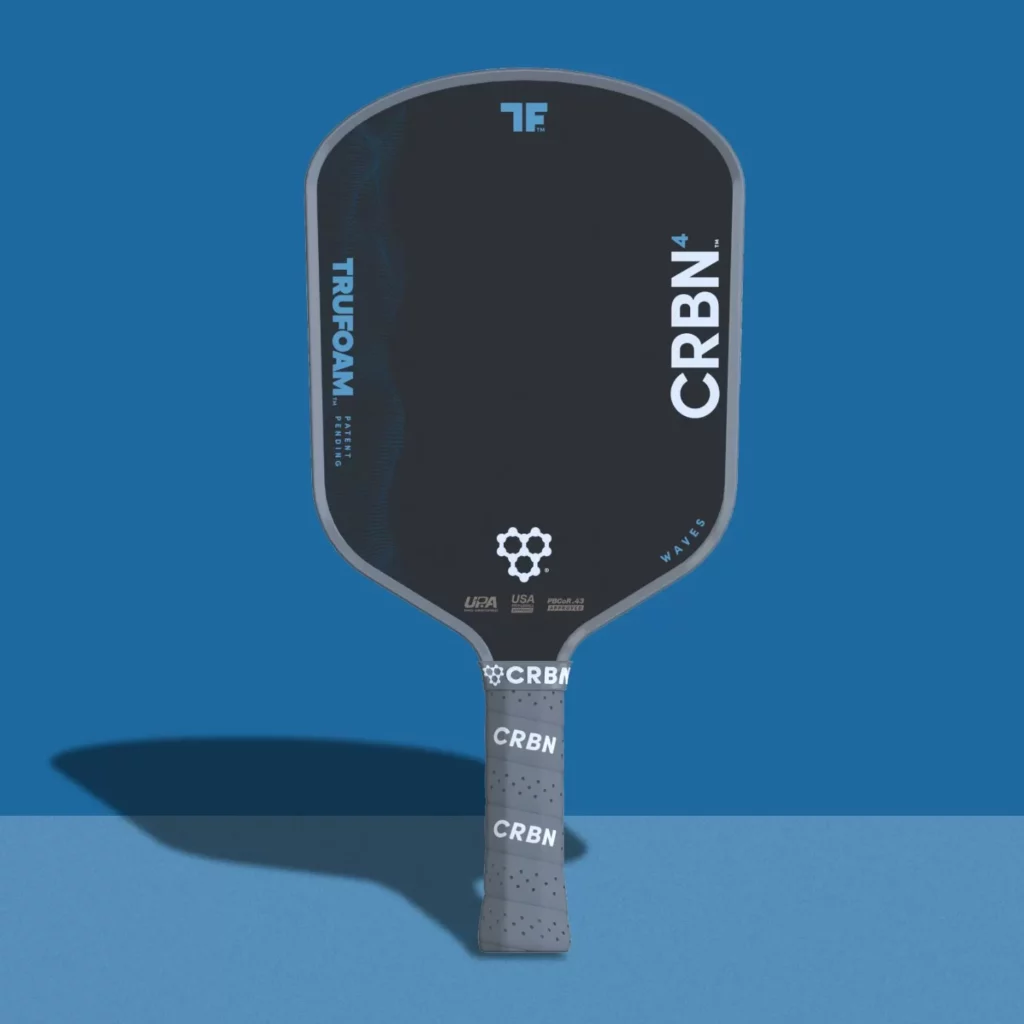
TFW 4
The Waves carry similar swingweights to the Genesis line but with stronger twistweight numbers, which makes them more stable side to side. Even so, I wouldn’t call them super forgiving, since they’re weaker near the tip of the paddle. Swingweight and balance lean a bit heavy and while they move fine out of the box they don’t leave much room for customization.
| Metric | TFW 1 | TFW2 | TFW3 | TFW4 |
|---|---|---|---|---|
|
Shape |
Elongated, square top |
Widebody, square top |
Elongated, square top |
Hybrid, curve top |
|
Static Weight |
7.9oz |
8.12oz |
8.18oz |
8oz |
|
Swingweight |
119 |
112 |
119 |
112 |
|
Twistweight |
5.93 |
7.02 |
6.61 |
6.68 |
|
Core |
Foam core cutout |
Foam core cutout |
Foam core cutout |
Foam core cutout |
|
Handle Length |
5.6 |
5.5 |
5.3 |
5.5 |
|
Grip Size |
4.25 |
4.25 |
4.25 |
4.25 |
CRBN positions the Waves as the “power” line, but in reality, they feel like a more refined all-court Genesis rather than jumping into the power category.
The Waves add a touch more power on drives and finishing swings, but pop speed and counters feel similar to the Genesis with a less noticeable jump in pop. What stood out more was the improved control. The ball came off cleaner and more predictable, which I attribute to the new face layup and core design. I found fewer of those unexpected extra springy responses I’d occasionally get with the Genesis. I was able to pick up and control these much more quickly than I do with bigger power foam paddles like the Selkirk Boomstik or the Bread & Butter Loco.
The Waves have a uniquely good shot-making ability. I could attack at the net with precision and spin better than many paddles. But I had to hit it clean to make that happen. If I caught the ball too high on the face then I found some dead spots and if I caught the ball wide of the sweet spot the ball wouldn’t die but I didn’t get near the same dwell, speed, and spin as I did with the strike zone. For me, I wasn’t finding that perfect zone enough to really take advantage of it though I can see why professional players like Jay Devilliers are playing so well with it.
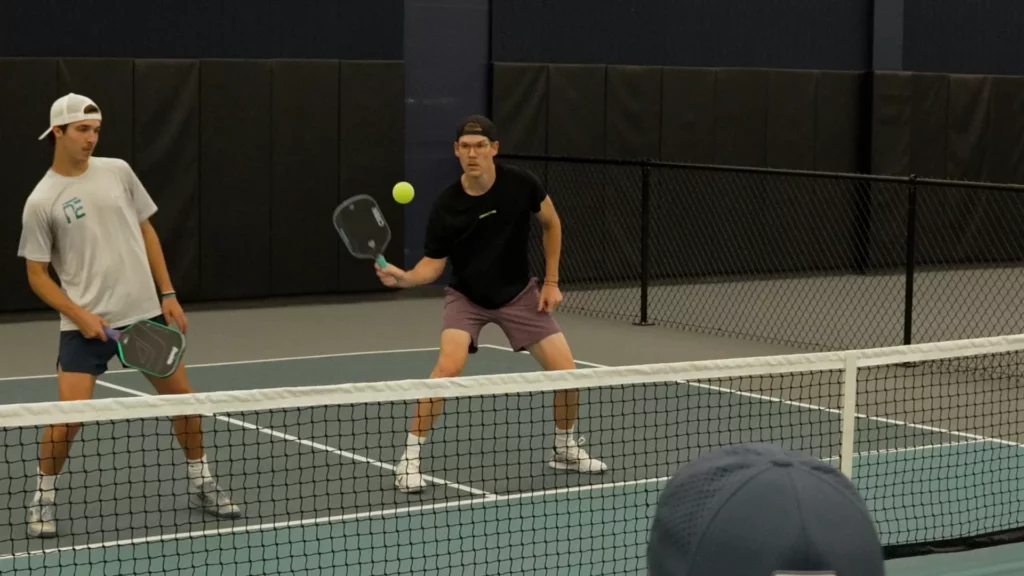
Braydon playing CRBN Waves
Both lines share a soft, dense, foamy impact feel that I really like. The Waves give a touch more feedback without crossing into harshness, which I thought helped dial in touch shots as well.
Use code PBEFFECT for 10% off your paddle purchase.
While marketed as a power paddle, I’d still classify the Waves as aggressive all-court paddles. They don’t generate enough raw firepower to compete with true power builds, but the control and balance will appeal to players who don’t want to be overwhelmed by poppy pace.
In summary, the Waves vs the Genesis gives you a small bump in drive power, a higher ceiling in shot making ability, a bump in control, and a feel that’s very similar to the Genesis line. For me, that’s enough to choose the Waves over the Genesis. If you’re willing to tinker with the weight to improve the sweet spot, you can get a strong all-court setup but you do give up maneuverability and don’t have the best forgiveness, particularly near the top.
The standouts are the Hybrid TFW 4 and Widebody TFW 2. These naturally lighter, more forgiving shapes give you more room to customize without bogging down maneuverability. By contrast, the elongated TFW 1 and 3 felt too sluggish once I added the weight needed to boost their stability.
Each model in the Waves line plays a little differently. Here’s a quick breakdown of how they compare to each other:
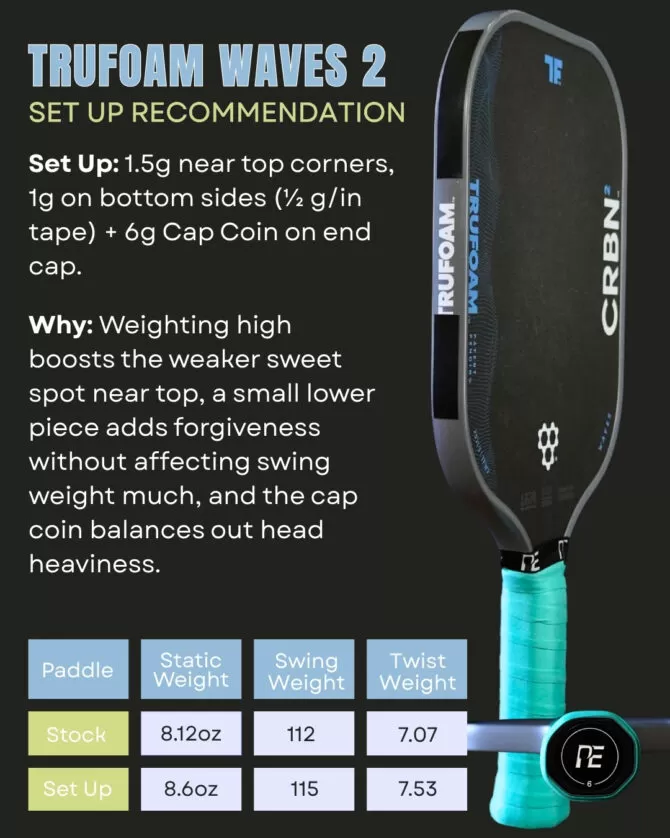
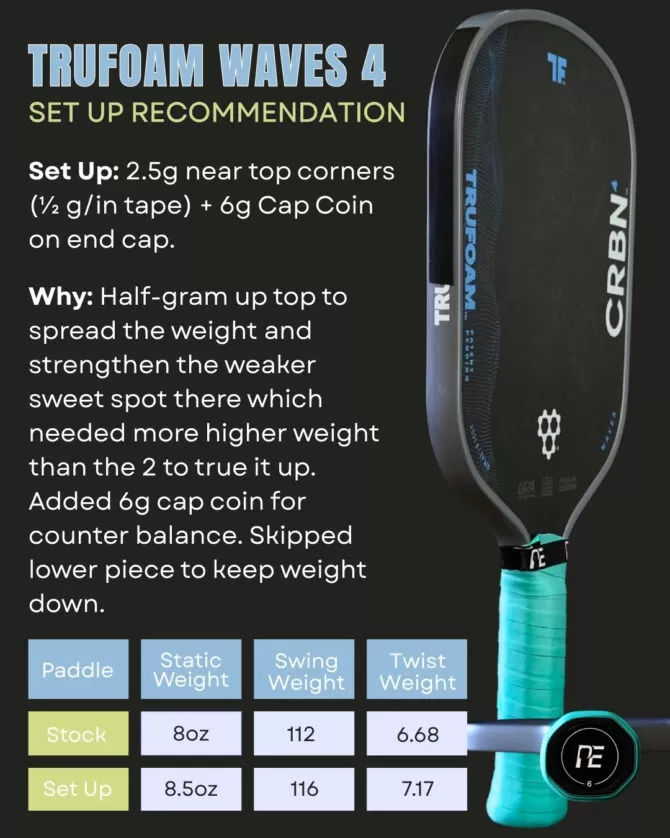
I didn’t show set ups for the TFW 1 & 3 because I think the other two shapes options are the best in the series. If I were tuning them, I’d start with a 1-ounce Slyce cap and add 2-3 grams of tape on each top corner, similar to how I weighted the TFW 4 just with more weight in the handle to offset head heaviness.
You can purchase the paddle tuning accessories I used for these set ups here:
The CRBN TruFoam Waves aren’t the power leap they were marketed to be, but that doesn’t make them a miss. I see them as best suited for higher-level players who can consistently find the sweet spot and take advantage of the paddle’s unique shot-making ability. They’re also a good fit for players who don’t want an all-out power paddle and prefer to swing freely without worrying as much about balls sailing long.
Ultimately though, as the all-court category continues to fill in with more foam options I think the Waves limitations with the sweet spot and maneuverability are going to hold it back even though its shot making ability is very good at times.
Buy the CRBN TruFoam Waves if:
We’ve categorized paddles into three categories. Control, All-Court, and Power. Paddle categories are determined by Braydon after he hits or reviews the paddle.
A paddle’s weight represents the inherent mass of the paddle as measured on a scale. However, relying solely on this static weight measurement can be misleading when assessing the true perceived heaviness of the paddle. Even if two paddles both clock in at 8 oz, their actual heft in your hand can markedly differ due to variations in weight distribution within the paddle. This is why the static weight should be considered with the swingweight of the paddle. See the definition of swingweight below.
The weight value listed in the database corresponds to the paddle’s weight that I used to gather the swingweight and twistweight measurement. It’s possible that if your paddle has a different static weight than then the swingweight and twistweight may be slightly different.
Swingweight is a measure of the paddle’s resistance to swinging about the end of the handle. The higher the swingweight number the heavier it will feel in your hands. A higher swingweight has more power but is harder to swing, lower swingweight is easier to swing but has less power. Sometimes a faster swing with a lower swingweight can make up for power lost in swingweight. The price paid for that is greater impact shock. Stock swingweights will vary between 100 – 140.
Twistweight is the resistance to rotating around the long axis through the middle of the paddle from butt to tip. The higher the twistweight the more resistance the paddle has to rotating on off center hits. This measurement is closely related to the amount of forgiveness or the size of the sweet spot of the paddle. A higher twistweight indicates a bigger sweet spot. Twistweight numbers range from 5 – 8.
Measuring the revolutions per minute (RPMs) off of a serve you get a number that shows the spin potential of a paddle. Using these RPM measurements I’ve created five buckets that a paddle will fall into indicating its overall spin potential. The five buckets are:
1900 or Higher = Very High
1700 – 1900 = High
1500 – 1700 = Medium
1300 – 1500 = Low
1300 or less = Very Low
You can tell a big difference in the amount of spin a paddle generates when you compare a Very High paddle to a low paddle. But the gains from Medium to High to Very High are marginal. We’ve found that having at least a medium rating is often enough if you’re looking for a good spin paddle. However, if you’re a big hitter then you will benefit more from a high spin paddle to help you keep the ball in play more often.
The power level of a paddle is shown in miles per hour (MPH) after taking ten measurements with a speed gun of hitting a serve as hard as I can. This measurement gives you an idea of how hard you can hit the ball when given the chance to take a full swing. So shots like serves, drives and overheads. The higher the MPH reading the more power you can generate with the paddle.
I also show the percentile ranking of the measurement to give you an idea of how it stacks up against the rest of the paddles in my database.
The pop level of a paddle is shown in miles per hour (MPH) after taking the average of ten speed gun measurements of hitting a punch volley as hard as I can. This measurement gives you an idea of how hard you can hit the ball on shorter swings and gives you an idea of how quickly a ball comes off the face when you apply less force on the ball. So shots volleys, dinks, counters, and resets are all affected by the pop measurement. The higher the pop measurement the stronger your counters will be but it takes more skill to keep the ball from floating or popping up on you when resetting a hard hit ball or when dinking.
I also show the percentile ranking of the measurement to give you an idea of how it stacks up against the rest of the paddles in my database.

Looking for the right paddle to fit your game? Take our paddle fitting quiz for three recommendations that will match your style of play.