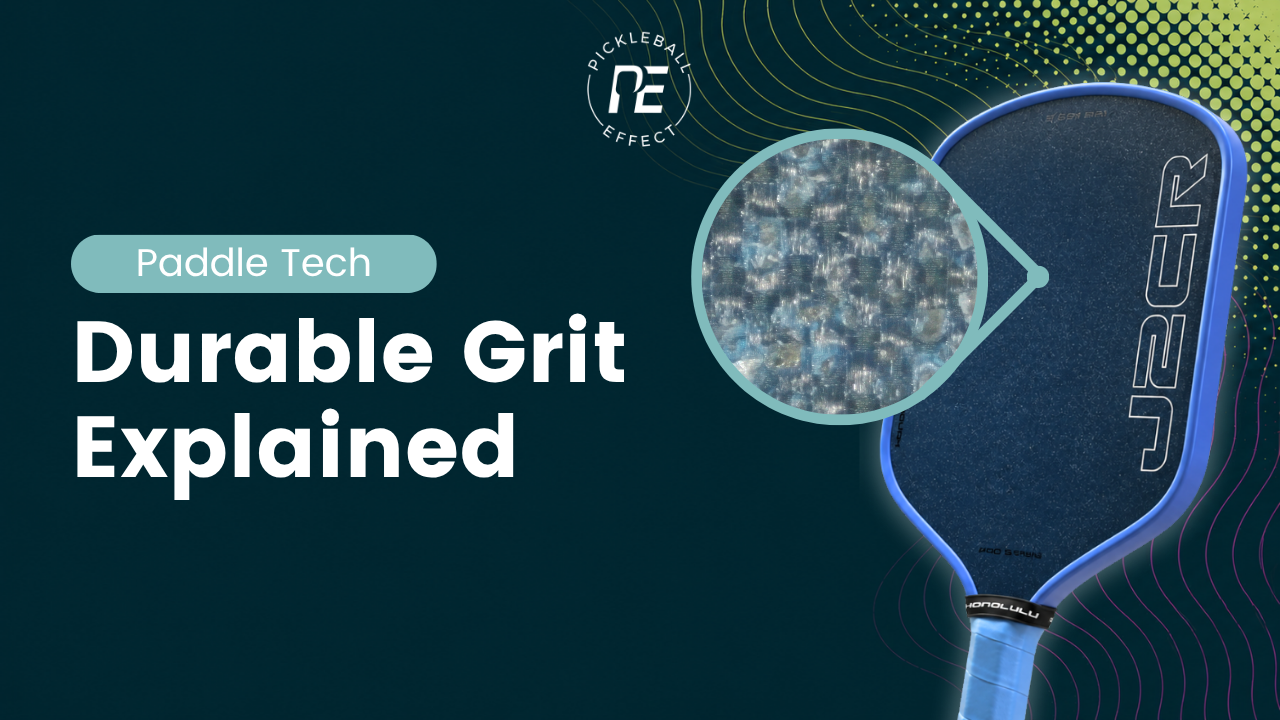
If there’s one topic shaping paddle tech conversations in 2026, it’s surface durability. Many brands are now marketing some version of durable grit.
Not all durable grit is the same, and the performance gap between surfaces is wider than most players realize once you actually measure it.
Affiliate disclosure: If you click the links on the page or use our discount codes, we may earn a small commission at no extra cost to you that supports our testing and reviews.
Raw carbon fiber has been the standard for spin production in pickleball paddles since 2022. During manufacturing, a textured release layer called peel ply is pressed onto the carbon fiber and then removed after curing, leaving behind a rough, sandpaper-like texture made from hardened resin. That added texture increases friction at contact and helps generate more spin than smooth surfaces can.
The catch is that the texture doesn’t last. The hardened resin isn’t as hard a pickleball ball so when they make contact, the ball wins and some of that hardened resin is chipped off.
Put enough hours on a raw carbon surface and you’ll start to notice it. Balls that used to jump off the face with heavy spin start coming off flatter. Drives that once dipped aggressively stop diving the same way. The surface hasn’t cracked or broken down visibly. It’s just become smoother over time, and that loss of texture is the problem.
Spin degradation is one of the biggest hidden costs of using a high-spin raw carbon paddle. A paddle that tests elite out of the box can become an average performer within as little as two months of regular use.
Durable grit is the industry’s attempt to solve this. The goal being to build a surface that produces strong spin and holds onto that performance over time. But, the execution varies widely from brand to brand.
Durability claims from brands are easy to make and hard to verify. Here’s exactly how Pickleball Effect is measuring them.
Our testing uses a profilometer, a device that drags a fine stylus across the paddle face to measure surface texture at a microscopic level. We record baseline Ra and Rz roughness measurements, run the paddle through our in-house accelerated wear test using controlled abrasion cycles, then re-measure the same location to see how much texture was retained. While no lab test perfectly replicates real play, the TK1 provides a consistent apples-to-apples comparison of grit durability across paddles.
Two key values come out of that measurement:
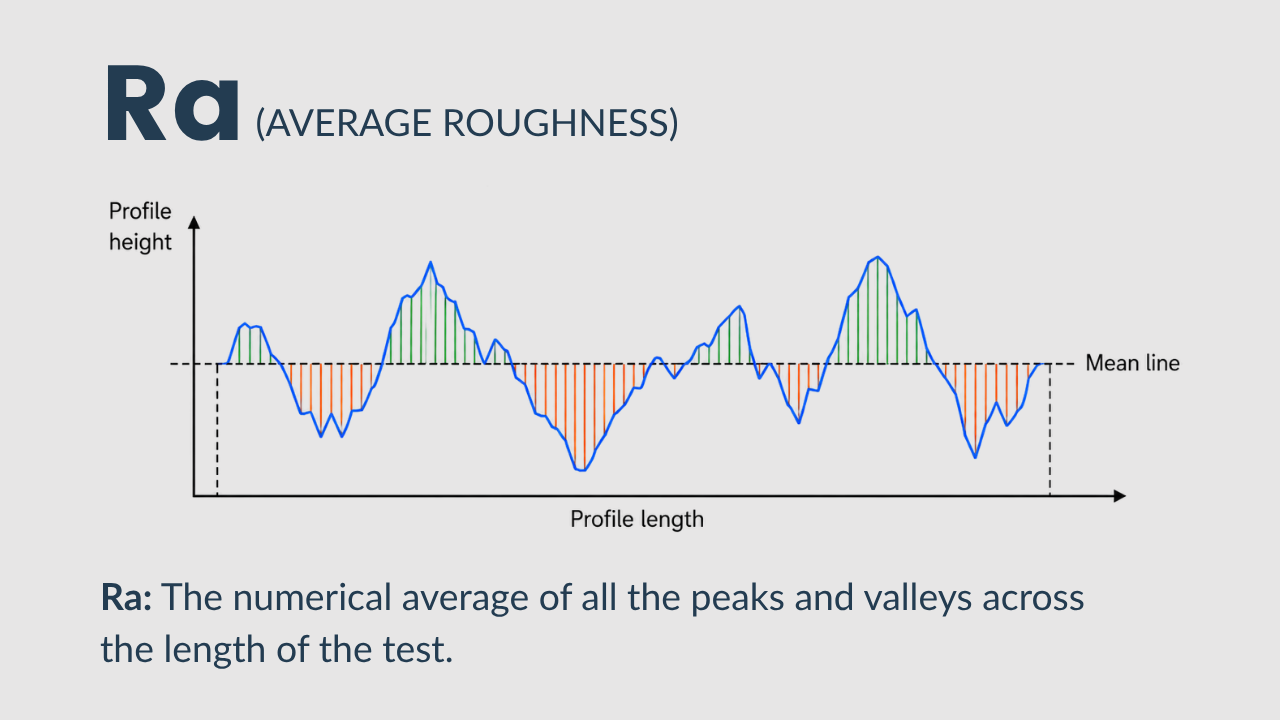
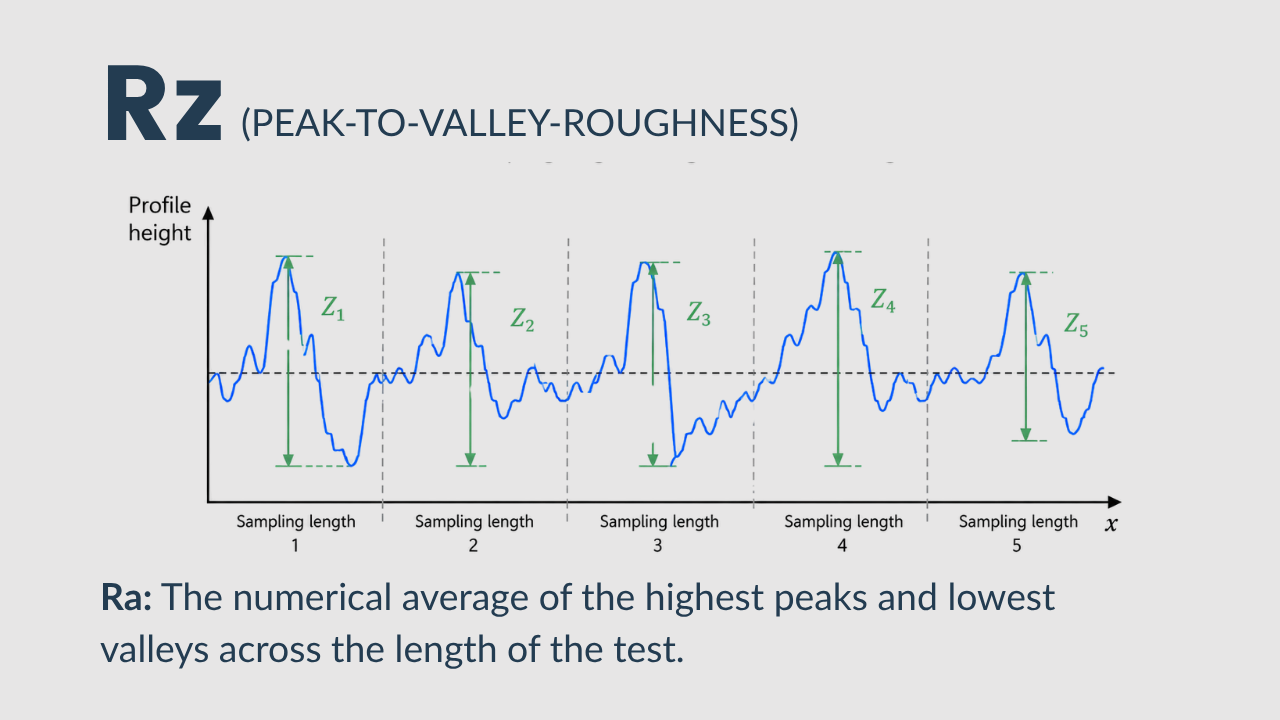
Both numbers matter. A surface could have a moderate Ra but aggressive peaks (high Rz), which would still generate strong spin. Testing both gives a more complete picture than a single roughness value alone.
To establish a baseline, our testing puts the average raw carbon fiber surface at an Ra of 6.8 and an Rz of 32.5. Those numbers are the benchmark everything else gets measured against, and where traditional carbon fiber eventually lands after wear.
For more detail on how this data shows up in practice, see Braydon’s 11SIX24 Power 2 review and Thrive Ignite review, which include surface roughness data as part of the full evaluation.
The key point: when Pickleball Effect calls a surface durable, it’s backed by before-and-after measurements. Not manufacturer marketing copy.
This is the table that matters. We measured Ra and Rz on each surface new, then re-measured after running them through our accelerate wear machine (the TK1). to calculate retention: how much of that original texture remained.
| Paddle | Cert | Ra Starting Value | Ra Retention | Rz Starting Value | Rz Retention |
|---|---|---|---|---|---|
|
11SIX24 HexGrit
Durable
|
UPA-A | 8.13 | 98% | 42.3 | 93% |
|
HPC Blue Endurance Surface
Durable
|
UPA-A | 8.19 | 97% | 41.3 | 92% |
|
6.0 Diamond Tough
Durable
|
USAP | 6.52 | 95% | 32.48 | 92% |
|
Chorus Harmony Grit
Durable
|
USAP | 7.11 | 94% | 35.97 | 83% |
|
Spartus PermaGrit
Durable
|
USAP | 6.67 | 93% | 35.1 | 87% |
|
Thrive Ignite
Raw + Coat
|
USAP | 7.54 | 90% | 36 | 88% |
|
Selkirk InfiniGrit
Durable
|
USAP | 5.7 | 90% | 30.93 | 85% |
|
Raw Carbon Avg
Raw
|
6.9 | 81% | 33.45 | 82% |
A few things stand out immediately.
HexGrit & Blue Endurance Surface are in a category of their own. Ra values of 8.13 and 8.19 are the highest starting roughnesses tested, well above the raw carbon average of 6.8, and they retains 98% & 97% of that Ra after wear. Their Rz retention of 93% and 92% are equally strong. They are also the only surfaces here that doesn’t pass USAP standards which is why their grit levels are higher. More on this in The Certification Issue section.
Check out our review of 11SIX24’s paddle with HexGrit and our podcast comparing taking a close look at Blue Endurance Grit.
The raw carbon baseline tells the real story. Traditional raw carbon fiber averages 81% Ra retention and 82% Rz retention. Every durable grit surface in the test beats that, some by a wide margin. This confirms that durable grit isn’t just marketing. The surfaces actually hold up better than raw carbon.
Diamond Tough punches above its Ra. Six Zero’s surface starts with a modest Ra of 6.52, close to the raw carbon average, but retains 95% of it and holds 92% of its Rz. The peak texture stays aggressive even as total average roughness stays relatively moderate. That Rz retention is second only to HexGrit. For USAP players, it’s probably the most interesting surface in this dataset.
Check out our review of Six Zero’s best paddle with Diamond Tough.
Thrive’s Clear Fusion takes a different path. The raw carbon + coating approach produces a strong starting Ra of 7.54, but retention is 90% Ra / 88% Rz. Solid, but not class-leading.
InfiniGrit starts lower but holds. The spray-on approach from Selkirk yields the lowest starting Ra at 5.7, but 90% retention keeps it performing consistently. If your baseline expectation for spin is modest, it holds there reliably.
Spartus PermaGrit is sneaky good. While the retention numbers for PermaGrit aren’t as strong, the surface has a unique tacky quality that generates spin through adhesion and ball grip rather than relying purely on abrasive grit, and it performs very well on court.
The Spartus P1 Standard is our favorite paddle with PermaGrit.
While brands will likely continue developing new approaches to durable grit, these are the main methods we’ve seen so far, along with what we currently know about them and microscopic images showing what each texture actually looks like up close.
Ultimately, the goal is to create a surface texture using materials harder than the ball itself so that during contact, the paddle maintains its texture instead of wearing down and losing grit.
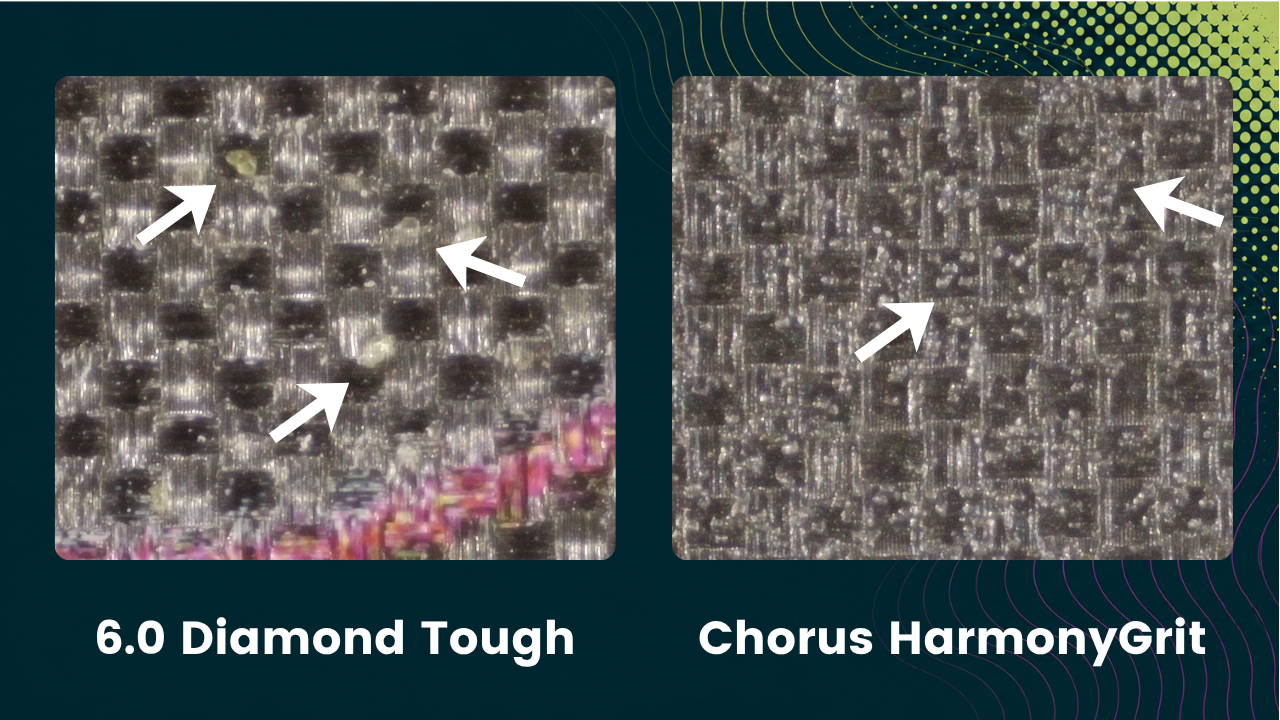
Some brands are building on the traditional peel-ply carbon fiber texture by infusing harder particles directly into the peel-ply process. The base texture is still a resin, but harder materials are embedded into or bonded with the resin to create a surface that resists wear better than raw carbon alone.
Six Zero’s Diamond Tough and Chorus’ Harmony Grit fall into this general category.
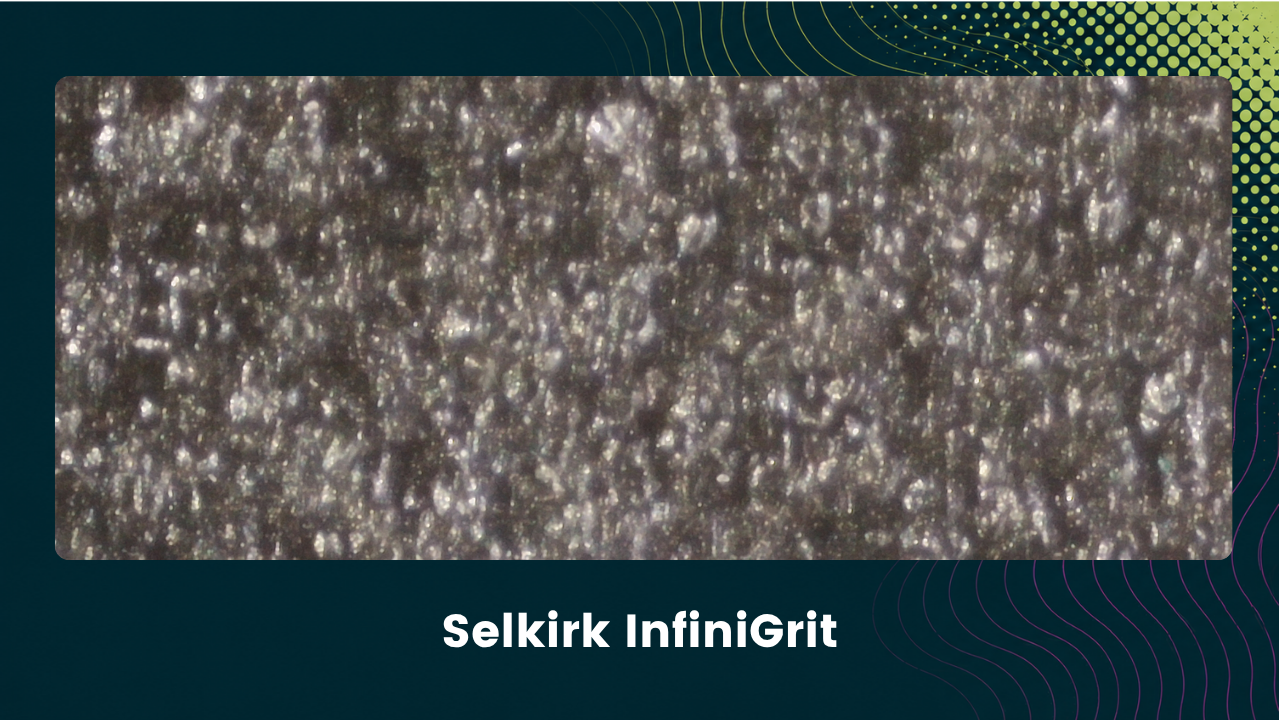
Rather than a peel-ply process, some brands apply a grit coating on top of the surface. This creates a textured layer that sits above the underlying carbon face.
Selkirk’s InfiniGrit takes this approach. Out of the box it starts at an Ra of 5.7, lower than most other durable grit surfaces, with an Rz of 30.93. It retains 90% of its Ra and 85% of its Rz after wear.
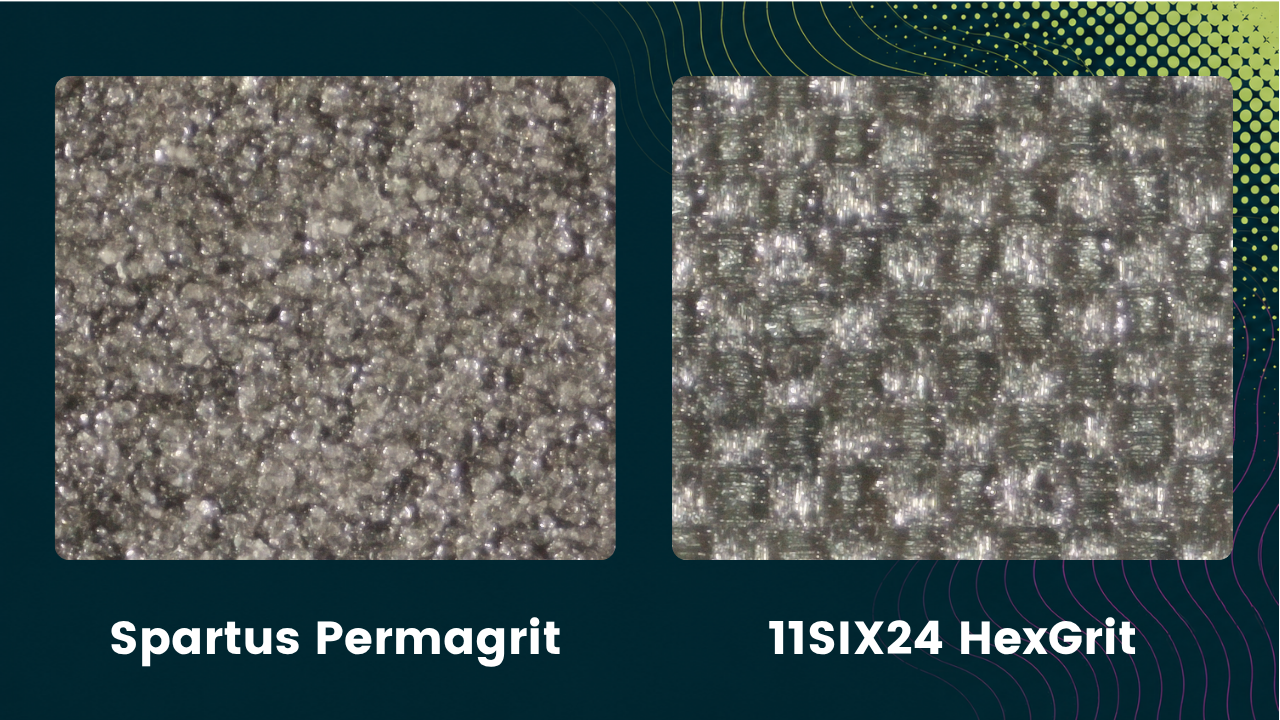
Some of the most closely guarded approaches appear to involve ceramic hybrid elements in the surface construction. Ceramic particles are significantly harder than the resin left behind in the peel-ply process, which makes them a logical candidate for improving texture longevity.
11SIX24’s HexGrit and Spartus’ PermaGrit both appear to use some type of ceramic component, though neither company has publicly confirmed the exact manufacturing details. As durable grit becomes a bigger competitive advantage, some brands are treating their surface construction as proprietary. Neither brand has confirmed the exact construction, but when a surface retains 98% of its Ra after extended play, you don’t really need them to.
Pickleball currently has two major governing bodies with different equipment standards: USA Pickleball (USAP) and the United Pickleball Association (UPA-A). Both approve equipment for tournament play, but the way they regulate spin and surface texture don’t match. That gap matters.
USAP uses surface roughness limits, while UPA-A uses an outcome-based spin test. That means UPA-A focuses on how much spin the paddle actually produces rather than how rough the surface itself is. USAP is expected to take a similar outcome based approach sometime this year but that has yet to happen.
Some of the highest-spinning durable grit surfaces currently pass UPA-A standards but fail USAP roughness testing. That means a paddle approved only for UPA-A tournaments would not be allowed in USAP-sanctioned events.
HexGrit from 11SIX24 and BlueGrit from Honolulu Pickleball are in this category right now: UPA-A approved, not USAP approved. The data explains it directly. HexGrit’s Ra of 8.13 is significantly above the raw carbon average, and it barely wears at all.
Before buying any durable grit paddle, check which governing body runs the tournaments you play in.
| Brand | Surface | USAP Approved | UPA-A Approved |
|---|---|---|---|
|
11SIX24
|
HexGrit
|
❌ | ✅ |
|
HPC
|
Blue Endurance Surface
|
❌ | ✅ |
|
Chorus
|
Harmony Grit
|
❌ | ✅ |
|
Spartus
|
PermaGrit
|
✅ | ✅ |
|
Selkirk
|
InfiniGrit
|
✅ | ✅ |
|
Six Zero
|
Diamond Tough
|
✅ | ✅ |
|
Thrive Ignite
|
Raw + Coat
|
✅ | ✅ |
Durable grit solves one of pickleball’s strangest durability problems… performance loss that happens slowly enough most players don’t notice it until the paddle suddenly doesn’t feel the same anymore.
Unlike core crush or delamination, which usually become obvious right away, surface degradation happens quietly. The spin fades little by little. Resets stop biting the same way. Drives and rolls don’t grab quite as much. Most players adapt without realizing the paddle is changing underneath them.
Frequent Players
If you’re playing four or five times a week, retention eventually matters more than starting roughness.
A paddle that retains 98% of its surface texture after extended use is simply a different long-term investment than one retaining 82%, even if both feel great on day one. The more often you play, the more likely you are to actually feel that gap.
Casual Players
For casual players, this may never become a meaningful issue.
If you play once a week and replace paddles every year or two, day-one feel probably matters more than long-term retention curves. Starting roughness, comfort, and overall playability will likely have a bigger impact on your experience than what happens hundreds of games later.
Tournament Players
Tournament players have a narrower set of choices.
HexGrit produced the strongest durability numbers in the testing, but it still lacks USAP approval. Among approved surfaces, Diamond Tough delivered the best combination of starting texture and long-term retention, and none of the other approved options were particularly close.
Durable grit won’t matter equally to every player. But if you’re playing four times a week and wondering why your paddle feels different than it did six months ago… now you know why.
As more brands enter the category, the differences in how durable grit surfaces are built and how well they retain performance over time will matter even more. The gap between marketing claims and measured performance will become harder to ignore.
Durable grit refers to a category of paddle surface technologies designed to maintain spin performance over time. Unlike traditional raw carbon fiber, which wears smooth with extended use, durable grit surfaces are engineered through infused particles, ceramic components, spray-on coatings, or protective layers to resist texture degradation.
Raw carbon fiber generates spin through a resin-based texture left behind during the peel-ply manufacturing process. That texture creates friction at contact with the ball, but the resin itself is not durable enough to withstand repeated ball impact long term. As a result, the surface typically loses spin production well before other parts of the paddle wear down.
Both Ra and Rz are surface roughness measurements taken with a profilometer. Ra is the average roughness across the surface, while Rz measures the peak-to-valley height, indicating how aggressive the texture is.
No. Some durable grit surfaces are approved for UPA events but not USAP events because they exceed USAP surface roughness limits.
Several do at the start, but the bigger advantage is retention over time.
By measuring Ra and Rz before and after accelerated wear using a home built machine and a profilometer to track how much surface texture is retained.
Author Profile
Matt started playing pickleball in 2023 and quickly fell in love with the strategy, patterns, and problem-solving parts of the sport. He enjoys following the latest in paddle technology, performance trends, and the pro game. As a type 1 diabetic athlete, he’s especially passionate about the intersection of health and competition, sharing his experiences managing diabetes while competing, training, and navigating everyday life through sports.
Click button to activate sitewide discount.
Affiliate disclosure: If you click the links on the page or use our discount codes, we may earn a small commission at no extra cost to you that supports our testing and reviews.