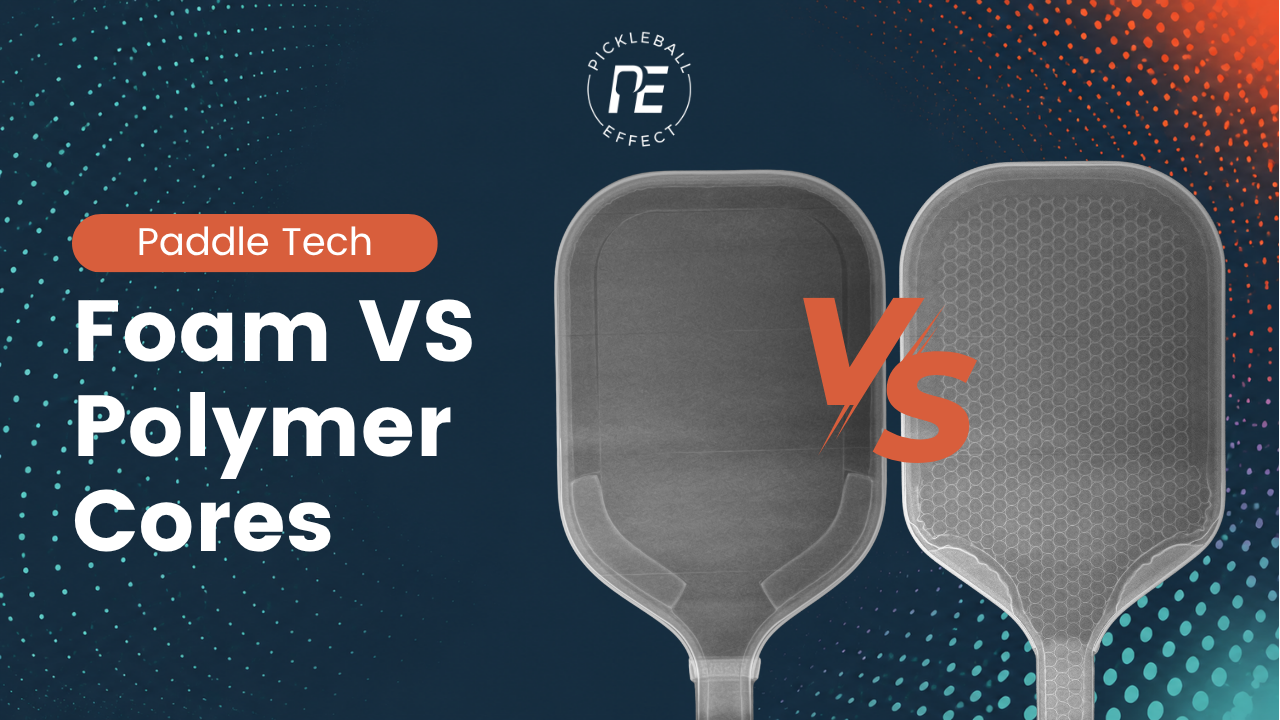
In the last year, the pickleball market has seen an influx of foam core paddles, yet polymer core paddles remain widely used. What does each offer the modern player?
A practical breakdown of foam vs polymer core pickleball paddles, including the history of paddle technology, core crushing, and why more players are switching to foam.
Affiliate disclosure: If you click the links on the page or use our discount codes, we may earn a small commission at no extra cost to you that supports our testing and reviews.
To understand the difference between Polymer and Foam, it helps to know how we got here. From pickleball’s invention in 1964 through the late 1990s, paddles were made of wood. Then the company Pro-Lite introduced the polymer core paddle: a lightweight plastic honeycomb construction that would define the sport for decades.
See the xray image below: Notice how the core is made of polymer plastic “cells” that create a honeycomb structure inside the paddle.
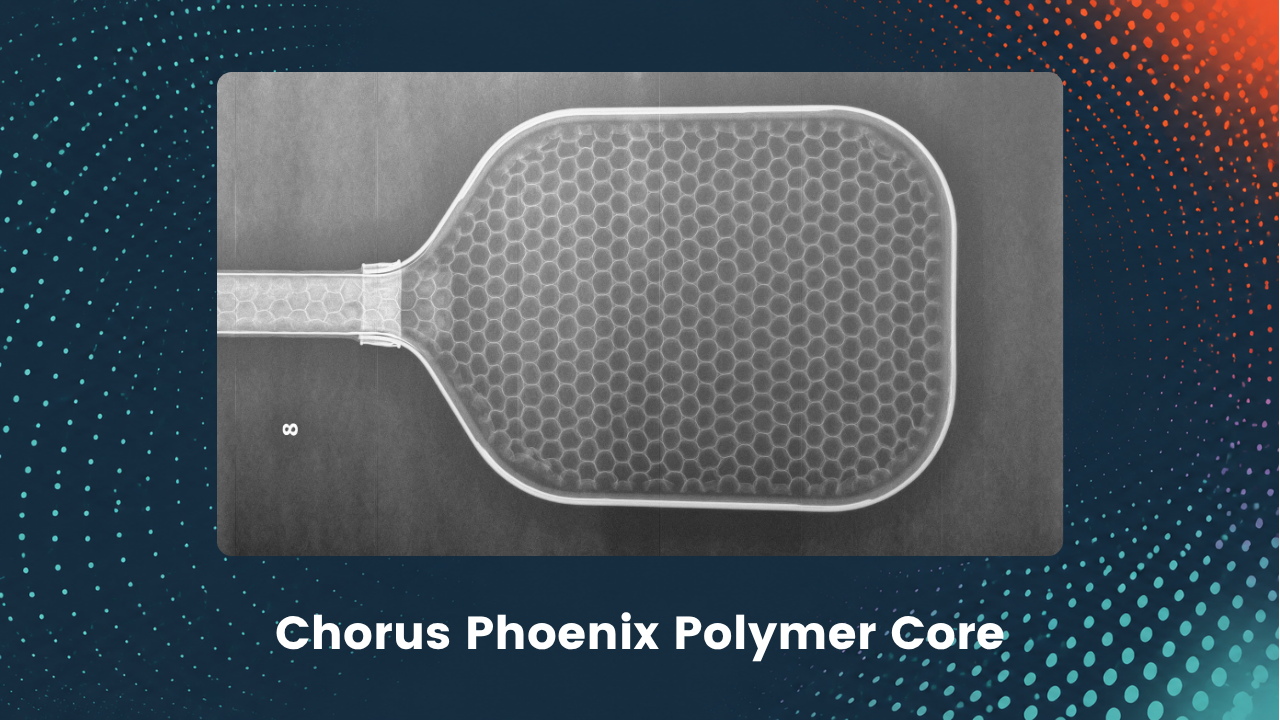
Core design remained largely unchanged until the early 2020s, when two innovations arrived: thermoforming during assembly (2022), and EVA (ethylene-vinyl acetate) foam around the paddle’s perimeter (2024).
Thermoforming is a manufacturing process that uses heat and pressure to bond the paddle layers together into a more unified structure which improves the sweet spot, while the EVA foam adds flex and energy return to the paddle, increasing power and pop. Together, these changes expanded the sweet spot and helped create the more powerful, poppy paddles that would define the next era of the sport.
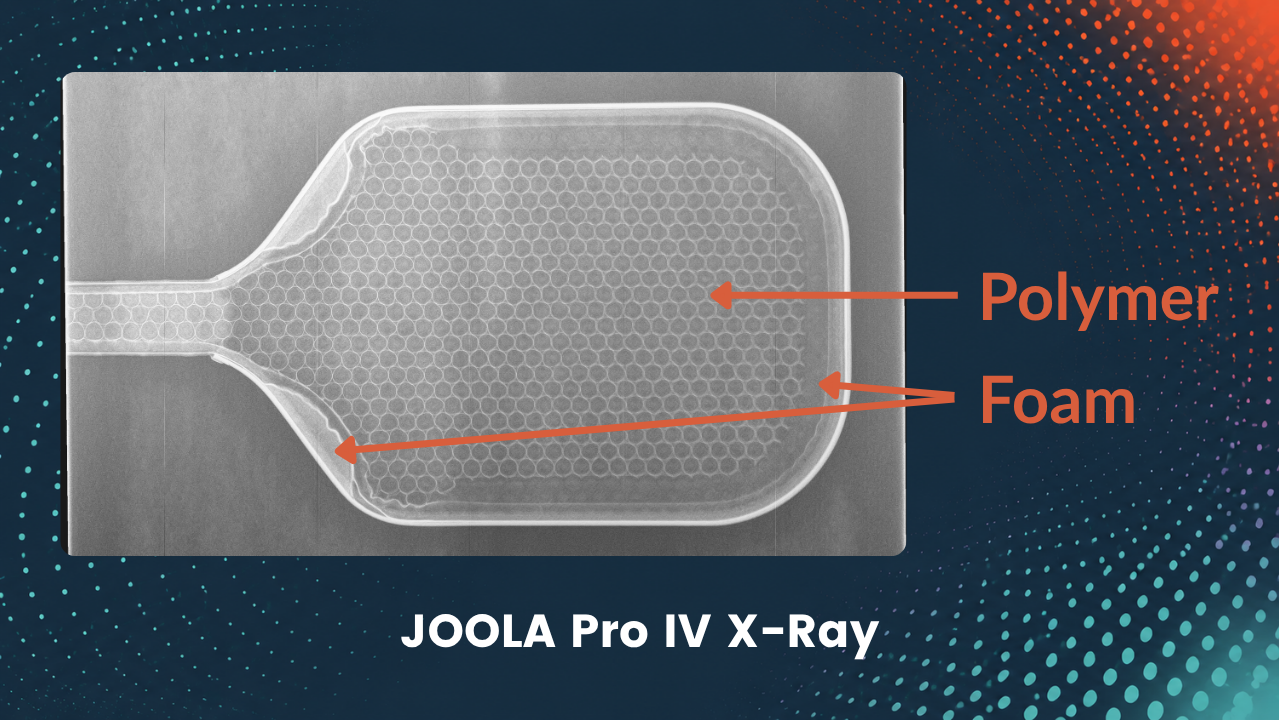
While thermoforming itself is more difficult to see in an x-ray, this x-ray of a Joola Pro IV clearly shows the foam additions. Notice the ring of EVA foam around the perimeter of the paddle, as well as the notched foam inserts in the throat.
These foam-enhanced polymer paddles delivered previously unheard-of power, pop, and spin while still retaining much of the connected feel players were accustomed to from traditional polymer constructions. They dominated both the market and the pro game from their introduction, and when pickleball exploded in popularity in 2021, they were considered the standard. World number one Ben Johns still plays one: “Polymer core paddles give me an unmatched feel of connection from paddle to ball,” he says of his Joola Pro V Perseus.
The chief downside is durability. Polymer cores fail through a process called core crushing. During manufacturing, thermoformed paddles are exposed to significant heat and pressure, which can weaken the paddle’s small (10–12mm) honeycomb cells over time.
With repeated ball impact, those cells can begin to buckle or collapse internally, changing how the paddle responds. The result is a paddle that becomes either wildly overpowered or deadened, and in either case, unplayable. Depending on playing frequency and intensity, a paddle may last less than six months. At the highest level, some players burn through one in a single tournament weekend.
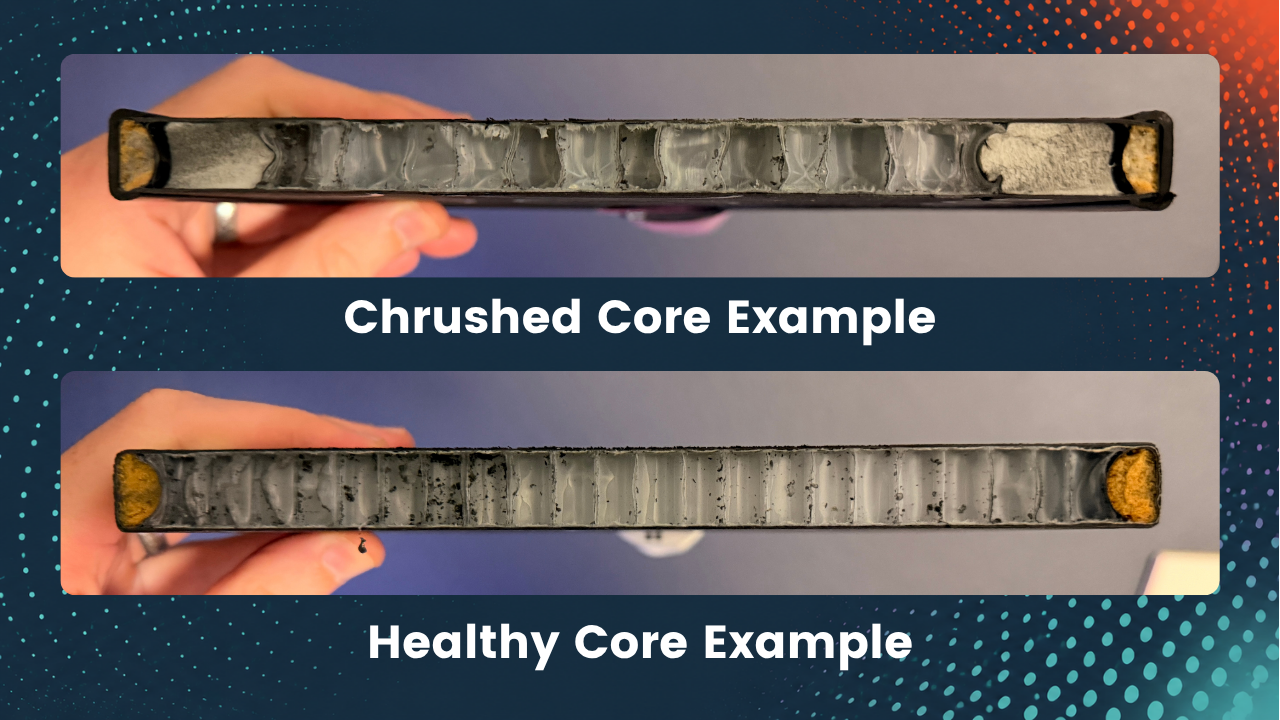
Fully foam core paddles, such as the CRBN TruFoam line and the Selkirk Boomstik, shook up the market after their 2025 introduction. Much of the appeal was tied to durability. As thermoformed polymer paddles became more common, so did core crushing. In amateur tournaments and recreational play, heavily worn or partially crushed paddles became increasingly common, sometimes creating unpredictable levels of power that crossed into safety concerns. In many cases, players didn’t even realize their paddle had failed internally because the damage often couldn’t be seen from the outside.
It’s important to distinguish these from earlier foam-enhanced polymer paddles. In those designs, foam was primarily used around the perimeter while the center remained a traditional honeycomb polymer core. Fully foam core paddles replace that honeycomb structure entirely.
Unlike polymer cores, which rely on thin honeycomb cells that can deform or collapse over time, foam core paddles use a solid foam structure that is generally more resistant to the heat, pressure, and manufacturing inconsistencies that can contribute to core crushing. Rather than continuing to reinforce the traditional honeycomb design, manufacturers began exploring entirely new constructions built around foam.
Foam cores opened the door to far more experimentation than traditional polymer honeycomb designs, which have more structural limitations in how they can be shaped and tuned. Manufacturers can use different foam materials, incorporate strategic voids and cutouts, and fine tune performance characteristics in ways that simply were not possible with traditional polymer constructions.
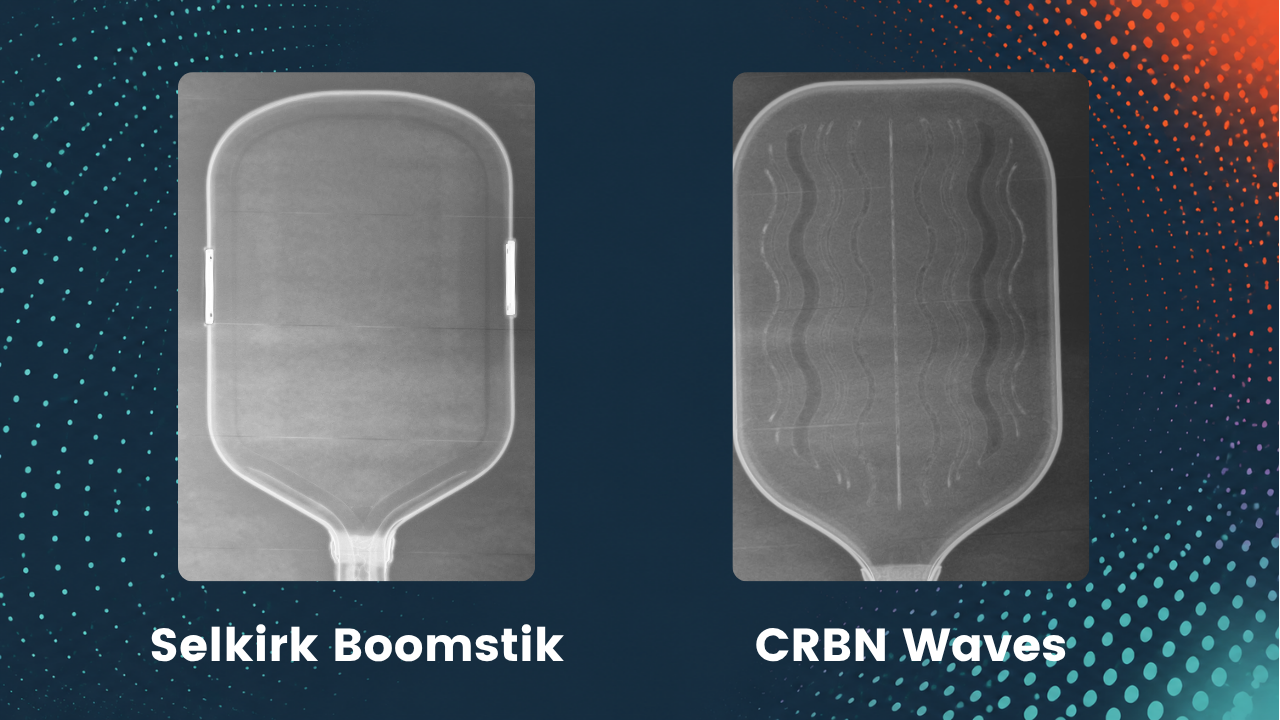
The Selkirk Boomstik and the CRBN Waves illustrate this well. Both are foam core paddles, but their constructions could not be more different. The Boomstik uses a single uninterrupted foam structure, while the Waves features strategically placed cutout voids throughout the core. The result is two paddles that play almost nothing alike, highlighting how much more flexibility foam gives manufacturers in shaping feel and performance.
Foam has made rapid inroads. According to data from Pickleball Effect’s Main Paddle Monitor, 51.4% of players now report using a fully foam core paddle, making it the most common paddle construction among respondents. Foam-enhanced polymer paddles still make up a large portion of the market as well, showing that many players are still gravitating toward hybrid-style constructions that blend traditional polymer feel with modern power and stability improvements.
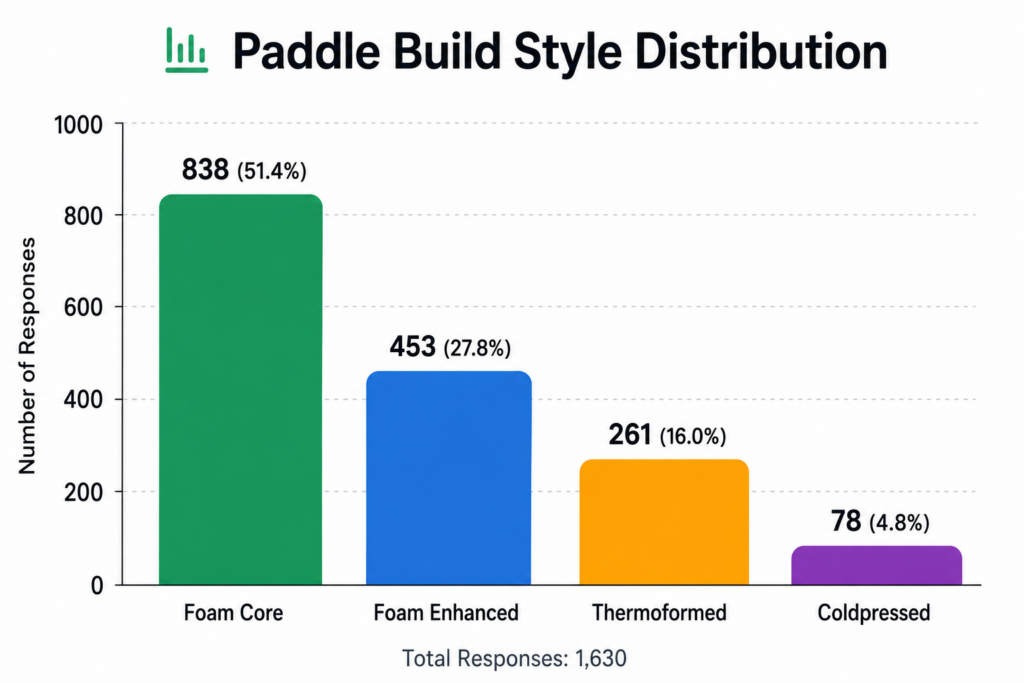
Keep in mind that this survey skews toward more dedicated paddle enthusiasts rather than the general pickleball population, though it still provides a strong snapshot of where the market currently stands.
When asked why they switched, most players cited one of three reasons: durability, power, or value. Durability is the standout. Polymer cores have multiple potential failure points, while solid foam cores, particularly EPP constructions, appear to have fewer common structural failure points and so far have generally proven more durable in real-world play.
One caveat: some MPP foam-based paddles have shown more durability concerns than comparable EPP constructions. Long-term data is still limited, but two theories have emerged. One is that the bonding between the facesheets and MPP core can separate over time, creating internal voids. The other is that MPP constructions may behave more brittly under repeated stress and temperature changes, similar to hard pencil lead snapping under pressure.
At the professional level, the landscape is more split and often depends on which brands sponsor the players. Some pros still prefer the feel and performance of polymer cores, while others have embraced foam for its durability and evolving performance characteristics. Across the broader market, however, the trend is clearly moving toward foam constructions. Manufacturers are pushing foam design in new directions, and the paddle landscape six months from now is genuinely hard to predict.
What is certain is that paddle construction is entering a far more experimental phase than the sport has seen before, and innovation is not slowing down anytime soon.
If you’re interested in trying a foam paddle yourself, many of the top-performing paddles in our current Best Power Pickleball Paddles list now feature some form of foam construction.
In general, foam core paddles appear to be more resistant to the internal collapse issues that can lead to core crushing in thermoformed polymer paddles.
Core crushing happens when the small honeycomb cells inside a polymer paddle begin to deform or collapse from repeated impact, changing the paddle’s performance and often causing it to become more powerful beyond intended certification limits.
Most players cite durability, power, and value as the primary reasons for switching to foam constructions.
Foam-enhanced paddles still use a traditional polymer honeycomb core with foam added around the perimeter, while fully foam core paddles replace the polymer honeycomb structure entirely.
Yes. Many players describe foam paddles as having a wider range of feel and performance characteristics that can vary significantly depending on the construction. Power, pop, stiffness, softness, and pocketing can all change dramatically from one foam paddle to another in ways polymer paddles don’t.
Probably not completely. There will likely always be a place for polymer core paddles because they may become more affordable as demand shifts toward foam, and some players will continue to prefer the feel and performance characteristics of polymer constructions. That said, brands are rapidly adopting foam technology, and foam paddles are likely to become the dominant paddle type on the market moving forward.
MPP (microcellular polypropylene) and EPP (expanded polypropylene) are two foam materials used in foam core paddles, but they behave differently under compression and rebound. In general, EPP foam tends to rebound more quickly and consistently, while MPP foam is often more compressible and muted in its response. However, foam type is only one part of the equation. Layering, density, cutout design, and overall paddle construction can dramatically change how either material performs on court.
Author Profile
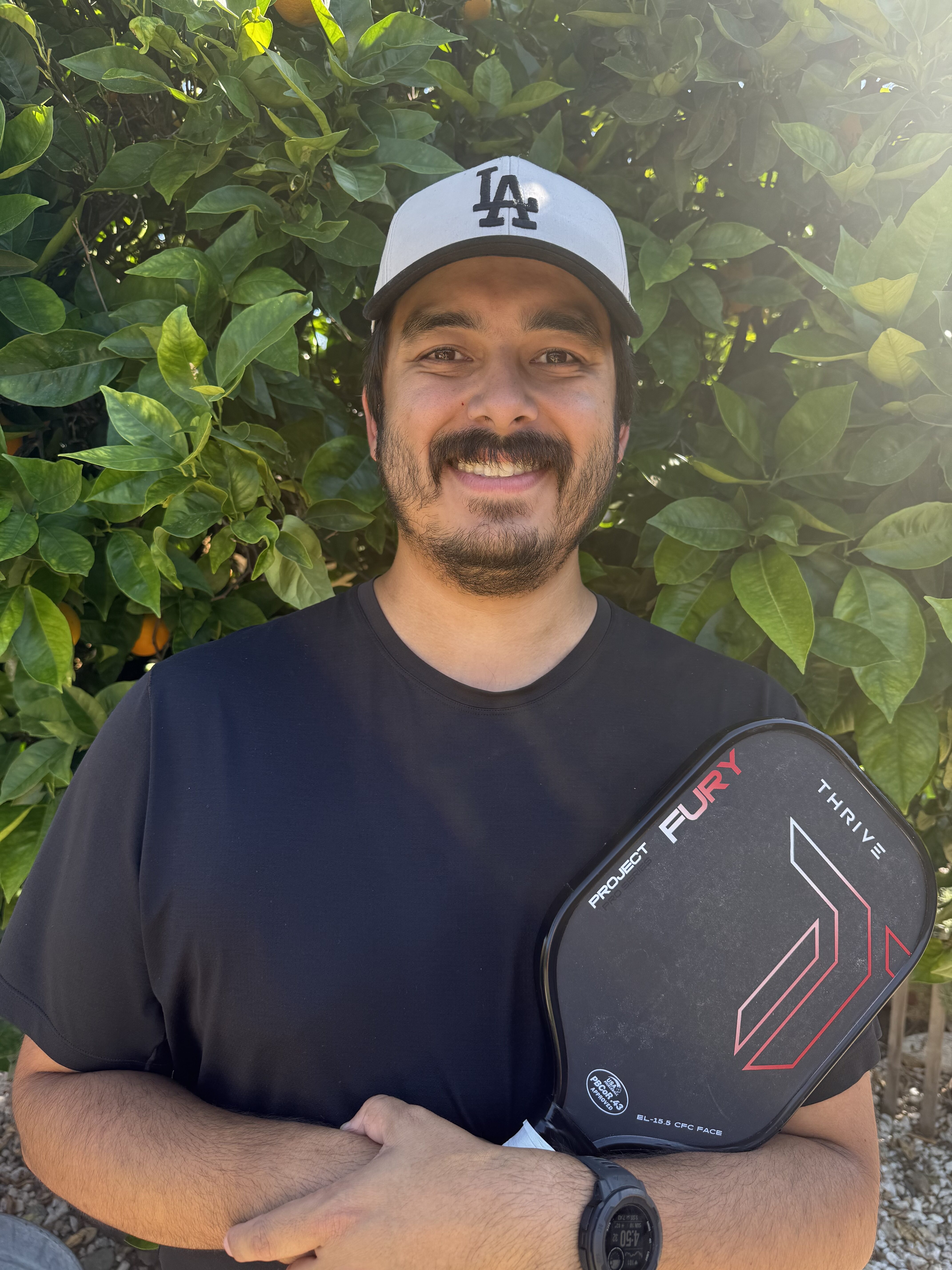
Nate Ting is a Los Angeles–based pickleball addict with a deep interest in paddle technology, emerging innovations, and the evolving equipment side of the sport. When he’s not going down rabbit holes on paddle construction, he’s competing in local tournaments and open play.
Click button to activate sitewide discount.
Affiliate disclosure: If you click the links on the page or use our discount codes, we may earn a small commission at no extra cost to you that supports our testing and reviews.