If you’re wondering which pickleball balls to use, these are the ones we recommend and have found to be the best after doing data-driven experiments and real on-court play testing.
If you just want the short answer:
These are the three balls I come back to after testing. Each one fits a specific need and are the best in their category.Affiliate disclosure: This review wasn’t paid for or approved by the brands. Everything here reflects my own testing and opinions. If you click the links on the page or use my discount codes, I may earn a small commission at no extra cost to you that supports my testing and reviews.
I’ve tested a range of popular pickleball balls using a mix of data-driven experiments and real on-court play to see how they actually perform and hold up over time.
I wanted to understand and focus on three things:
Most balls feel good right out of the box but most don’t stay there for long. The difference shows up over time as they start to soften, warp, or change performance.
That’s what separates the good ones from the ones I don’t recommend.
If you want to see how these balls actually held up in testing, here’s the full breakdown:
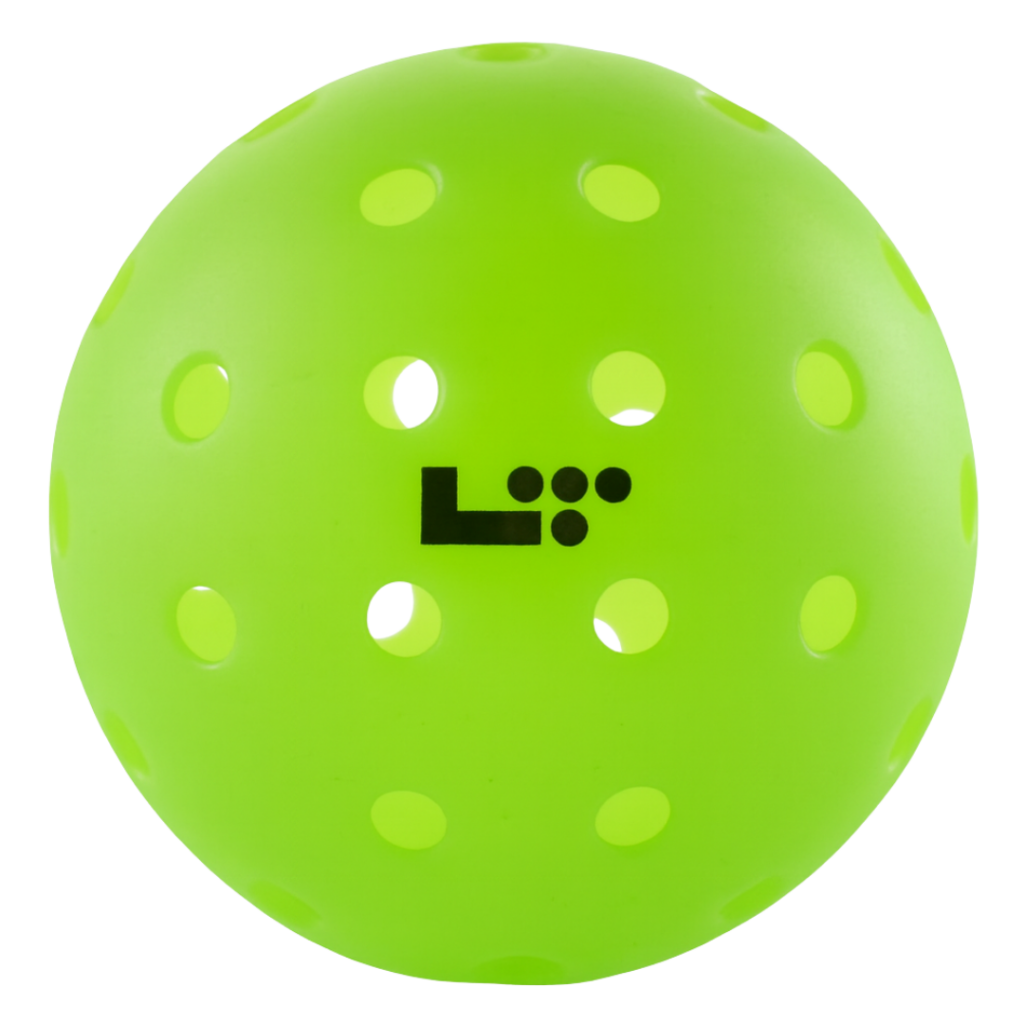
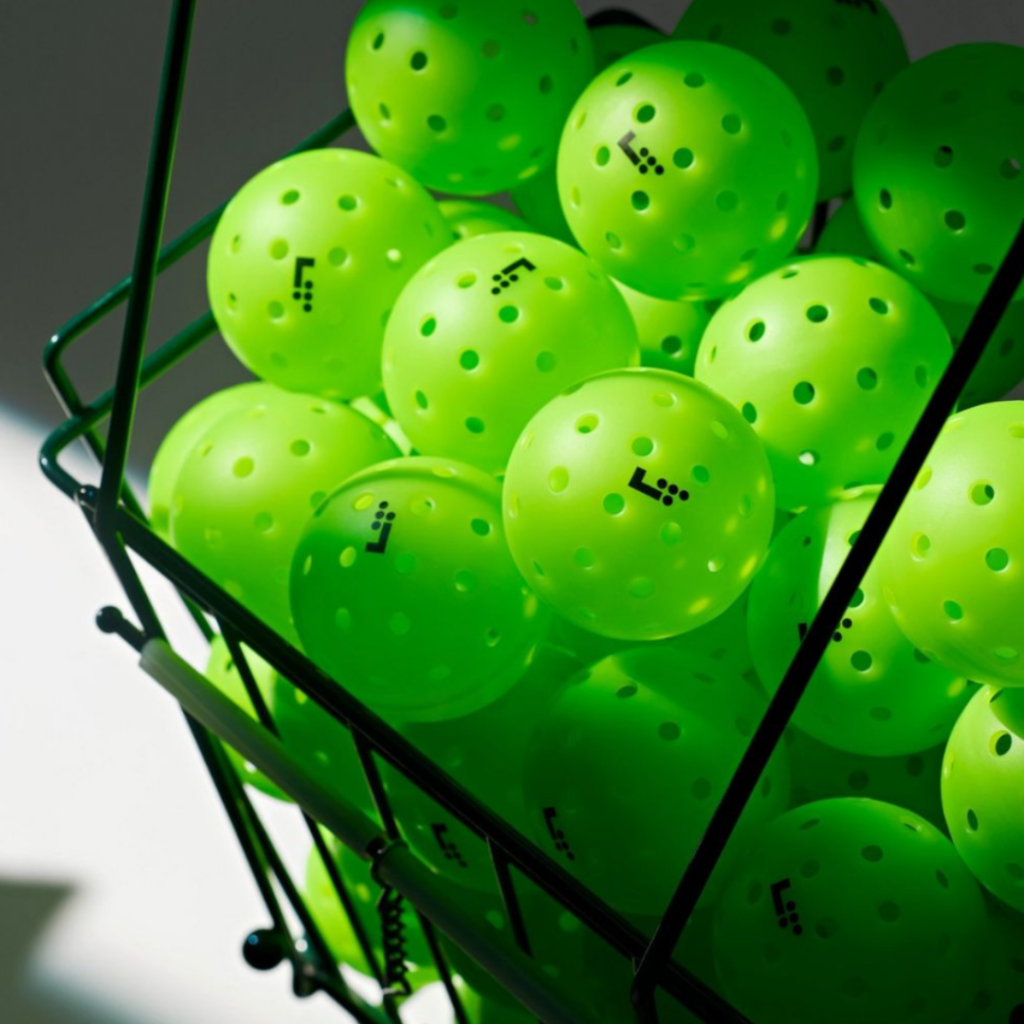
Consistent under pressure
The LT-48’s biggest strength is how well it stays round. I’ve never played another fast paced ball that holds its shape. When you’re playing against players with big serves or heavy pace, that matters. Balls that go out of round create weird bounces and hand out free points. This one doesn’t. You get a clean, predictable bounce even in high-speed play.
Handles pace well
On drives, counters, and speed-ups, it stays firm and doesn’t “give out”. The ball comes off the paddle more consistently, which higher-level players will notice immediately.
Break-in and long-term playability
Out of the box, it plays very fast and bouncy. After a few games, it settles in slightly, and that’s where it really shines. It maintains that break-in performance for a long time instead of dropping off quickly.
Durability
This is another highlight of the ball. It doesn’t crack easily. Over the last six months, I’ve only cracked one, and that was during a very cold early-morning session, which is a tougher environment than I typically play in.
Great for High-Level Play
This is a great ball for advanced play. It stays consistent, doesn’t bounce weird, and when you swing hard, it rewards you instead of feeling soft or muted.
Great for outdoor and hot conditions
It plays faster with a higher bounce, which helps counteract how balls tend to soften in heat.
Used at the highest level (but that’s not why it’s here)
The LT-48 is the ball used on the Professional Pickleball Association (PPA) Tour. That matters because players tend to gravitate toward whatever is being used in tournaments, and clubs often follow that lead.
But that’s not why this is the top fast ball here. It earns that spot because of how it actually performs. The durability, shape retention, and response to pace are what separate it.
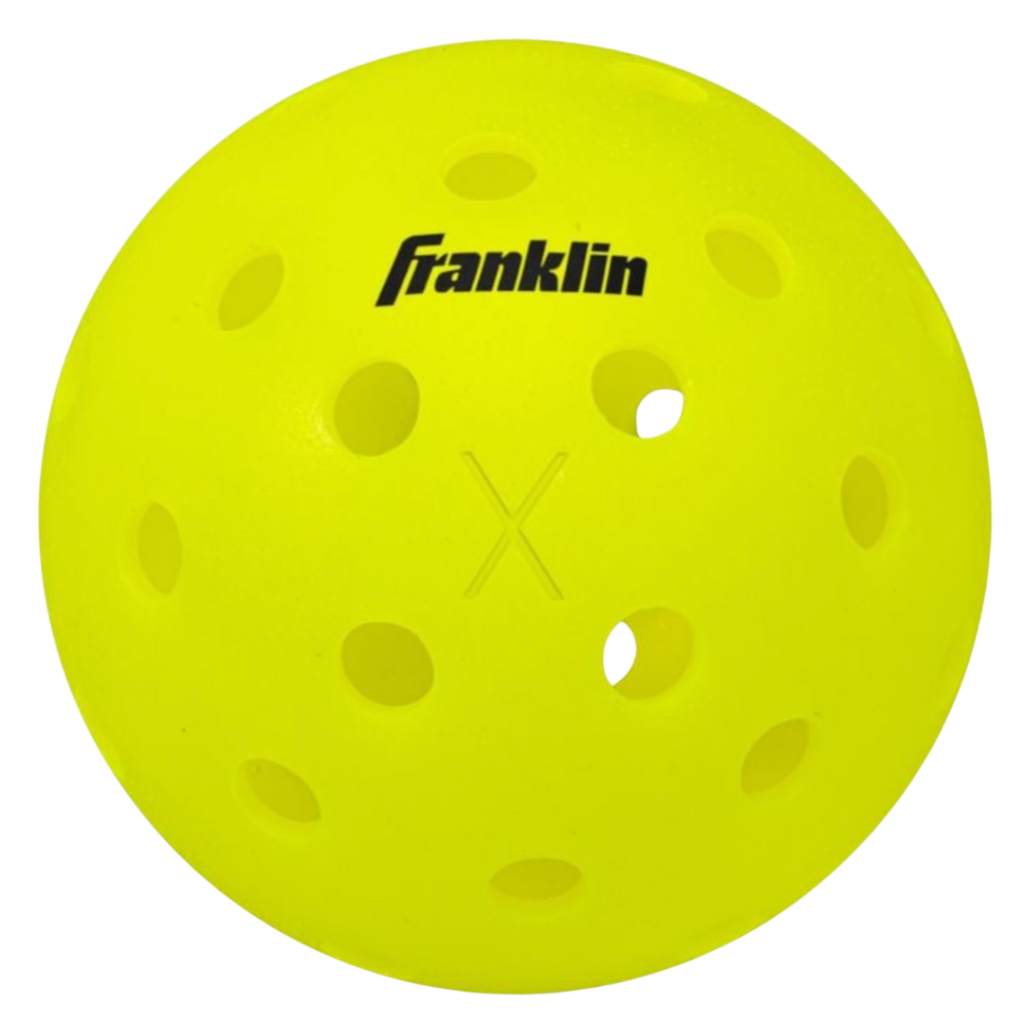
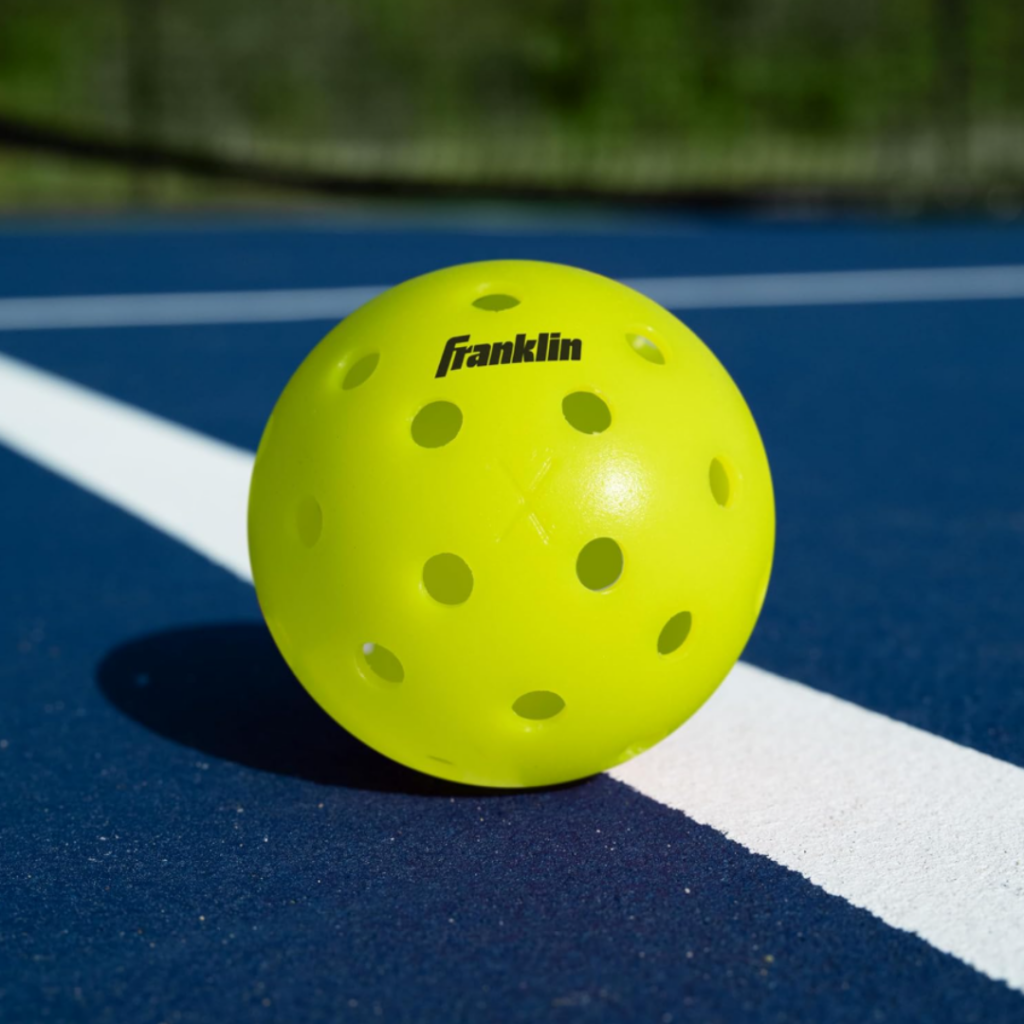
Controlled, slower response
The X-40 doesn’t jump off the face as quickly, which makes it easier to manage resets, drops, and extended hands exchanges. It’s a more controlled ball overall.
Reliable shape retention
It holds its shape better than other balls in its category, which keeps bounce more consistent and one of the bigger factors when looking for a good ball.
Softens under higher pace
As the game speeds up, it can start to feel soft or muted on contact. On harder swings, it absorbs more energy and doesn’t respond as cleanly as firmer balls like the LT 48 above.
Great for hardcourt indoor and controlled environments
In cooler conditions or controlled hardourt indoor environments, that softer response actually helps bring the game under control, especially with modern power paddles.
Gets “mushy” in hot weather
This is the biggest tradeoff. In higher temperatures, the X-40 tends to soften up more than most, which can make it feel a bit “mushy.” I don’t recommend it when it’s over 90 degrees outside.
Durability
The softer construction helps extend its lifespan, and it doesn’t crack as easily as many alternatives. It’s slightly above average in durability overall, though it still doesn’t hold up as well as the LT-48.
Best color choice (this actually matters)
The X-40 comes in multiple colors, but just get the optic yellow. It’s the easiest to track across any lighting conditions and court colors.
And yeah… showing up with anything else is a tough look.
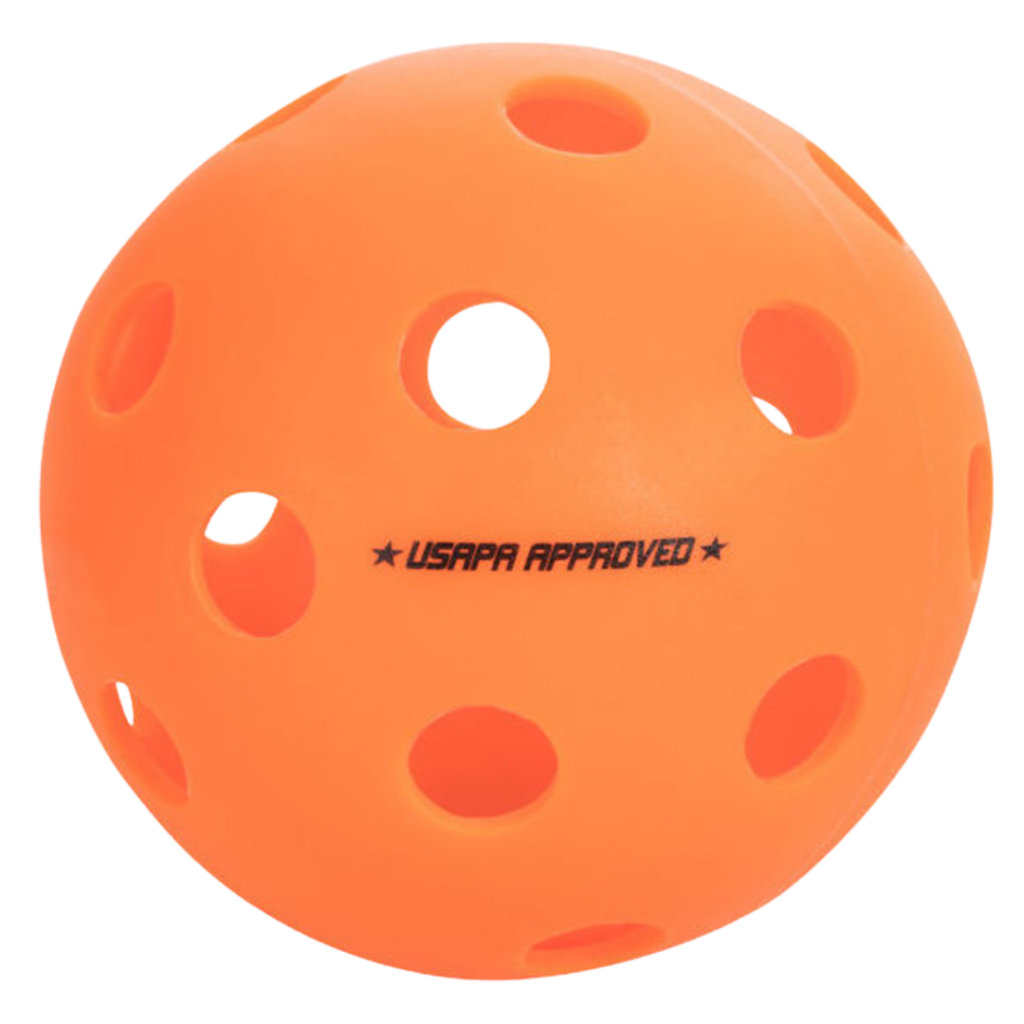
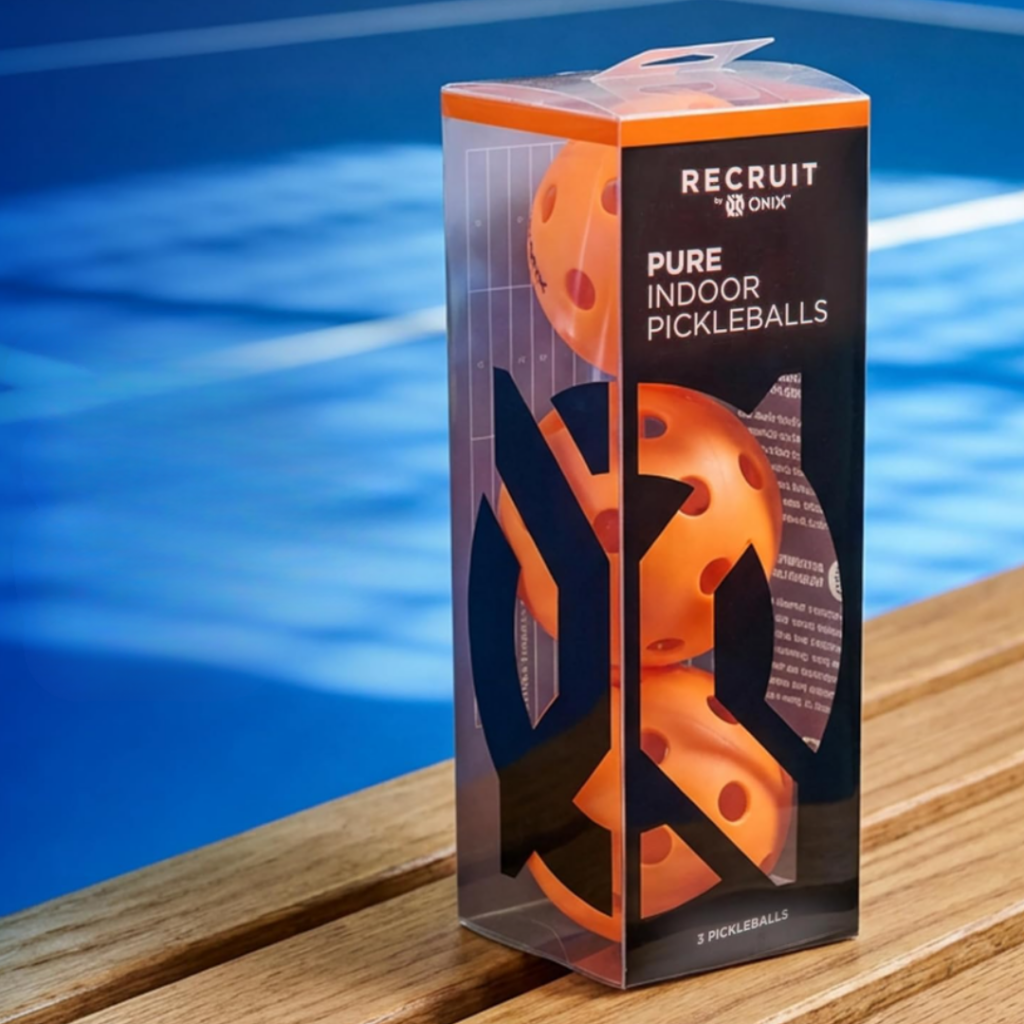
Built for wood surfaces
Outdoor balls like the LT-48 and X-40 don’t play well on wood floors. They tend to skip and skid, which makes the game feel inconsistent and hard to control.
The Fuse fixes that. It grips the surface better and produces a more true, predictable bounce, which is exactly what you want on a gym floor.
Consistent bounce, fewer bad hops
On wood courts, consistency is everything. The Fuse gives you a more reliable bounce pattern so you’re not dealing with random skips or low skidders that disrupt rallies.
Soft and slow, but that’s the category
The Fuse plays soft and slower, but that’s not a downside. That’s how every good indoor wood court ball plays because you need to use a softer material to get the grip you want on the wood floors.
Go with orange, not yellow
Get the orange version. It’s much easier to see on more yellowy wood floors.
This is where a lot of players get confused.
“Indoor” and “outdoor” balls aren’t really about whether you’re playing inside or outside. They’re about the surface you’re playing on.
Outdoor Balls
Outdoor balls (like the Lifetime LT-48 and Franklin X-40) are designed for hard, concrete-style courts.
These are what you’ll use on most dedicated pickleball courts, whether they’re outside or inside a facility with hard courts.
Indoor Balls
Indoor balls (like the ONIX Fuse) are designed for smooth wood gym floors.
On wood courts, outdoor balls tend to skip and skid, which makes the game feel inconsistent. Indoor balls fix that by giving you a more true, predictable bounce.
The Simple Rule
A lot of newer facilities are “indoor” but still use hard courts. In those cases, you’ll still want an outdoor ball.
There are a number of balls that play well initially but fall off quickly.
From my testing, these are the common issues:
Balls like:
can feel good early on, but they don’t maintain their shape nearly as well as the LT-48 or X-40. Over time, that inconsistency becomes noticeable and affects play.
This isn’t just about preference. Where you play and how hard you hit the ball both matter, especially with how powerful paddles are now.
In indoor environments, the game already plays quicker because of cooler conditions. Add in modern power paddles, and it can get lively.
The X-40 helps balance that out. It takes a bit of pace off the ball, making resets, drops, and hands exchanges easier to manage.
This is where the separation really shows up.
At higher levels, the game speeds up and consistency becomes everything. A lot of players move away from the X-40 because it can feel too soft when the pace picks up. On harder drives, counters, and speed-ups, the ball can feel like it “gives out” or absorbs too much energy, which leads to less predictable results.
The LT-48 doesn’t do that.
It stays firmer and responds cleanly at higher speeds, so the ball comes off the paddle more consistently and predictably when you’re hitting hard. That makes a big difference in fast exchanges where you need the ball to behave the same way every time.
On top of that, it plays faster and bounces higher, which helps keep the game from dragging in hotter conditions where balls tend to soften.
Most pickleball balls aren’t separated by how they play on day one. They’re separated by how they hold up and how well they fit your environment.
That’s why I keep coming back to:
Pick the one that matches where you play, and you’ll get a much better on-court experience.
Reviewer Profile
Braydon Unsicker is the founder of Pickleball Effect and has been reviewing pickleball gear since 2020. He’s known for independent, data-backed paddle reviews and hands-on testing that help players cut through marketing claims and make smarter equipment decisions.

Affiliate disclosure: This review wasn’t paid for or approved by the brands. Everything here reflects my own testing and opinions. If you click the links on the page or use my discount codes, I may earn a small commission at no extra cost to you that supports my testing and reviews.