
Selkirk’s move into performance footwear was inevitable. As one of pickleball’s top paddle brands, they’ve spent years pushing innovation in paddle design, and now they’re aiming to do the same with shoes. The CourtStrike and CourtStrike Pro mark their first official entries into footwear, built from the ground up to meet the needs of pickleball players rather than serving as rebranded tennis court shoes.
I tested both models to see if Selkirk’s first effort delivers something truly pickleball-specific, or if they’re just tennis shoes in disguise.
Use code INF-BRAYDONU to add a gift card to your purchase.
Affiliate disclosure: Selkirk provided these shoes for testing, but this review was not sponsored or guaranteed. All thoughts are my own. If you’d like to support my work and decide to pick up a pair, you can use code INF-BRAYDONU at checkout or click the affiliate links in this article.
Looking for the right paddle to fit your game? Take our paddle fitting quiz for three recommendations that will match your style of play.
Best for: Competitive players who prioritize stability, responsiveness, and a contained feel.
Fit: True to size with a snug midfoot and slightly wider toe box.
What stands out: Multiple features engineered for lateral support and aggressive movement.
Watch out for: Firmer cushioning and a short break-in period.
Bottom line: One of the first shoes that genuinely feels engineered for pickleball footwork.
| Spec | CourtStrike Pro | CourtStrike |
|---|---|---|
Weight (Men’s 10) | 13.6 oz | 12.8 oz |
Drop (or offset) | Medium | Medium |
Cushion Feel | Firm/Responsive | Firm/Responsive |
Fit | True to size; snug midfoot, wider toe box | True to size; snug midfoot, wider toe box |
Intended Use | Competitive / High-Performance | Recreational / High-Performance |
Price | $120 | $100 |
Before diving into the review, it’s worth considering what actually makes a pickleball shoe different from a tennis shoe.
Since the start of the sport, pickleball players have mostly worn tennis shoes simply because that’s all that was available. Until recently, the major footwear brands hadn’t invested in designing something truly pickleball-specific.
In my view, a real pickleball shoe should prioritize:
Tennis footwear, by contrast, is designed for longer strides, linear acceleration, and controlled slides that ease impact from full-speed lateral sprints, movements that simply don’t happen in doubles pickleball.
These are the traits I used to evaluate the CourtStrike shoes.
Selkirk collaborated with Dave Larson who has experience at Brooks Running, K-Swiss, and Nike. Larson helped engineer the core structure and stability systems in both models.
Both the CourtStrike and CourtStrike Pro share several design fundamentals: a wider platform for stability, a continuous herringbone tread with deeper grooves, a TPU shank plate in the midsole, and a runner’s-knot-compatible lacing system.
The primary difference lies in the uppers. The CourtStrike Pro features a 360-degree TPU overlay that reinforces lateral movement and adds upper durability, while the CourtStrike uses a softer, more flexible mesh for a plusher lace up feel.
Use code INF-BRAYDONU to add a gift card to your purchase.
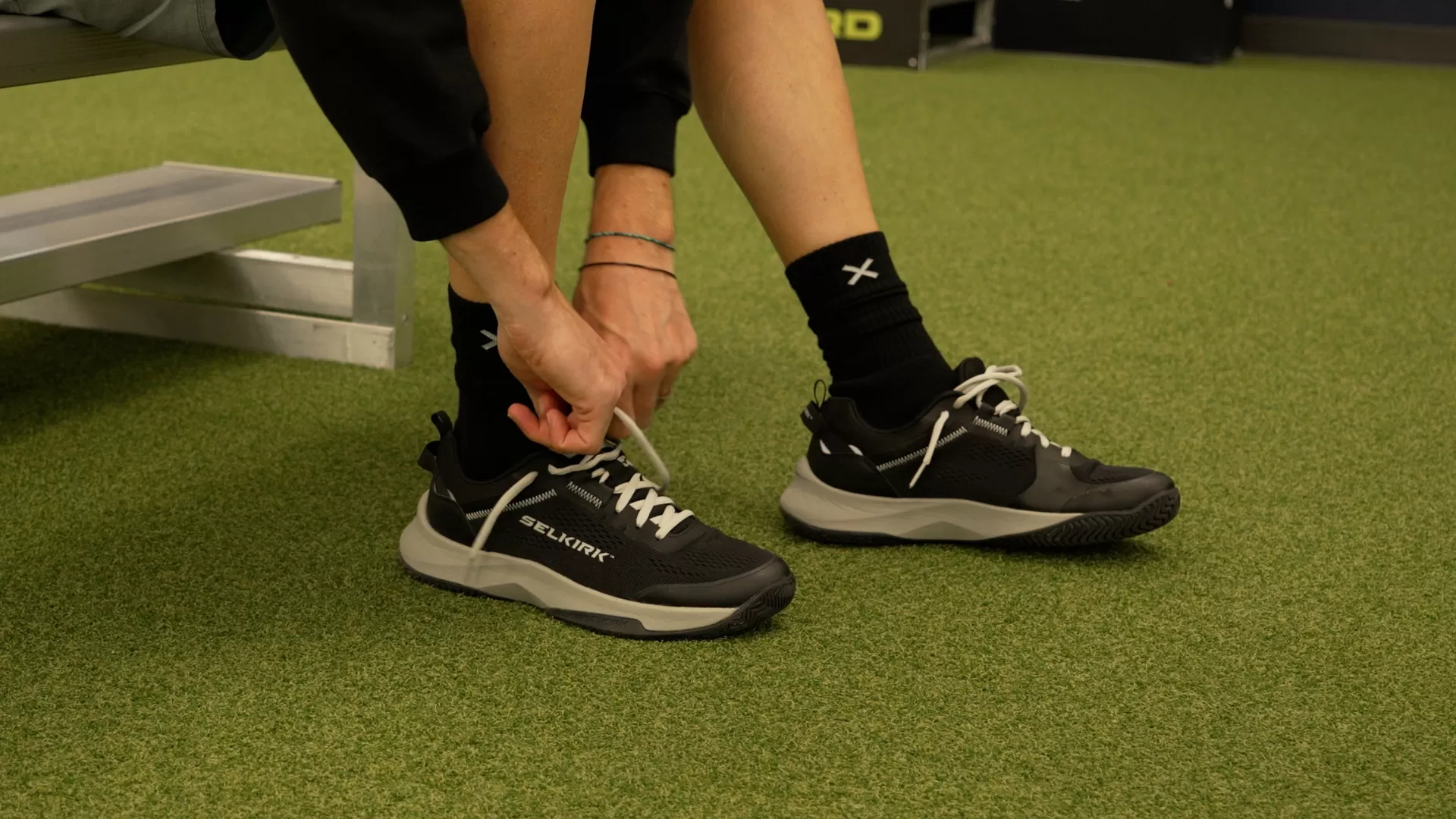
Both shoes fit true to size, with a snug midfoot and a moderately wide toe box. The Pro feels more structured and performance-oriented, while the CourtStrike is softer and more forgiving in the uppers.
I have narrow feet and felt some pressure points on the sides of my forefoot early on, though players with medium width feet haven’t reported similar issues and players with wide feet also reported some discomfort.
Heel containment is good if you use the runner’s knot, otherwise, you’ll likely feel some heel movement. The Pro requires a short break-in period before the upper flexes naturally, while the CourtStrike feels comfortable right out of the box.
Underfoot, both have a firmer ride with slightly more cushion in the heel for shock absorption. Players needing additional under-arch support or softer cushioning may want to supplement with different insoles.
This is where both shoes excel, especially the CourtStrike Pro. Several design elements contribute to impressive lateral support: the deep, continuous herringbone tread for traction, the midfoot shank for torsional rigidity, the extended lateral outrigger, and the TPU upper wrap on the Pro.
The result is a shoe that feels planted and balanced when you’re leaning into blocks at the kitchen or making quick directional cuts. This is what makes it a pickleball shoe to me rather than a repurposed tennis shoe. The structural emphasis on side-to-side control and stability shows clear awareness of how pickleball players actually move.
Both models use a firmer EVA blend combined with a TPU shank in the midsole. This gives you a firmer underfoot feel that reacts and responds quickly to small and big push offs. Players who prefer a performance-oriented ride will appreciate this firmness, while those wanting a softer, more forgiving experience may find it too rigid for long sessions.
Both shoes feature a relatively high offset or heel to toe drop of around 8 mm, noticeably steeper than most tennis court shoes. The added heel elevation shifts your weight slightly forward, theoretically creating a more athletic stance and helping absorb impact from split-steps and lunges. The trade-off is a touch less flat-footed stability at the kitchen. It’s a design choice that prioritizes heel strikers and planting rebound over maximum court connection. I personally prefer the agility I get from shoes closer to the ground with a flatter offset but players coming from other sports, particularly running, will feel more natural here than with a flatter shoe.
Selkirk’s full-length herringbone outsole with deep grooves was the right call and one of the pickleball-specific design choices they made.
The lack of decoupled pods means more surface area contacts the court when you’re planted, adding to stability and responsiveness. The deep tread pattern bites well in any direction with little to no sliding, which is ideal for doubles play. The herringbone also channels dust outward as you move, keeping traction consistent throughout matches, unlike geometric or pod-based patterns that tend to collect debris.
All the benefits of a herringbone tread seem to cater to pickleball well. I don’t imagine we see anything other than herringbone or modified herringbone tread patterns in future pickleball shoes from any brand
Use code INF-BRADYONU to add a gift card to your purchase.
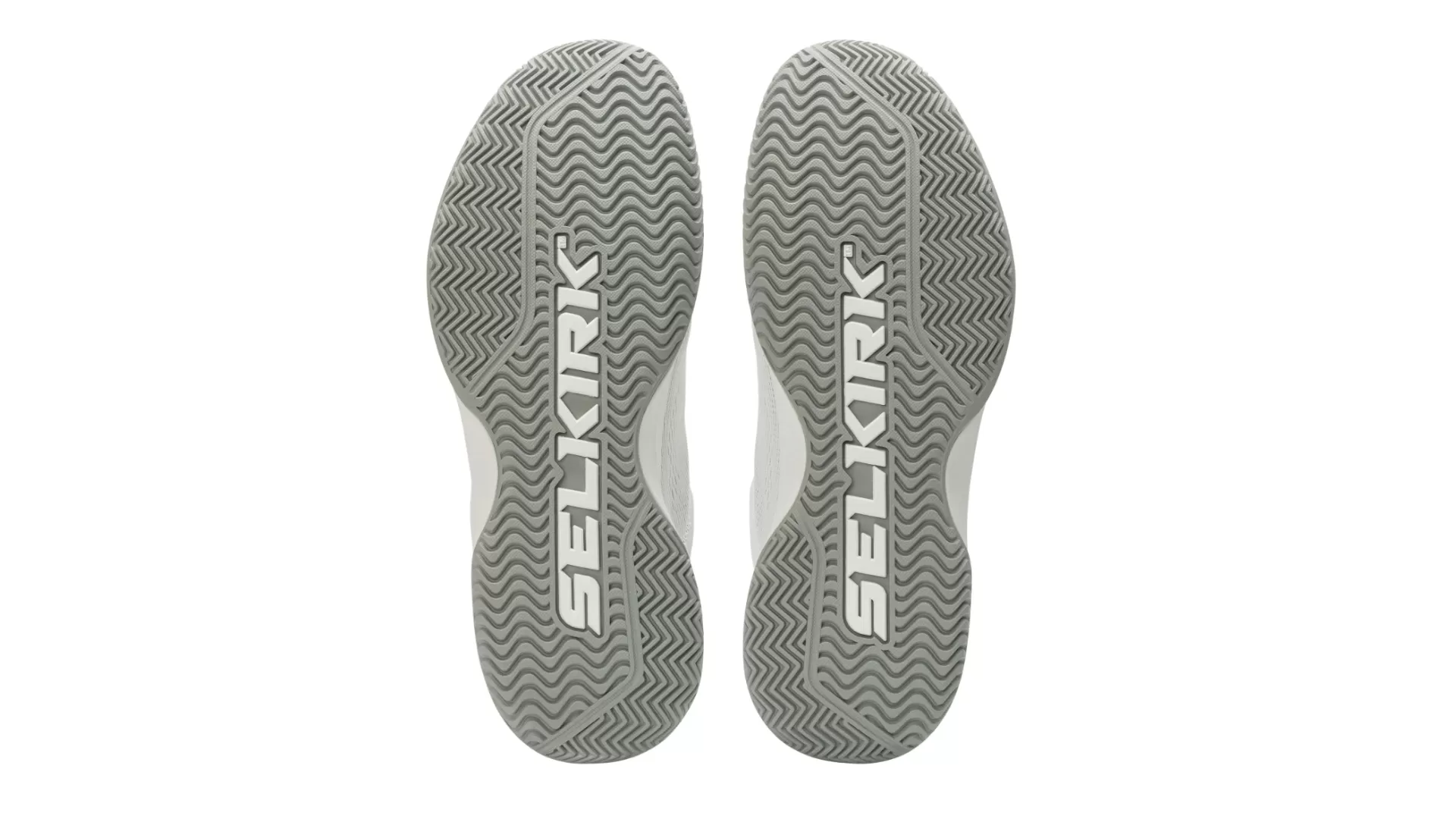
CourtStrike Tread Pattern
When Selkirk first launched these shoes in January 2025, players reported premature outsole wear. Selkirk quietly paused production and revised the rubber compound, re-releasing the improved version in September 2025 with much stronger durability.
The update worked: after testing, the new outsole shows only moderate wear in high-friction zones, and the overall construction, from stitching to midsole compression, feels solid.
Plus Selkrik offers a 6-month outsole warranty for these which is a big deal and is always something I look for and appreciate from brands.
| Category | CourtStrike Pro | CourtStrike |
|---|---|---|
Traction | 9.5 | 9.5 |
Stability | 9.0 | 8.5 |
Cushioning | 6.5 | 6.5 |
Responsiveness | 8.5 | 8.0 |
Court Feel | 8.0 | 8.0 |
Lockdown | 8.5 | 7.5 |
Comfort | 7.0 | 7.5 |
Durability | 8.5 | 8.5 |
Value | 8.5 | 10 |
Overall Score | 8.4 | 8.2 |
The CourtStrike line plays like a serious performance shoe. Firm, supportive, and confidence-inspiring during lateral movement. It rewards aggressive movers who need reliable bite and containment.
Players seeking plush cushioning or those with narrow feet will want to explore softer or more narrow fitting shoes from other brands.
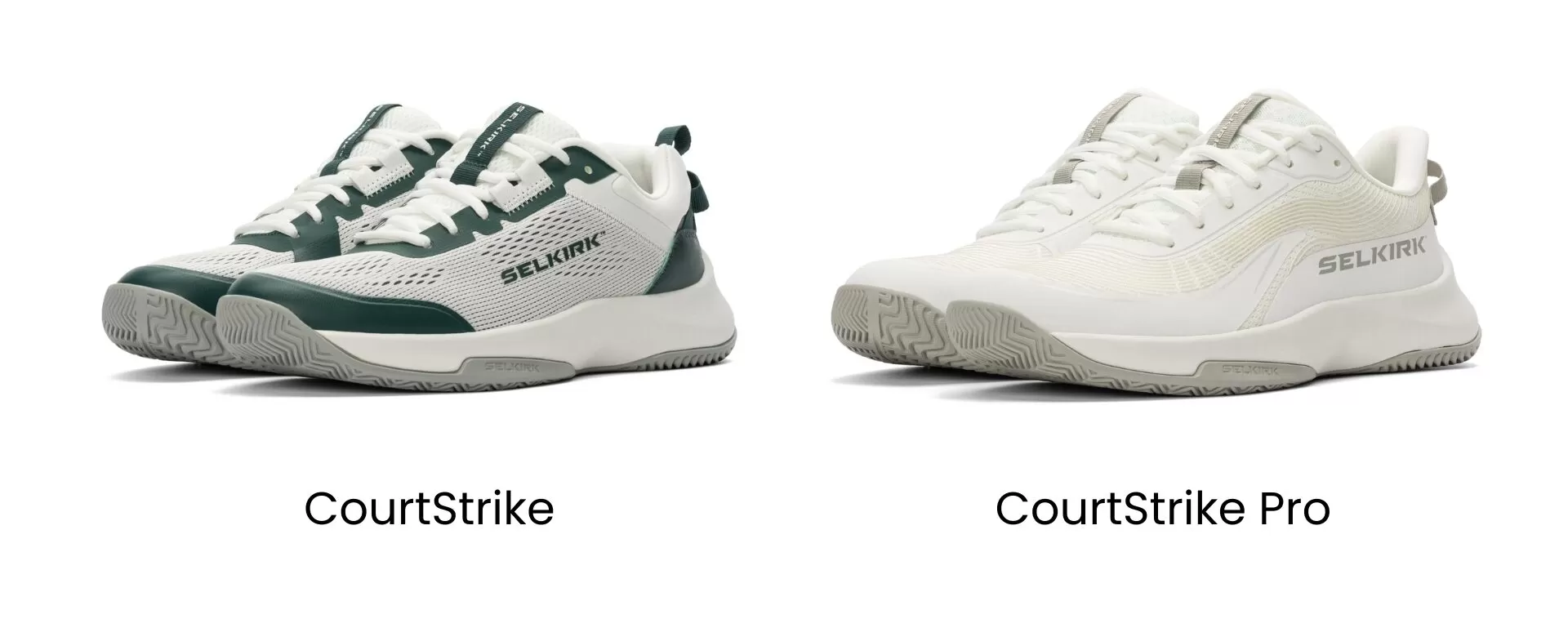
CourtStrike vs CourtStrike Pro
The Courtstrike Pro adds the 360-degree TPU wrap in the upper, which does improve lateral stability, but only slightly, and then it also makes it a bit heavier. The shank plate, wide base, and outsole design already provide excellent support, so most players will be fine saving $20 and going with the standard CourtStrike, which also offers a more plush step-in feel.
That said, if you tend to drag your toes, the Pro’s TPU overlay adds meaningful protection and longevity to the upper which will be enough to persuade some to go that direction.
Selkirk’s footwear debut lands strong. Both models feel purpose-built for pickleball’s short, reactive movement patterns and lateral demands.
If this is their starting point, they’re off to an impressive one. Selkirk clearly identified what pickleball players actually need in a shoe and addressed it directly. It’ll be exciting to see how the pickleball shoe category evolves and diversifies from here.
Use code INF-BRADYONU to add a gift card to your purchase.

Looking for the right paddle to fit your game? Take our paddle fitting quiz for three recommendations that will match your style of play.