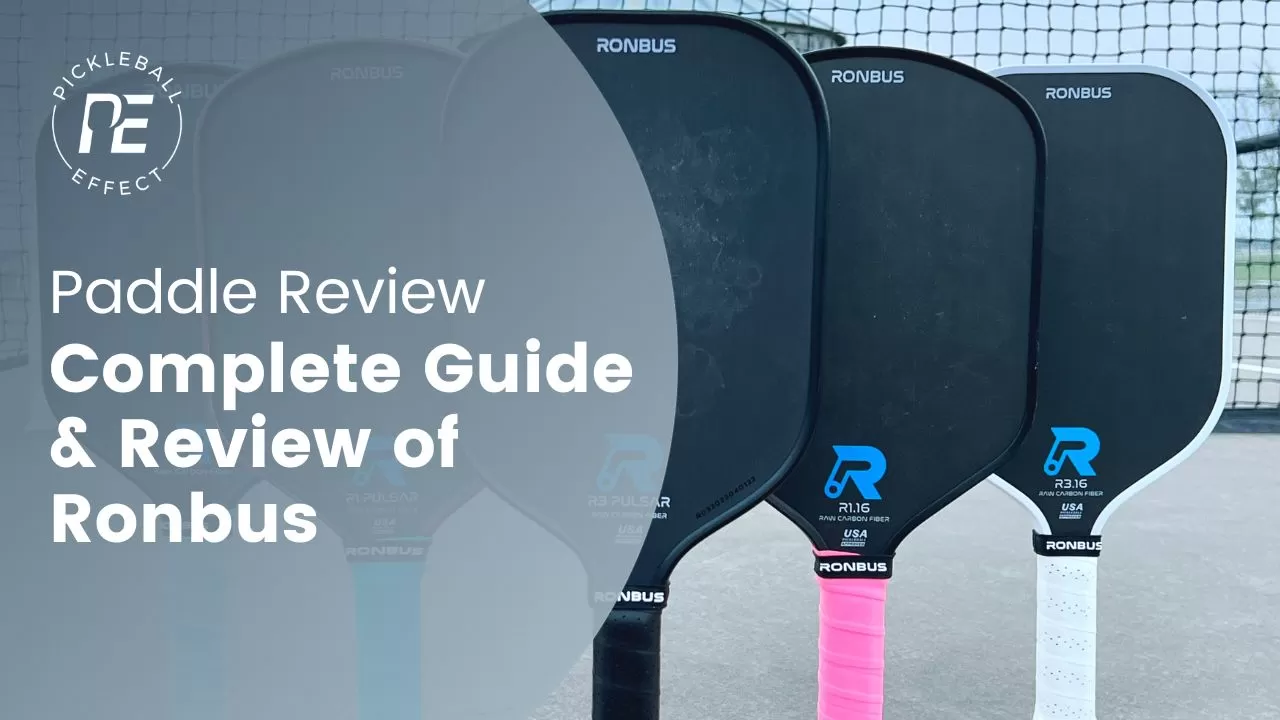
Ronbus is a grassroots pickleball brand that has become influential in the pickleball world through word of mouth and positive reviews. Known for providing exceptional value and quality, Ronbus has earned respect and a dedicated community of followers due to their transparency around their manufacturing process, involvement in online communities, and excellent customer service.
I was able to get my hands on Ronbus’ most popular paddles so that I could compare them side by side, note their differences and help direct you towards the one that would best fit you. If you are interested in getting a Ronbus paddle but aren’t sure which one, this guide/review is for you.
Looking for the right paddle to fit your game? Take our paddle fitting quiz for three recommendations that will match your style of play.
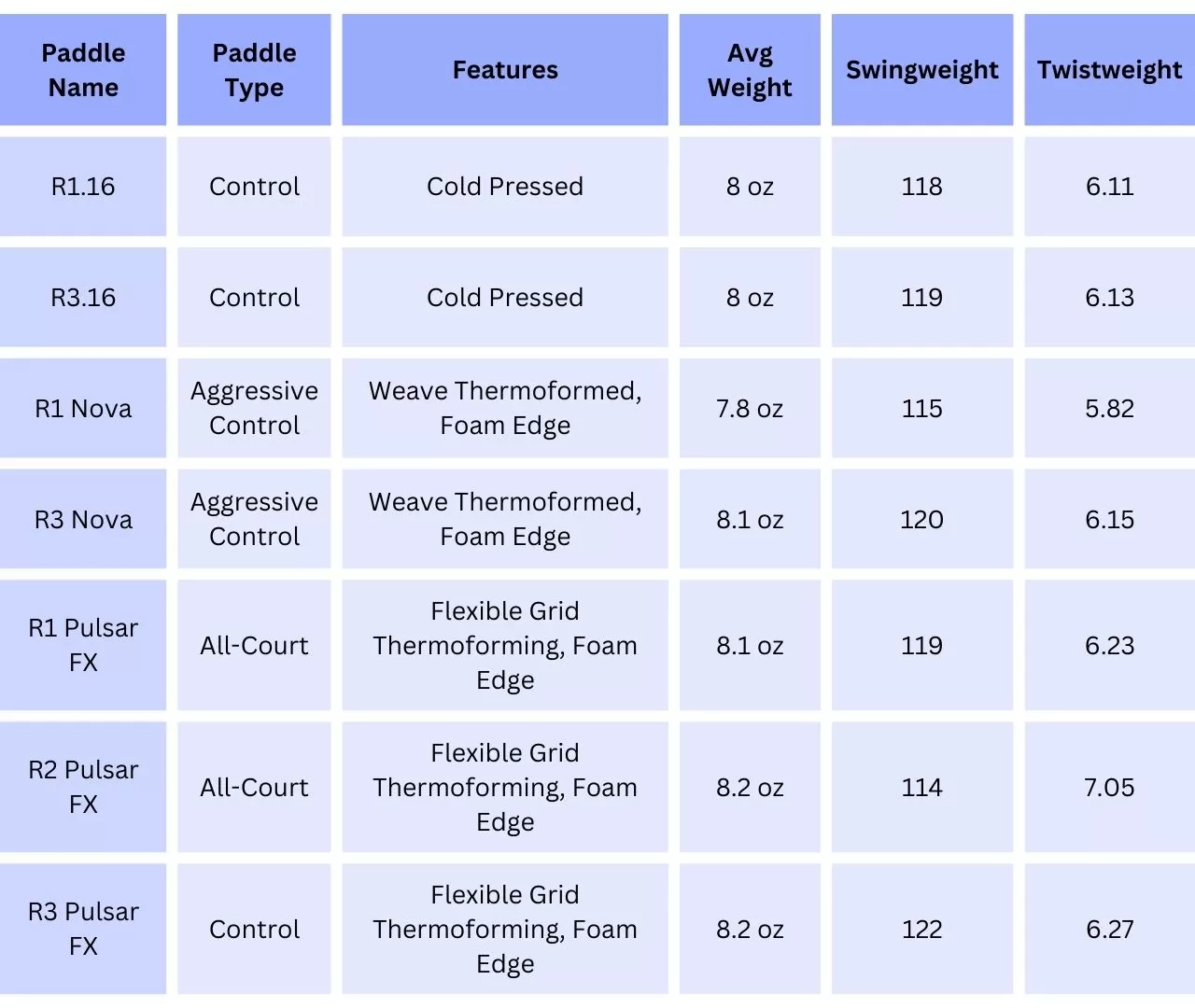
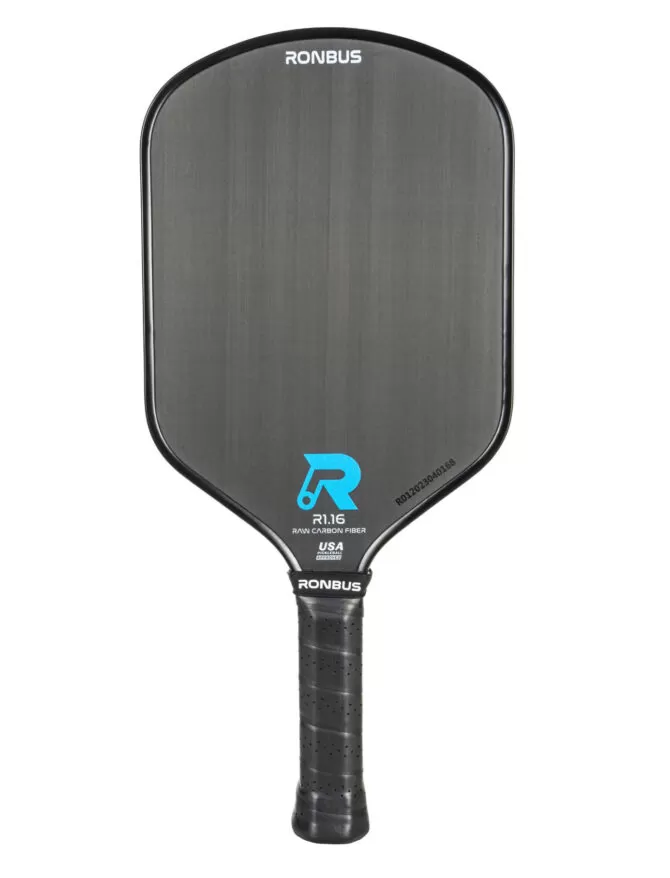
The R1.16 and the R3.16 are the two most control oriented paddles of the Ronbus bunch and compete with control paddles that cost twice as much. It’s easy to take pace off the ball but requires more effort to add power. Spin comes easy and is naturally produced with your strokes without any exaggerated motions. For an elongated shape, it boasts good maneuverability. The paddle has a slightly larger than average sweet spot and a plush, soft feel, providing a satisfying sensation when making contact with the ball, which in turn improves control. If you struggle with popping the ball up, this paddle can assist in keeping it down. If you need help controlling the ball and improving your consistency, this paddle will enhance your soft game.
It plays most similarly to the R3.16. The main difference between the two being the swingweight. The swingweight is lower on the R1.16 which makes it more maneuverable and a touch less powerful compared to the R3.16.
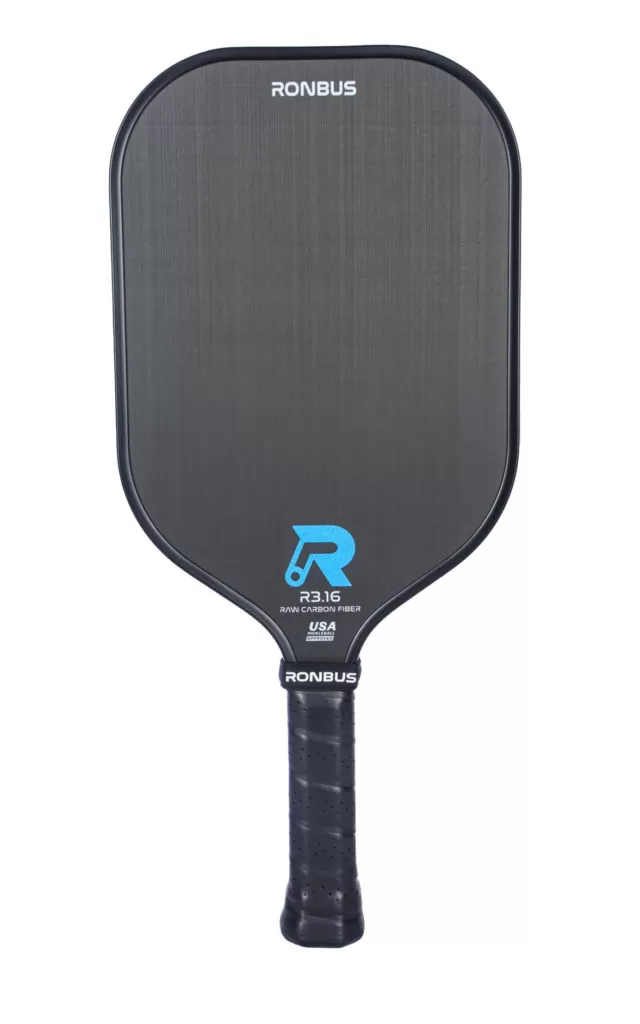
Similar to the R1.16, the R3.16 is a control-oriented paddle with a square top design. As such, it feels and performs much the same way. One key difference between the two, however, is the R3.16’s higher swingweight. This extra heft allows for more powerful groundstrokes and makes the paddle slightly more forgiving. The twistweight measurement for the R3.16 was lower than the R1.16 but without knowing those numbers I would have said the R3.16 plays with a little more forgiveness than the R1.16. Nevertheless, it shares the R1.16’s qualities of excellent control, large amounts of spin and requires more effort to generate power though it will give you a little more power than the R1.16.
The R3.16 has a slightly denser, plush feel to it while the R1.16 has a lighter, plush feel to it. I thought I could control the R3.16 a little better since it carried through the ball easier at impact compared to the R1.16. However, I did notice a slower maneuverability speed compared to the R1.16, which some players might find limiting.
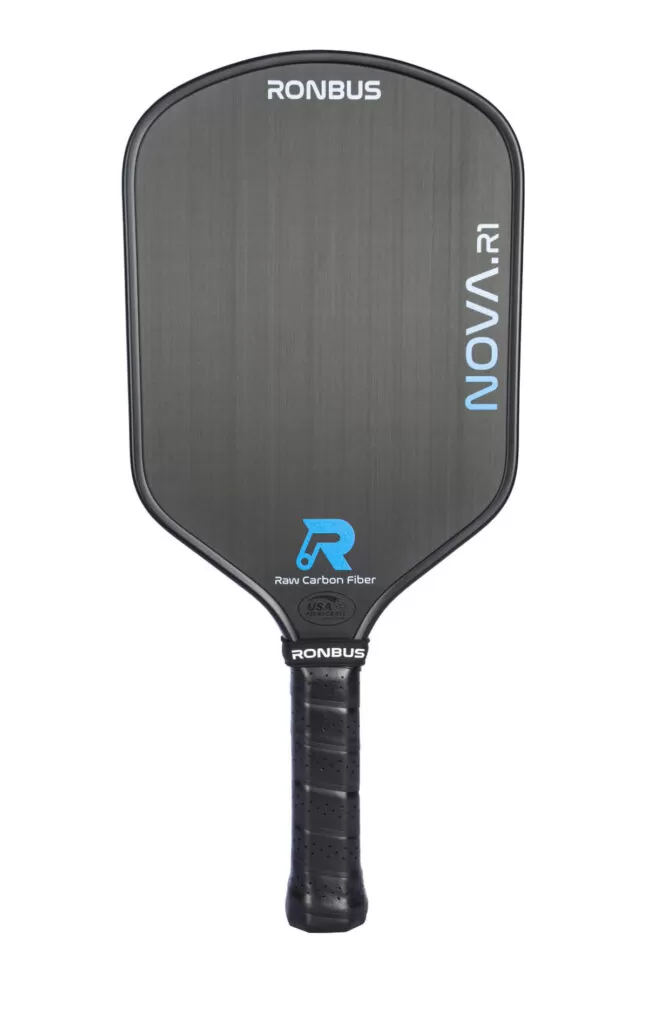
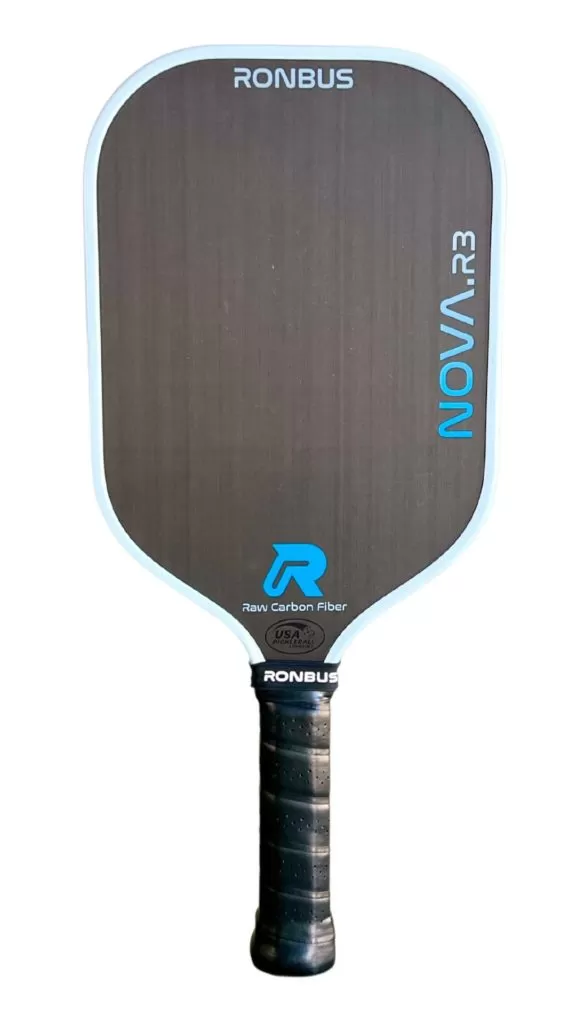
The R3 Nova came out a couple of months after the R1 Nova and plays slightly different than the R1 Nova though they are both made with the same weave thermoforming technology. Like the R1 it offers similar power from the baseline as the Pulsar series but is a little softer feeling than traditional thermoformed paddles and doesn’t have as much pop at the net on shorter swings. It is easier to control as a result, though.
The biggest difference between the R3 Nova and the R1 Nova is that the R3 plays more forgivingly and has a higher swingweight. While it feels heavier than the R1, it is still on par with most other elongated shapes. The R1 is just really light for an elongated shape. Unlike the R1, the R3 doesn’t require lead tape for customization so I didn’t feel the need to add any extra weight to it with lead tape. It’s also worth noting that the R3 Nova is a couple of points lighter than the R3 Pulsar.
The higher swingweight gives you more on counter punches and volleys and just feels more stable in general. Like the R1 Nova, I’m categorizing it as an aggressive control paddle. On the spin side, it falls in line with the R1 with RPMs averaging just under 1900 which is great result though it falls just short of my very high spin category.
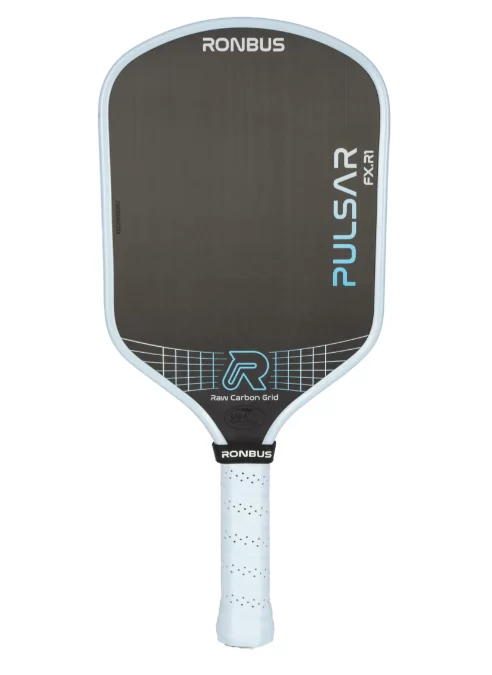
The Pulsar FX series is the update to their original Pulsar series. It features an extra layer of carbon fiber underneath its facing sheets that is in the form of a grid like the top of a pie. Ronbus calls it the Flexible Grid. The series also has the same grid technology encasing the perimeter of the paddle.
This paddle falls into the all-court category and gives you a touch more power, pop, and spin than the previous Pulsar series. While not big jumps in any of those categories, they are jumps. They also feature a slightly smoother feel to them that isn’t quite as stiff as the previous line though still stiffer than their other lines of paddles. Players who like a softer, plusher feel would like Ronbus’ other paddle lines but those that like a crisper, more responsive feel will like the feeling of the FX series more.
Aside from the extra power and pop this series gives you over Ronbus’ other paddles, they are also a little more forgiving and stable than the others which is a nice plus. You find yourself hitting less unforced errors. This comes at a sacrifice of some maneuverability, though. It has a higher swingweight than the Nova and control line.
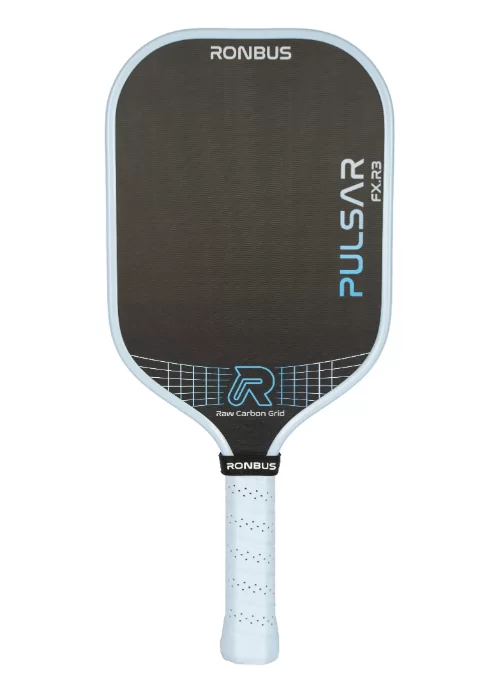
The R3 shape in the lines other than the Pulsar FX plays slightly different than the R1 shape where it gives you a little more forgiveness at the cost of a little more weight. However, that wasn’t the case in the Pulsar FX Series. It has a similar level of forgiveness and plays extremely similar other than it it’s a bit heavier. I don’t really see a reason to pick the R3 FX over the R1 FX since the R1 FX gives you everything the R3 does, but in a lighter package. And it’s not like the R1 is super light so even if you prefer higher swingweight paddles, there isn’t much of a difference there.
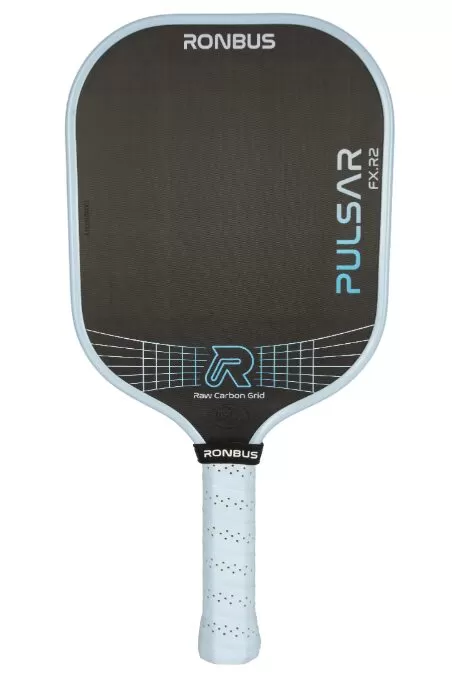
This new R2 shape was introduced with the Pulsar FX series. It’s a standard shaped paddle that is shorter and wider than the other paddles Ronbus offers and is paired with an extended 5.5 inch handle. Historically we haven’t seen many standard shaped paddles paired with longer handles and I’m loving the trend and love seeing more brands do it because I think it’s a winning combination.
This paddle has all the same tech I explained earlier under the R1 Pulsar FX but it’s different shape makes it more forgiving and more maneuverable at the cost of some reach and power since the paddle is shorter. The sweet spot feels massive on this thing and it’s very easy to play with. The paddle flirts with control and all-court category line. It doesn’t give you as much power as the R1 and R3 shapes but when you compare it to similar shaped paddles from other brands it gives you a touch more power and pop which is nice.

Looking for the right paddle to fit your game? Take our paddle fitting quiz for three recommendations that will match your style of play.