

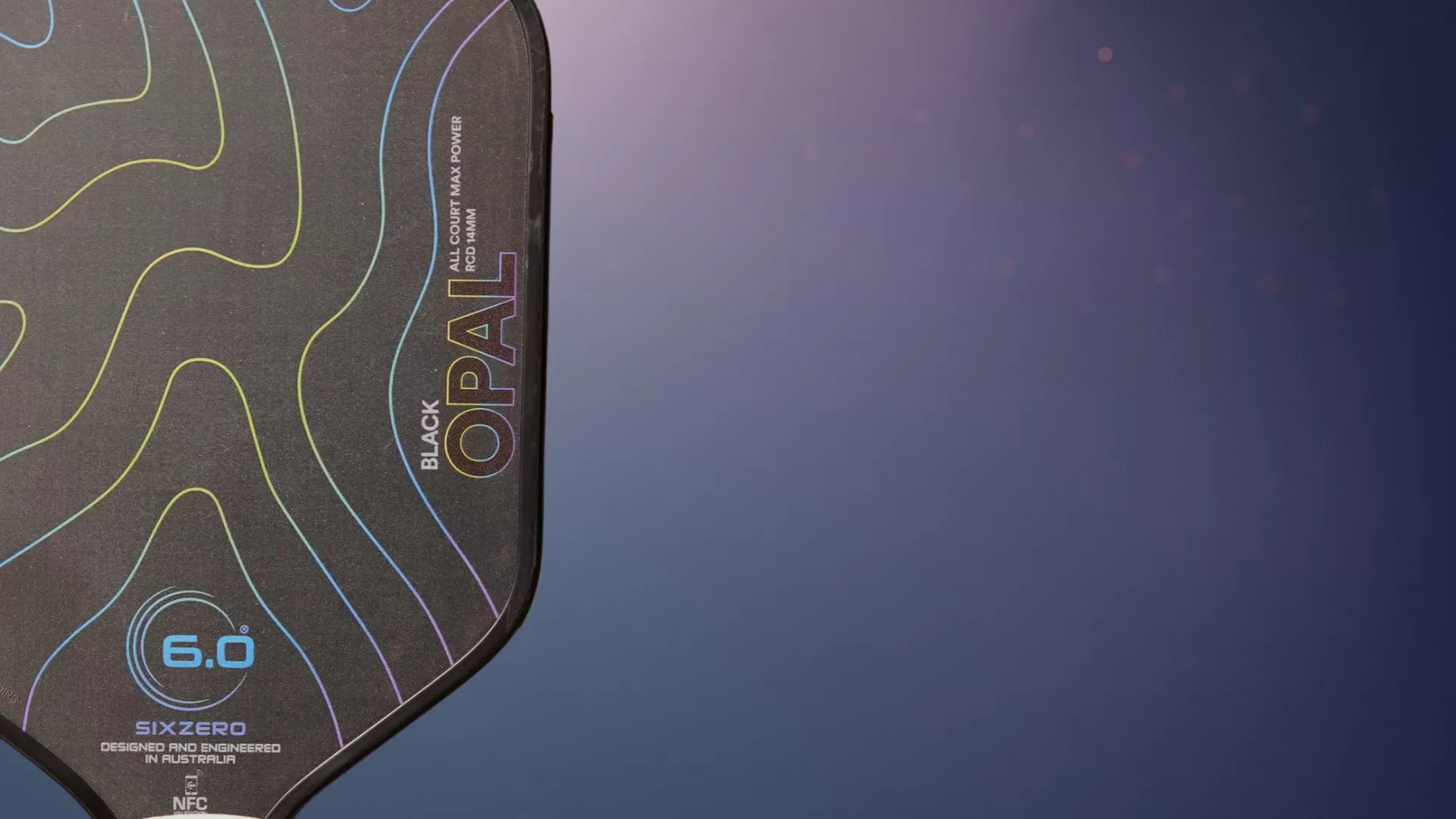
Six Zero was the brand to beat in 2023 but has been quiet since. Until now. The Black Opal marks their return, showcasing Six Zero’s R&D capabilities with a unique higher-density foam core and an innovative Diamond Tough texture that uses industrial diamonds to improve grit durability.
The result is one of the hardest-hitting paddles I’ve tested, combining huge power with a dense, springy, and satisfying feel. It gives you a unique playing experience that’s genuinely very fun to hit though its combination of big power and an okay sweet spot makes it a better fit for advanced players rather than those still developing their game or looking for more user-friendly power.
For this review I’ll dive into tech & specs, on-court performance, market comparisons and my recommendation.
Save with code PBEFFECT on Six Zero’s website or click the Pickleball Central link to apply discount.
Affiliate disclosure: I was sent this paddle to test, but this review wasn’t paid for or approved by the brand. Everything here reflects my own testing and opinions. If you use the links or my code PBEFFECT, I may earn a small commission at no extra cost to you that supports future reviews.
*Quick disclaimer before we get into it. I was sent a pre-production version of the Black Opal that was originally expected to be the same as the final retail model. Six Zero ended up making a few small tweaks before launch, mainly adding a bit of reinforcement in the throat area. From what I’ve been told, the production and pre-production versions are pretty well the same paddle. This review is based on my experience with the pre-production model, and I’ll share an update if I notice any performance differences once I receive and test the production version.
Looking for the right paddle to fit your game? Take our paddle fitting quiz for three recommendations that will match your style of play.
The entire construction is uniquely Six Zero. Most paddles are small variations of what already exists, but the Black Opal showcases true R&D depth and creativity from a brand capable of engineering something original.
Key New Technologies in the Black Opal:
I am particularly excited about the Diamond Tough innovation. Improving grit durability has been one of the biggest industry-wide challenges, and this feels like a meaningful step forward. Seeing several original technologies in one design highlights Six Zero’s R&D capabilities and reinforces why they stand out as a true innovator in paddle engineering.
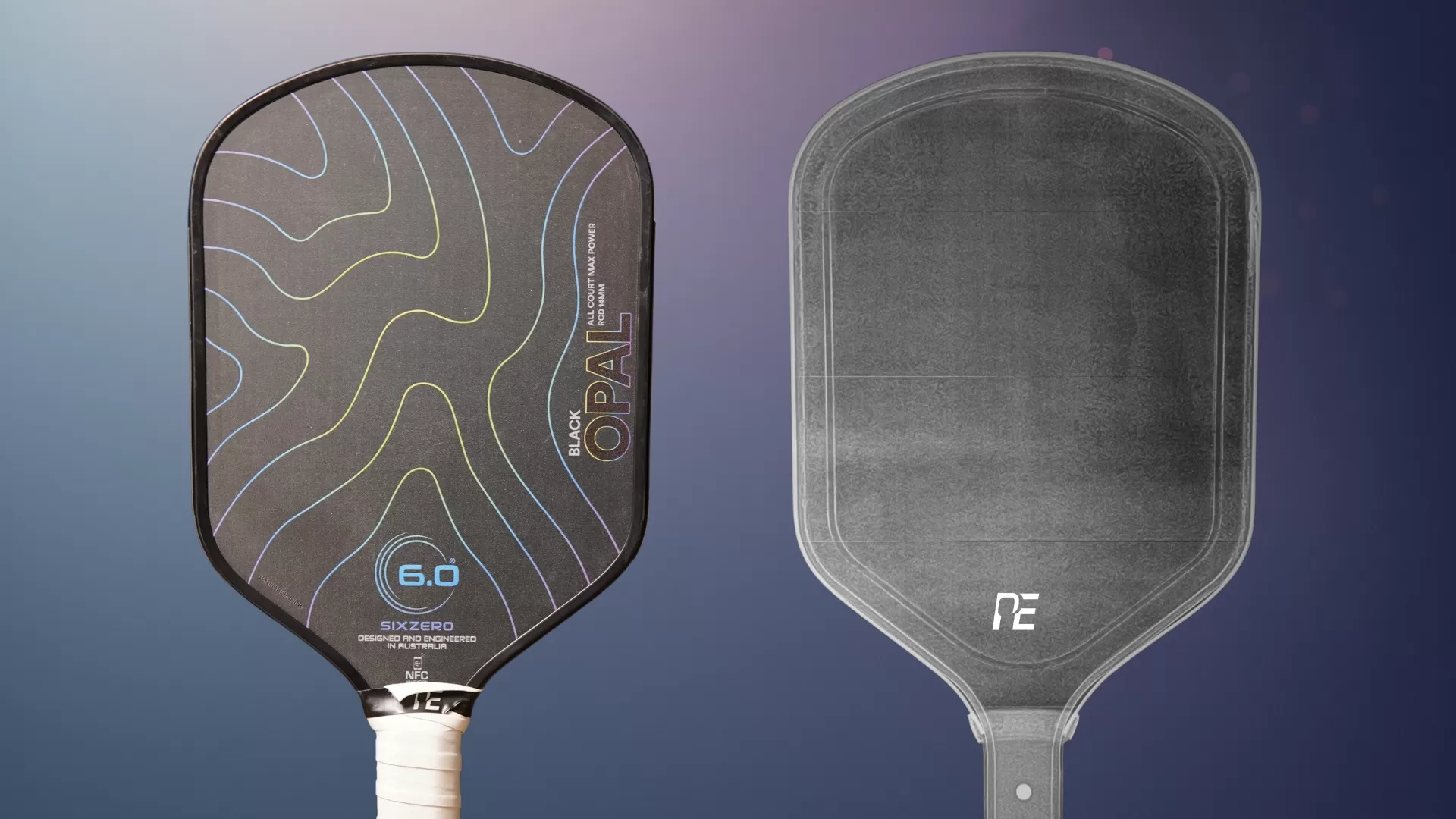
Black Opal X-Ray
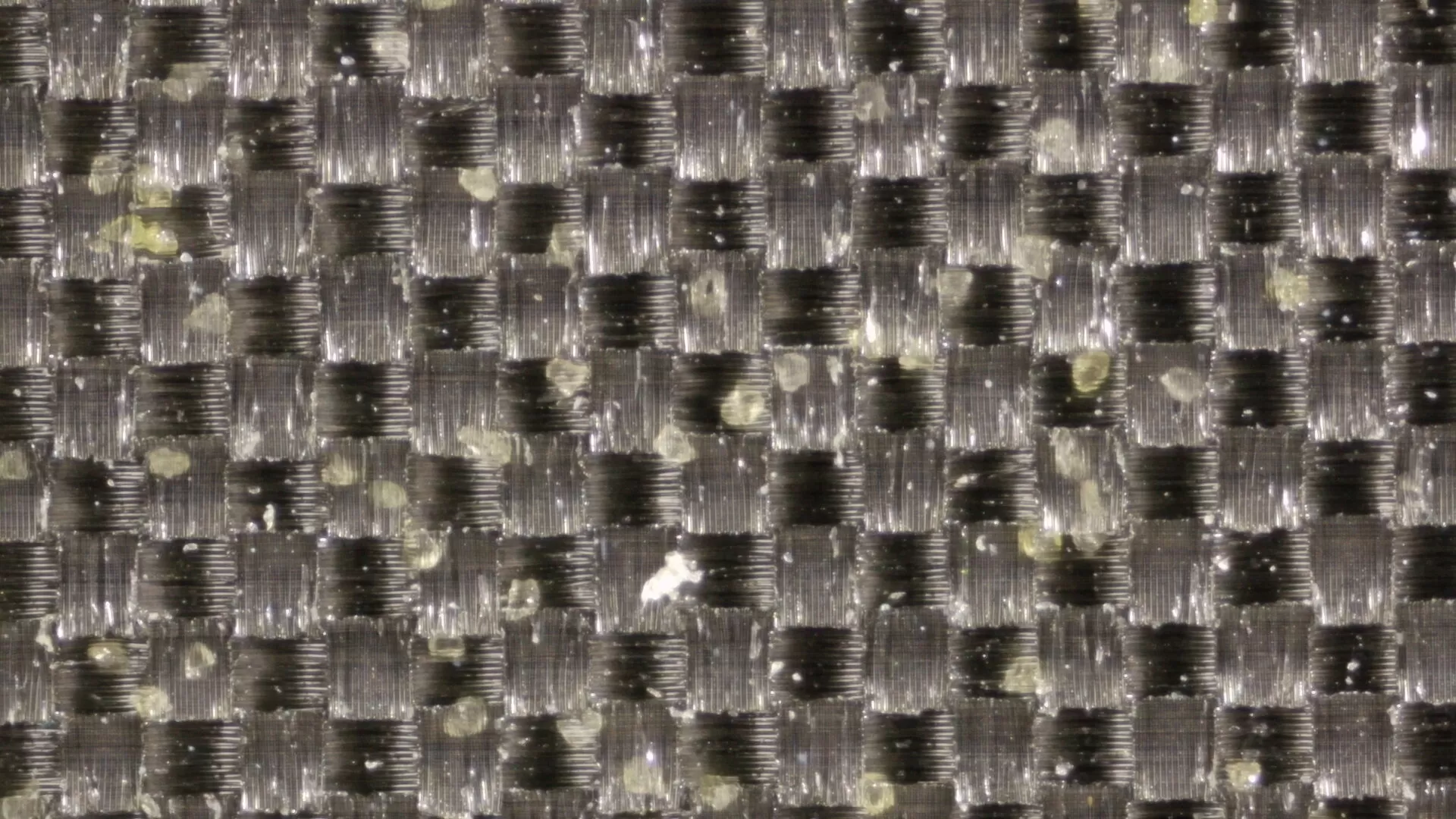
Microscopic Image of Texture
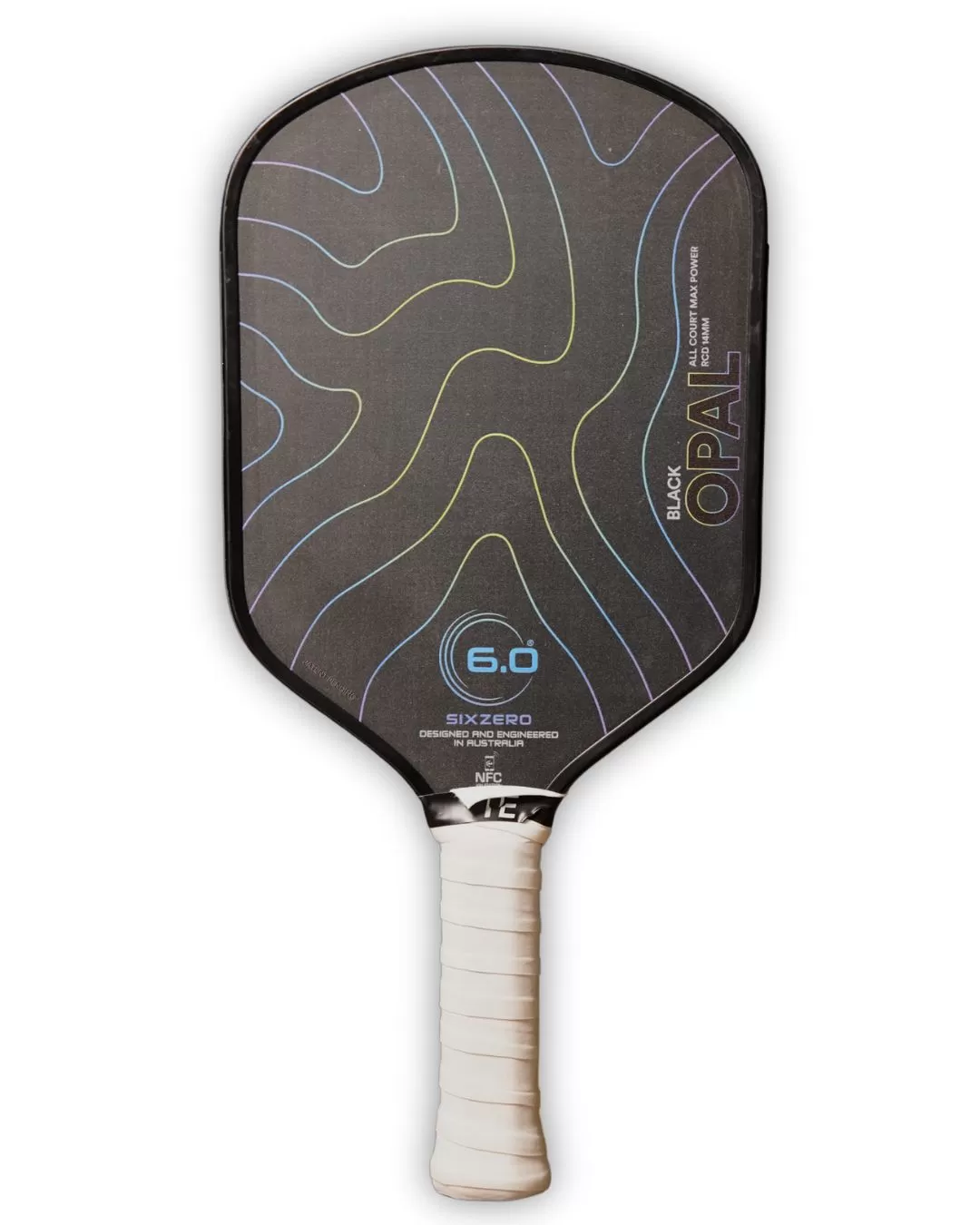
Black Opal
Measurements are from my review unit and may vary between paddles.
Save with code PBEFFECT on Six Zero’s website or click Pickleball Central link to apply discount.
The Black Opal is currently offered only in this hybrid shape. Six Zero likely went with a thinner 14mm core because the foam material is denser and heavier, so reducing the thickness helped manage total weight.
It sits slightly above average in swing weight for hybrids overall, and a few points higher than the average 14mm hybrid. The twist weight, however, matches the 14mm average but is several points lower than most 16mm paddles. Ideally, twist weight should rise alongside the swing weight for balance and stability. Here, that mismatch means adding tuning tape to improve stability will also push total weight higher than some players prefer.
This paddle hits big, one of the hardest-hitting legal paddles I have tested, ranking second in power from my power tests at the time of this review. The pop is high as well, my tests put it at the 89th percentile in my database, though it feels even hotter in play. Power output is instant and seems to scale exponentially. The harder you swing, the more it gives back. My spin test averaged 2024 RPMs, a strong result that matches other top-spin paddles.
While the power is big, the paddle’s feel is what really sets the Opal apart. It has a deeper, thud-like sound and a dense, springy response at impact. It is not crisp or hollow like most EPP floating-core paddles. Instead, it feels firm and connected without being harsh. It is softer at impact than an EPP paddle but not overly plush, which gives you great tactile feedback.
The closest comparison would be the Gearbox Pro Ultimate 16mm, though the Opal feels even denser through contact. It also has that same “springy” pocketing effect as Gearbox paddles, but with a more neutral launch angle vs the higher launch angle of Gearbox paddles.
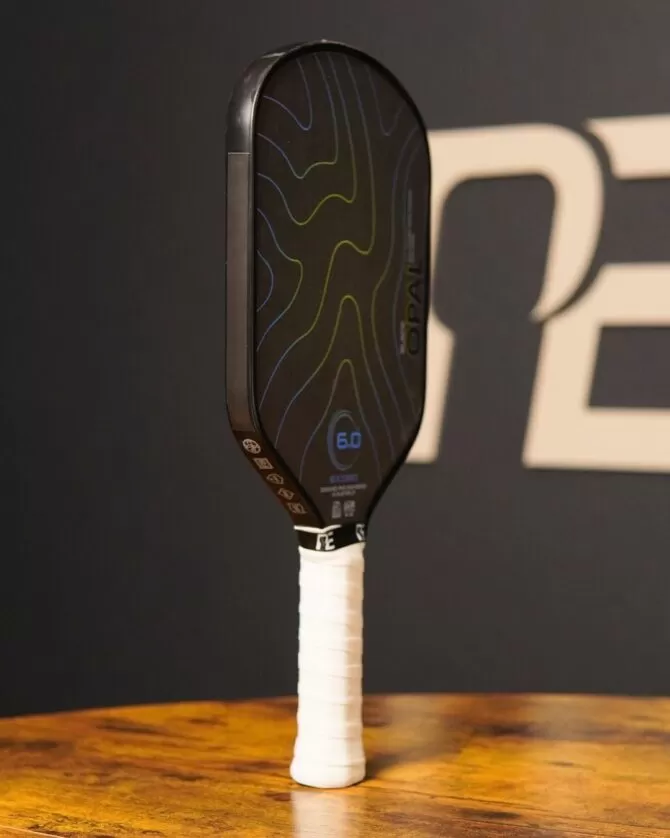
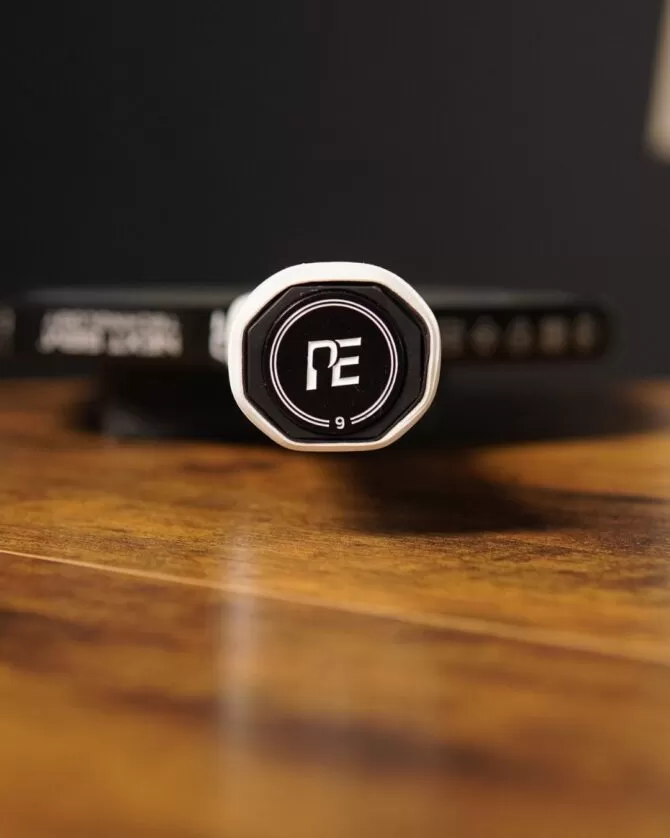
The sweet spot is the paddle’s main drawback. It is noticeably weaker near the throat, where low contact often dies short. On fast exchanges it holds up fine, but soft shots while dinking or resetting that made contact with the lower face would fall short of clearing the net.
Side-to-side forgiveness is below average for a hybrid. After testing several setups, I landed on 3 grams of half-gram-per-inch tape on each side starting from the bottom corners. That bumped twist weight to 6.89 and swing weight to 118 which gave it the side to side stability improvement I was looking for though the sweet spot still didn’t feel oversized.
I also added a 9g Cap Coin on the handle to balance the head weight, which improved maneuverability some, though it is still not a quick paddle. With this model, better forgiveness comes at the expense of maneuverability, and that is simply the tradeoff.
I tested adding weight lower on the neck to improve the weaker lower sweet spot and keep swing weight in check, but it offered little benefit and threw off the paddle’s balance. I ultimately placed the weight on the sides, where it better enhanced side-to-side stability.
In stock form, maneuverability is average. Adding weight to improve side-to-side stability moves the paddle into heavier territory and slows its handling. Fortunately, the Black Opal generates enough pop that you don’t need a full swing on counters or blocks. Simply getting it in position adds pace. This helps balance out the slower feel, though flicks and quick volleys still feel more cumbersome compared to most hybrids.
The Six Zero Black Opal sits among the highest-power paddles on the market, including the Body Helix Flik F1, Vatic Pro V-Sol Pro, Selkirk Boomstik, and Bread & Butter Loco. Each brings big power but delivers a distinct feel and play experience.
Overall, the Black Opal separates itself by pairing massive power with a dense, springy, and connected feel. It delivers a more unique playing experience than most in its class but is also more demanding to tame due to its extreme power and okay sweet spot.
Save on the paddles mentioned above and others with my discount codes found here.
Save with code PBEFFECT on Six Zero’s website or click on Pickleball Central link to apply discount.
The Black Opal’s tech creates a ton of power and a connected, satisfying feel. I have not played another paddle that combines those two qualities quite like this one. It rewards clean mechanics and confident swings, but its high power and average-sized sweet spot make it less forgiving for developing players or those seeking a more approachable power paddle.
Even if it is not the perfect fit for your game, paddle enthusiasts will love experiencing what Six Zero has built here. It is a uniquely designed and fun-to-hit paddle that shows how far materials and construction can be pushed.
The Black Opal feels like a statement piece from Six Zero and a reminder of what they are capable of creating. They have proven they can innovate and bring something truly new to the market. The demand for power paddles has been loud, and they delivered. While this model caters most to aggressive, advanced players, upcoming releases built on this same tech foundation should appeal to a wider range of players.
Braydon playing with Coral Widebody
Save with code PBEFFECT on Six Zero’s website or click the Pickleball Central link to apply discount.
We’ve categorized paddles into three categories. Control, All-Court, and Power. Paddle categories are determined by Braydon after he hits or reviews the paddle.
A paddle’s weight represents the inherent mass of the paddle as measured on a scale. However, relying solely on this static weight measurement can be misleading when assessing the true perceived heaviness of the paddle. Even if two paddles both clock in at 8 oz, their actual heft in your hand can markedly differ due to variations in weight distribution within the paddle. This is why the static weight should be considered with the swingweight of the paddle. See the definition of swingweight below.
The weight value listed in the database corresponds to the paddle’s weight that I used to gather the swingweight and twistweight measurement. It’s possible that if your paddle has a different static weight than then the swingweight and twistweight may be slightly different.
There are three primary shapes a paddle can have which consists of the length and width of the paddle. These three shapes are:
Then there are two less common shapes you’ll see. These are:
When considering the advantages and trade-offs of paddle shapes, it’s important to understand the characteristics of each shape.
It’s interesting to note that advanced players often prefer elongated shapes. On the other hand, players at lower skill levels typically opt for the extra forgiveness offered by standard shaped paddles.
Ultimately, the choice of paddle shape depends on an individual’s playing style, preferences, and skill level. Whether your focus is on reach or forgiveness, understanding the unique benefits and trade-offs of each shape can assist you in selecting the paddle that best suits your game.
Measuring the revolutions per minute (RPMs) off of a serve you get a number that shows the spin potential of a paddle. Using these RPM measurements I’ve created five buckets that a paddle will fall into indicating its overall spin potential. The five buckets are:
1900 or Higher = Very High
1700 – 1900 = High
1500 – 1700 = Medium
1300 – 1500 = Low
1300 or less = Very Low
You can tell a big difference in the amount of spin a paddle generates when you compare a Very High paddle to a low paddle. But the gains from Medium to High to Very High are marginal. We’ve found that having at least a medium rating is often enough if you’re looking for a good spin paddle. However, if you’re a big hitter then you will benefit more from a high spin paddle to help you keep the ball in play more often.
The power level of a paddle is shown in miles per hour (MPH) after taking ten measurements with a speed gun of hitting a serve as hard as I can. This measurement gives you an idea of how hard you can hit the ball when given the chance to take a full swing. So shots like serves, drives and overheads. The higher the MPH reading the more power you can generate with the paddle.
I also show the percentile ranking of the measurement to give you an idea of how it stacks up against the rest of the paddles in my database.
The pop level of a paddle is shown in miles per hour (MPH) after taking the average of ten speed gun measurements of hitting a punch volley as hard as I can. This measurement gives you an idea of how hard you can hit the ball on shorter swings and gives you an idea of how quickly a ball comes off the face when you apply less force on the ball. So shots volleys, dinks, counters, and resets are all affected by the pop measurement. The higher the pop measurement the stronger your counters will be but it takes more skill to keep the ball from floating or popping up on you when resetting a hard hit ball or when dinking.
I also show the percentile ranking of the measurement to give you an idea of how it stacks up against the rest of the paddles in my database.

Looking for the right paddle to fit your game? Take our paddle fitting quiz for three recommendations that will match your style of play.


